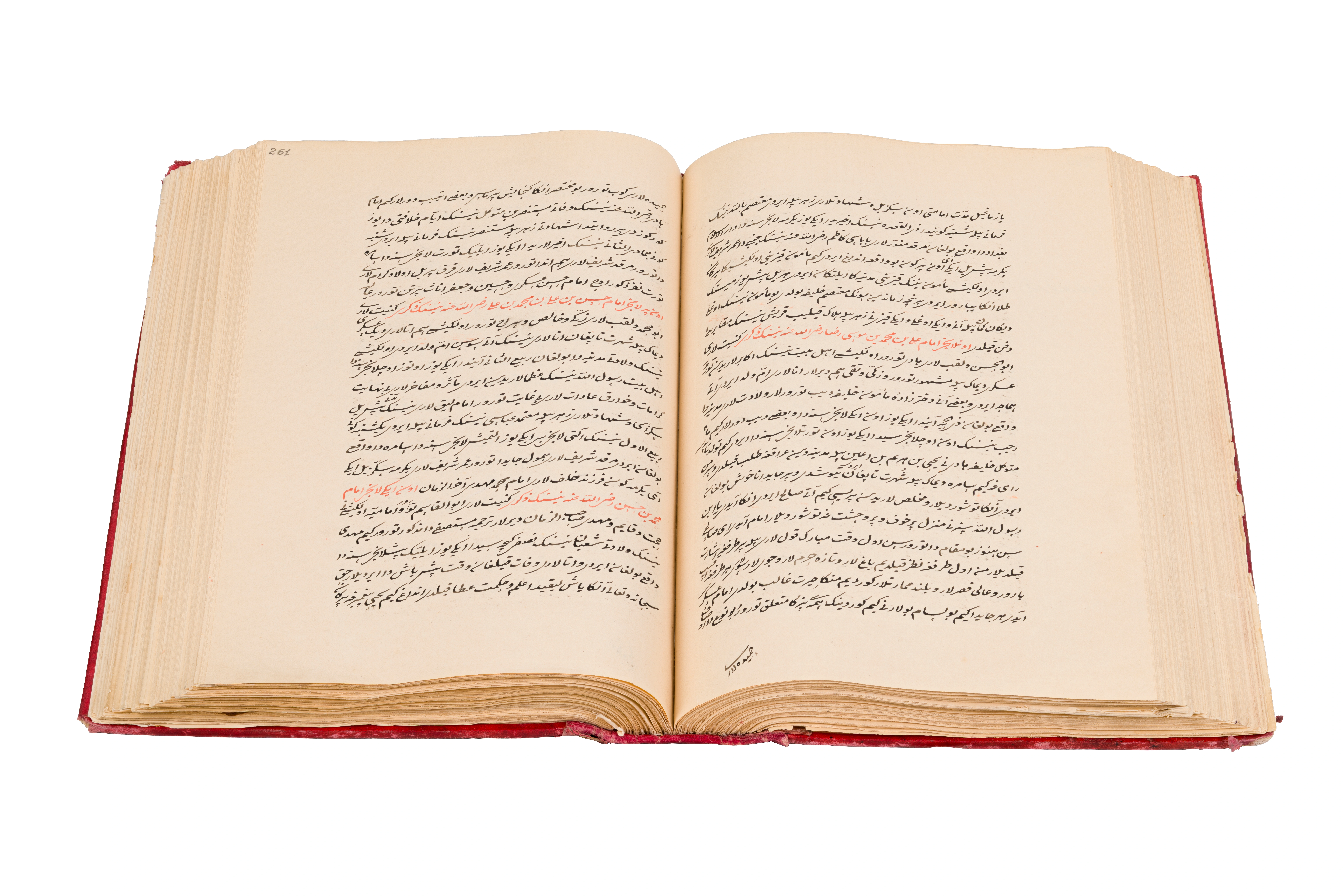
The Story of Amir Haydar
Second half of the 18th century – early 19th century. Bukhara. Persian. Nastaliq script. 17.5 × 39 sm. Manuscript of the Institute of Oriental Studies of the Academy of Sciences of the Republic of Uzbekistan, inv. No. 836
Description
The elongated format of this manuscript immediately sets it apart from an ordinary book. Narrow pages, dense nastaliq script, red highlights, and occasional marginal notes create the impression of a working historical document, close to a court record or archival chronicle.
The History of Amir Haydar is devoted to the Bukhara ruler of the Manghit dynasty who ruled in the early nineteenth century. In Bukhara’s historical memory, Amir Haydar was remembered not only as a sovereign, but also as a figure connected with scholarly life: sources note his interest in religious sciences, Islamic jurisprudence, and hadith.
For the section on the Uzbek Khanates, this manuscript matters as an internal view of Bukharan statehood. Persian appears here as the language of high historiography, while the chronicle shows how power described itself through Islamic knowledge, urban culture, and the memory of rule.
The traces of reading and the disciplined page make this manuscript not an abstract monument of history, but a document of an age in which political authority needed written testimony.