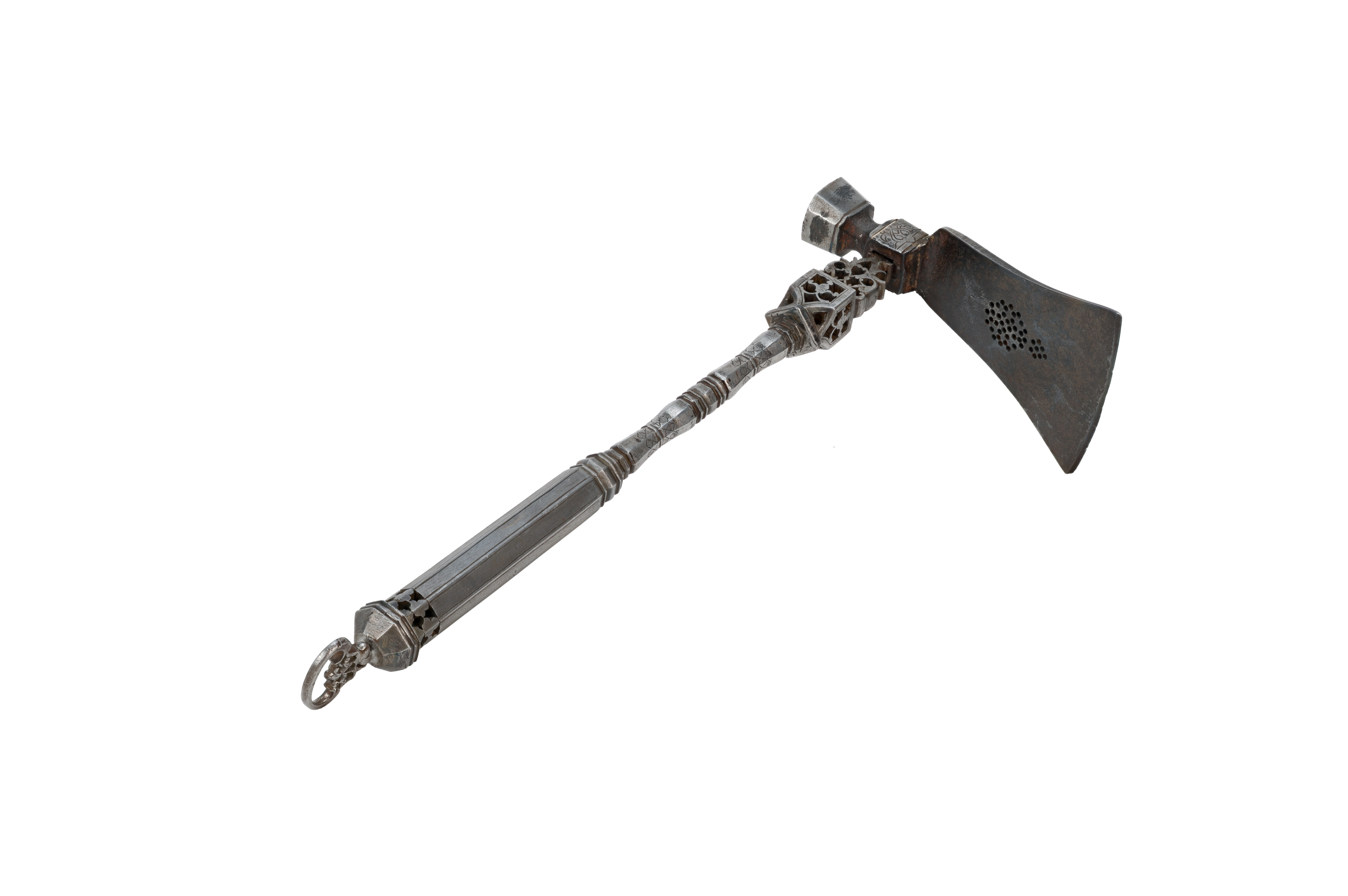
Axe
18th century. Iran. Steel. Length: 31,3 cm. Axe head: 13.7 × 7.6 cm
Audio guide
Description
This unusual 18th-century CE axe may appear to be a weapon, but in fact it served a very different purpose. It is a sugar axe, an elegant domestic tool used in the ceremonial culture of the Persian world.
For many centuries CE sugar in the Middle East and Central Asia was not sold as granulated crystals but in large, solid cones or blocks. To divide these into smaller pieces, special axes were used.
Yet objects like this one were far more than simple kitchen tools. Breaking sugar often formed part of festive gatherings, weddings, or formal receptions. In Eastern symbolism, sugar represented sweetness, prosperity, and hospitality.
This example is made of steel and decorated with delicate engraving and openwork elements. The patterns on the blade and handle consist of intricate vegetal motifs typical of Islamic decorative art.
Such axes were often produced by Iranian craftsmen and circulated widely through trade networks connecting Iran and Central Asia.
Today the object offers insight into the refined material culture of hospitality and ceremony in the eighteenth-century CE Islamic world.