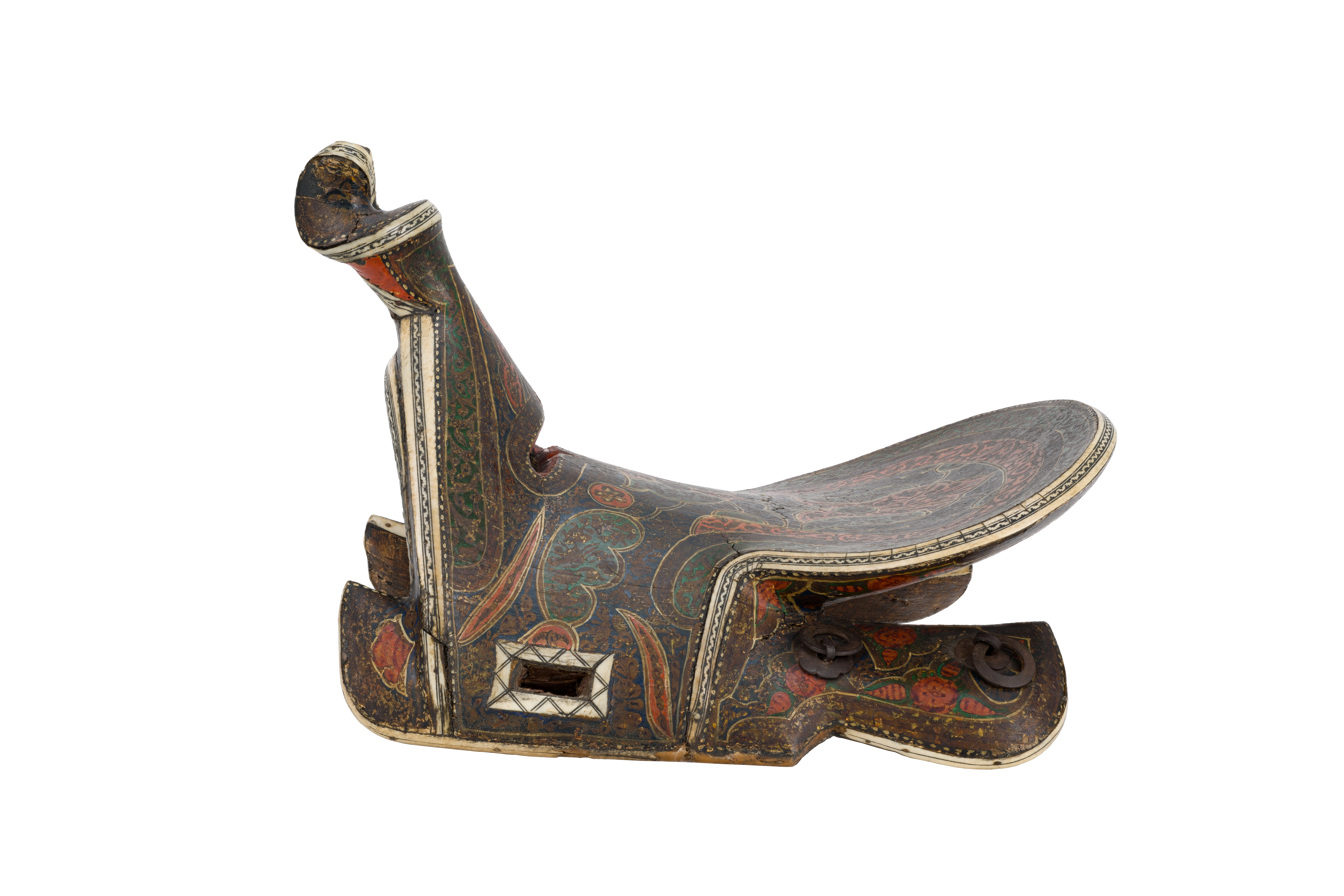
Saddle
Late 19th – early 20th century. Central Asia. Wood, ivory. 43.3 × 32.3 cm. Length: 29.5 cm
Audio guide
Audio available in: RU
Description
This object is a traditional Central Asian saddle, known as an archak, created in the late nineteenth or early twentieth century CE, during the period of the Uzbek khanates.
In the cultures of Central Asia, the horse held a special place in everyday life. It was not only a means of transportation but also an essential companion for warriors, hunters, and travelers. As a result, horse equipment—especially saddles—often received elaborate artistic decoration.
The structure of this saddle is typical for the region. It features a high front pommel and a raised rear cantle, a design that helped riders maintain stability during fast riding, hunting, or combat, while allowing them to use a bow or other weapons freely.
The saddle is made of wood and decorated with painted ornament and ivory inlay. Such materials suggest that the object was intended for ceremonial or high-status use. Saddles of this kind could belong to members of the nobility, military elites, or guards serving a khan or emir.
During the period of the Bukhara, Khiva, and Kokand khanates, richly decorated saddles were sometimes presented as diplomatic gifts to rulers or foreign envoys, symbolizing prestige and honor.