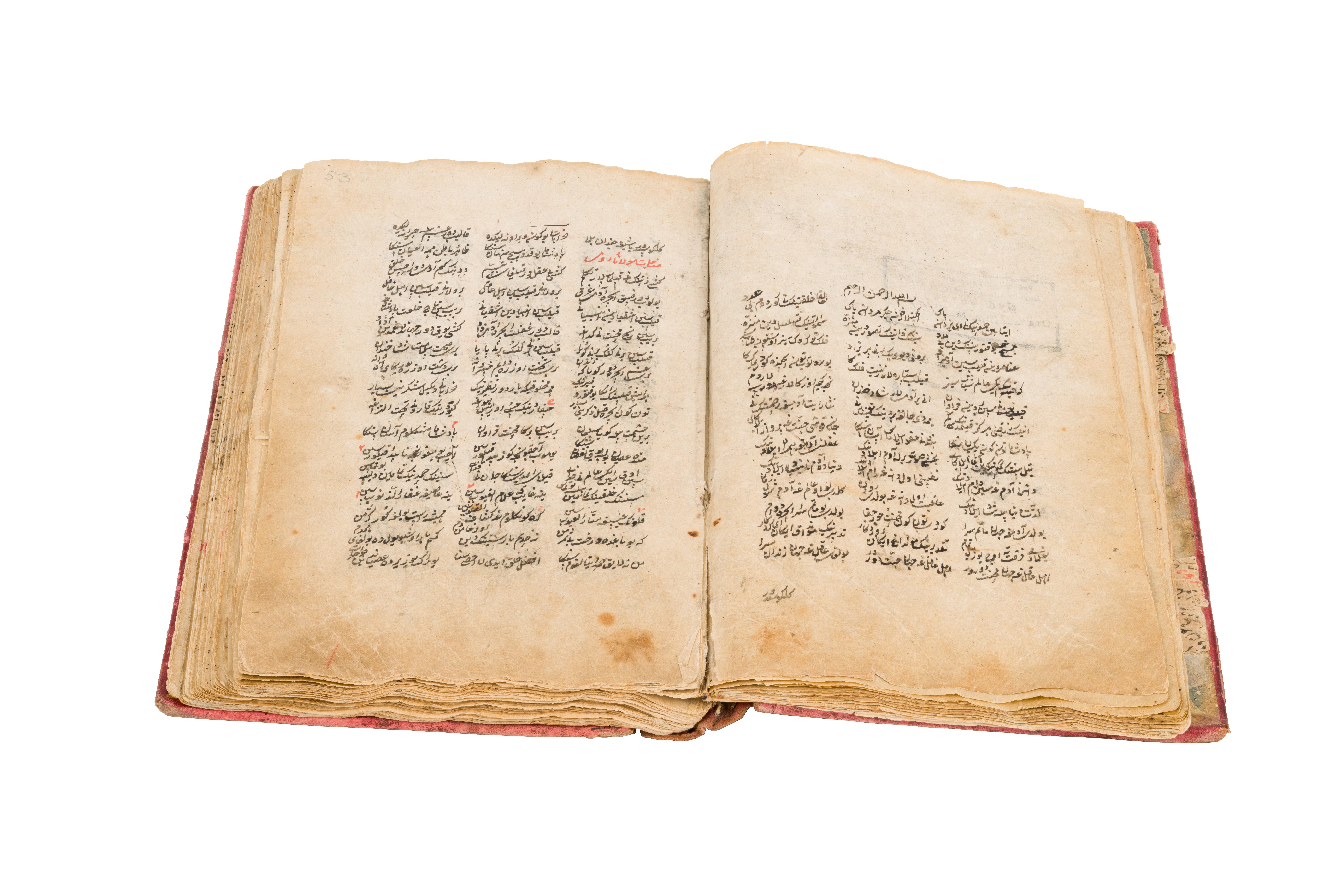
“Devon”
Turdi Farogi. 17th century. Bukhara, Khujand. Uzbek. Nastalik script. 12.5 × 21.5 sm. Manuscript of the Institute of Oriental Studies of the Academy of Sciences of the Republic of Uzbekistan, inv. No. 1407
Description
The margins of this manuscript are almost entirely filled with diagonal notes added by different hands over time. The main text is arranged in orderly columns, yet around it another layer gradually emerges – poems, annotations, and readers’ responses. In this way, the manuscript became not only a book, but also a living space of literary exchange.
This is the Divan of Turdi Faroghi, one of the most distinctive poets of the seventeenth-century Bukhara Khanate. Unlike court poets who praised rulers, Faroghi wrote about social division, injustice, and political conflict. His verses circulated in private manuscript copies and were read within educated circles.
The language of the work was especially significant. Faroghi deliberately wrote in old Uzbek, using vivid popular expressions, proverbs, and accessible imagery. Through this choice, civic poetry moved beyond the limits of court culture.
At a time of internal tribal conflict, Turdi Faroghi became one of the earliest voices calling for the unity of Uzbek tribes. This small manuscript therefore preserves not only poetry, but also the moral conscience of its age.