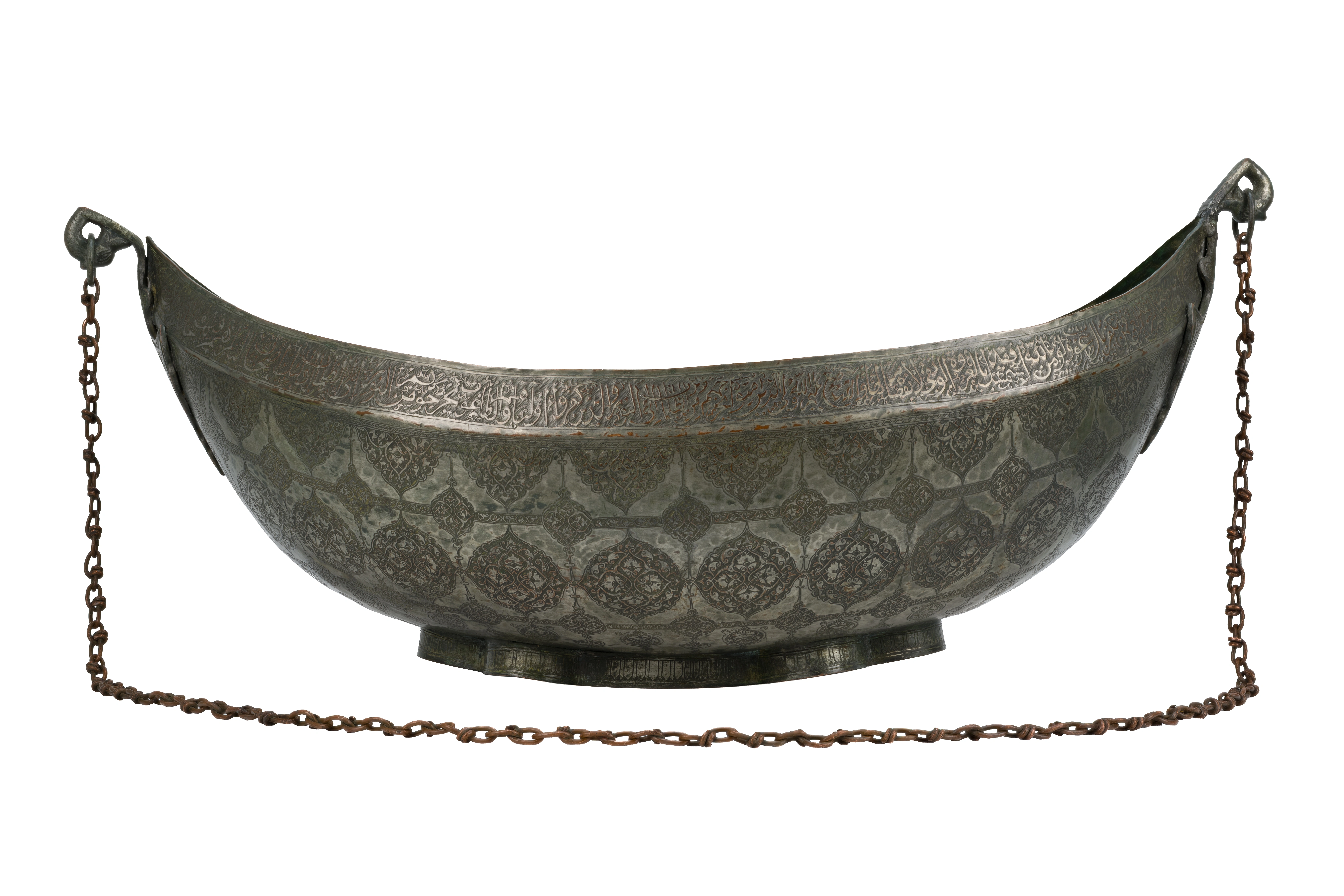
Large Kashkul (Beggar’s Bowl)
16th–17th centuries. India. Bronze. 38.2 × 89.1 × 48.1 cm
Audio guide
Audio available in: RU
Description
This impressive kashkul, or dervish begging bowl, represents one of the most recognizable symbols of the Sufi spiritual tradition. More than a utilitarian object, it embodies the philosophical ideal of voluntary poverty as a path toward spiritual knowledge.
Its distinctive boat-like shape is deeply symbolic. In Sufi thought, the kashkul was often compared to a vessel carrying the dervish across the ocean of divine wisdom. This metaphor reflects the central Sufi concept of faqr — spiritual poverty understood not as deprivation, but as liberation from worldly attachment.
The engraved decoration and calligraphic inscriptions along the rim are also significant. Such inscriptions commonly included Qur’anic verses, invocations, or poetic quotations, serving both as ornament and as spiritual protection for the wandering mystic.
While earlier kashkuls were sometimes made from exotic coconut shells, by the sixteenth and seventeenth centuries, during the Baburid Period, they were increasingly produced in metal. Given its large size, this example was likely intended for ceremonial use, possibly within a Sufi lodge.
This object also reflects the strong cultural and spiritual connections between Central Asia and India, shaped by the Timurid heritage of Babur. It stands as a material witness to the shared intellectual and religious landscape of the Islamic world.