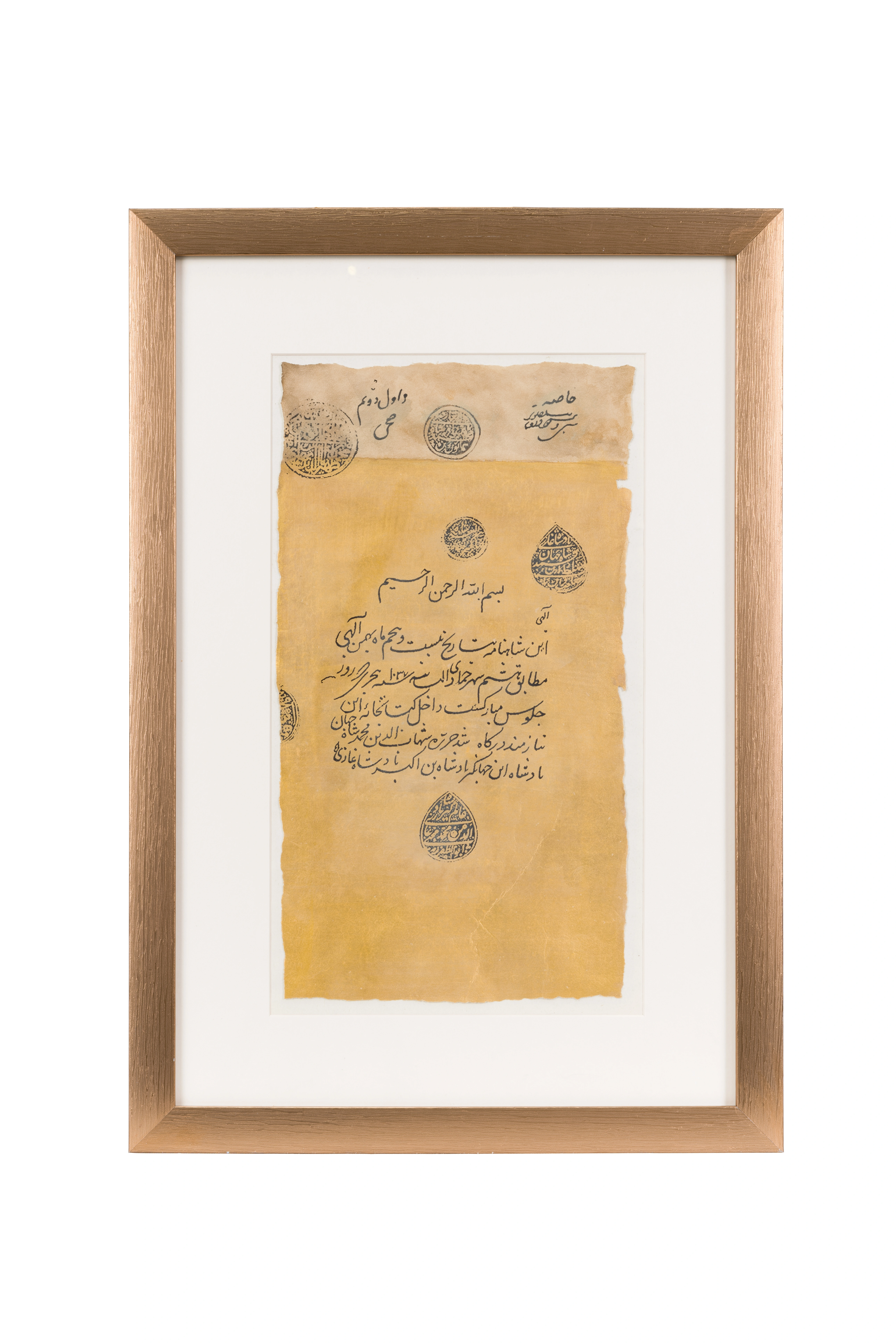
Page from “Shahname”
Abulqosim Firdowsi. Prepared under the patronage of Muhammad Juki. With the seals of Babur and the Baburid rulers. Early 15th century. Herat. Persian. 30 × 16 cm
Description
This folio from Ferdowsi’s Shahnameh is connected with one of the most important Timurid book monuments: a manuscript prepared in Herat under the patronage of Prince Muhammad Juki, grandson of Shahrukh and great-grandson of Amir Temur. What we see is not merely a page of text, but a kind of historical passport of the book. It bears seals and ownership notes associated with Babur and later Baburid rulers, recording the manuscript’s passage through imperial libraries. The formula “Bismillah,” the Persian text, and the varied forms of the seals show that the book was understood at once as a literary masterpiece, a dynastic relic, and a document of possession. The material of the folio, traces of use, and free arrangement of inscriptions reveal the living history of the manuscript, not only its artistic aspect. For Babur and his descendants, the Shahnameh was not only a great epic of kings and heroes, but also a language of political legitimacy. Through Herat, Kabul, Agra, and Delhi, this folio links the Baburids to the legacy of the Second Renaissance of Islamic civilization, where the manuscript book united dynastic memory, court culture, and the idea of statehood.