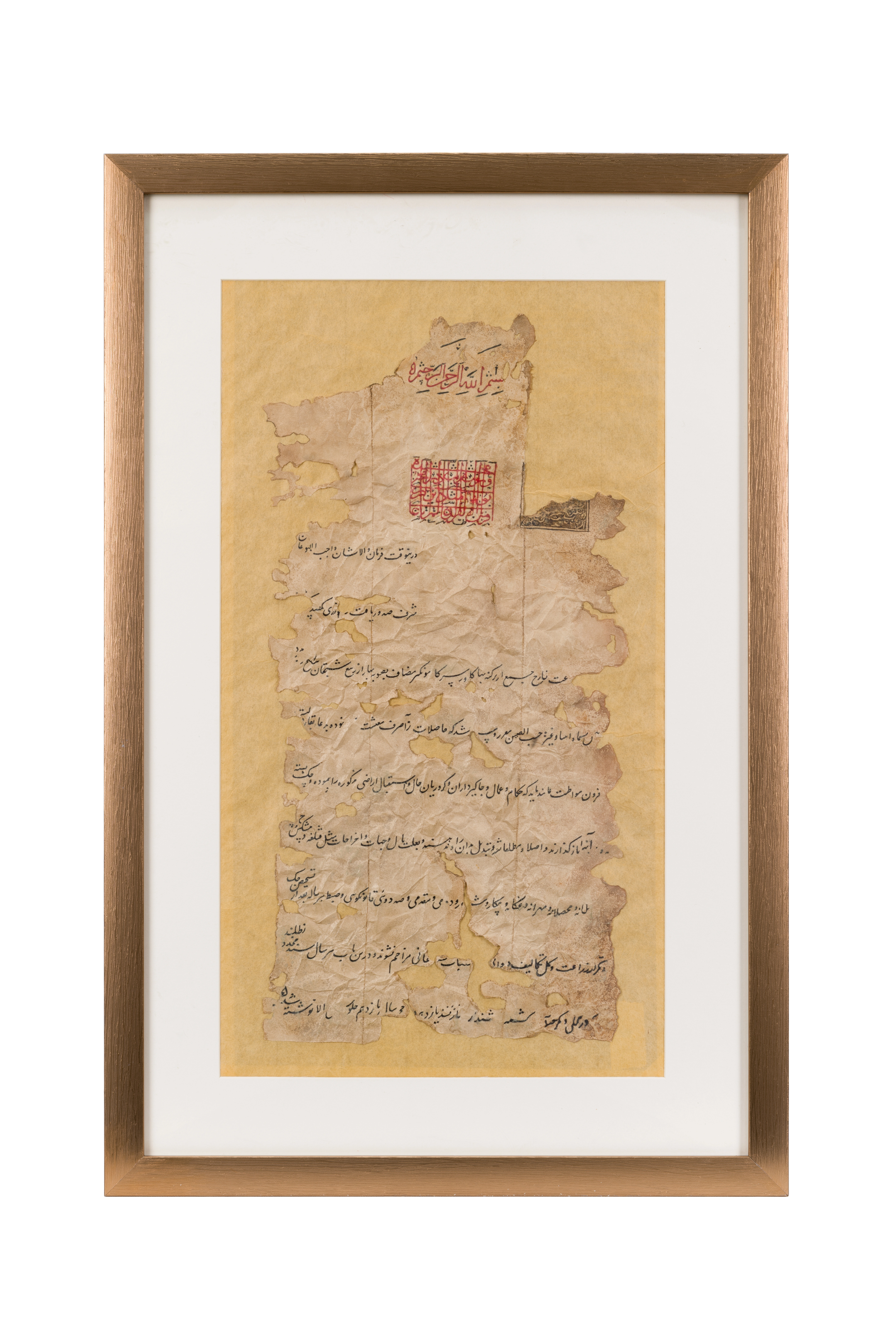
Decree of Aurangzeb
17th century. India. Persian. Nastaliq script. Paper. 40 × 20 cm
Description
Before us is a decree of Aurangzeb: an official seventeenth-century firman produced in India in Persian and written in nastaliq script. Even in its fragmentary condition, the document clearly reveals the strict order of Baburid chancery practice. In the upper part we see a sacred formula and a red square seal impression: such elements confirmed that the command came from imperial authority. Below is the main text, written in free, slightly ascending lines; this upward movement helped distinguish an official document from an ordinary note. Decrees of this kind recorded grants, tax privileges, land rights, or administrative decisions; the precise content of this folio requires separate reading by a specialist in Persian diplomatics. For the Babur sector, the object is especially important: it shows how the state culture created by the Baburids in India continued the Timurid chancery traditions of Central Asia and preserved Persian as a language of administration. The Second Renaissance of Islamic civilization was expressed not only in poetry, architecture, and miniature painting, but also in legal writing – in the ability to turn authority, law, and dynastic memory into a document.