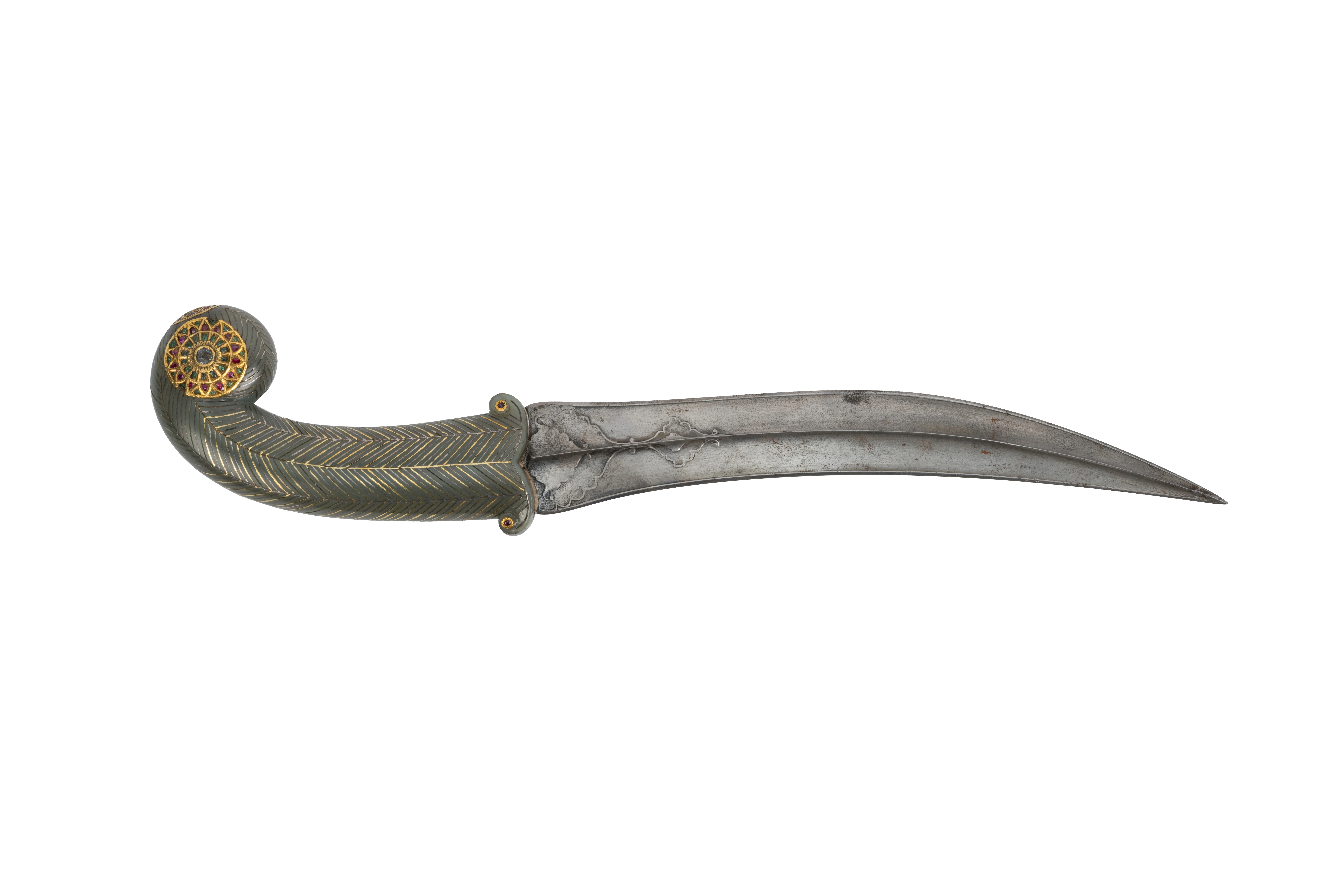
Dagger
Baburid Period. 18th century. India. Iron. Hilt: Nephrite (jade) with gold trim. 37.5 × 8 × 2.7 cm
Audio guide
Audio available in: RU
Description
This ceremonial dagger from eighteenth-century Baburid period reflects a period when weapons in India functioned not only as instruments of war but also as symbols of rank and refinement within courtly culture.
The hilt is carved from nephrite (jade), a material highly valued in both Central Asia and India as a symbol of authority and mental discipline. The technical difficulty of carving jade indicates that such objects were commissioned for elite patrons.
Its curved “pistol-grip” form ensured a secure hold, while the finely carved surface pattern, resembling feathers or scales, may be interpreted as protective symbolism associated with strength and resilience.
The pommel is decorated with a gemstone-inlaid rosette. Solar motifs of this type were widely appreciated in Baburid decorative arts and were often associated with prosperity and celestial protection.
At the base of the blade, delicate vegetal engraving reflects the Baburid aesthetic ideal in which even weapons were expected to embody elegance and natural beauty.
This dagger illustrates how the Central Asian artistic heritage of Babur’s descendants evolved into a distinctive Indian courtly style.