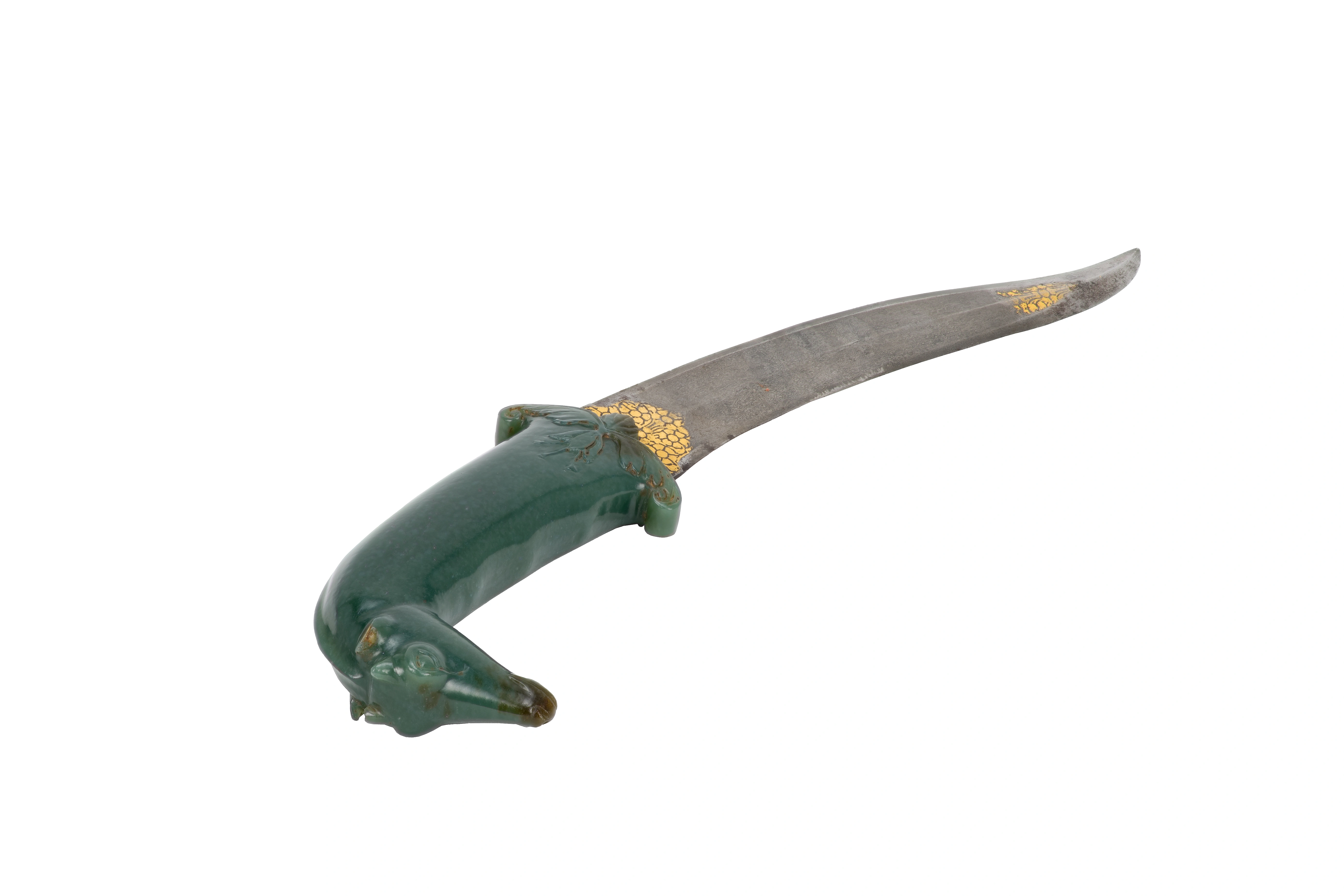
Dagger
Baburid Рeriod. 18th century. India. Steel with gold trim. Handle: Nephrite, precious stones. 30.4 × 5.2 × 2.3 cm
Description
The curved blade of this dagger points to the courtly culture of eighteenth-century Baburid India. Its steel surface is decorated with gold at the base and closer to the tip: such additions transformed a weapon into a sign of status, not only an object of combat. Particularly expressive is the jade hilt carved in the form of a horse’s head. For Babur’s descendants, the horse remained an image of power, movement, and martial valor inherited from the Central Asian Timurid tradition.
In form, the object belongs to the khanjar type — a short dagger with a curved blade and a comfortable hilt, worn at the belt as part of ceremonial dress. The photographs show the flowing silhouette of the blade, leaf-like gold decoration, and carefully modeled ears, eyes, and muzzle of the animal, indicating the work of an experienced court stone-carver. Jade carving, golden vegetal ornament, and precious inlays reveal a synthesis of Indian lapidary skill and Islamic courtly aesthetics. Such an object could serve as a gift, a sign of favor, or a diplomatic present, joining military symbolism with the jeweled luxury of the court and the memory of the Baburid Ferghana roots.