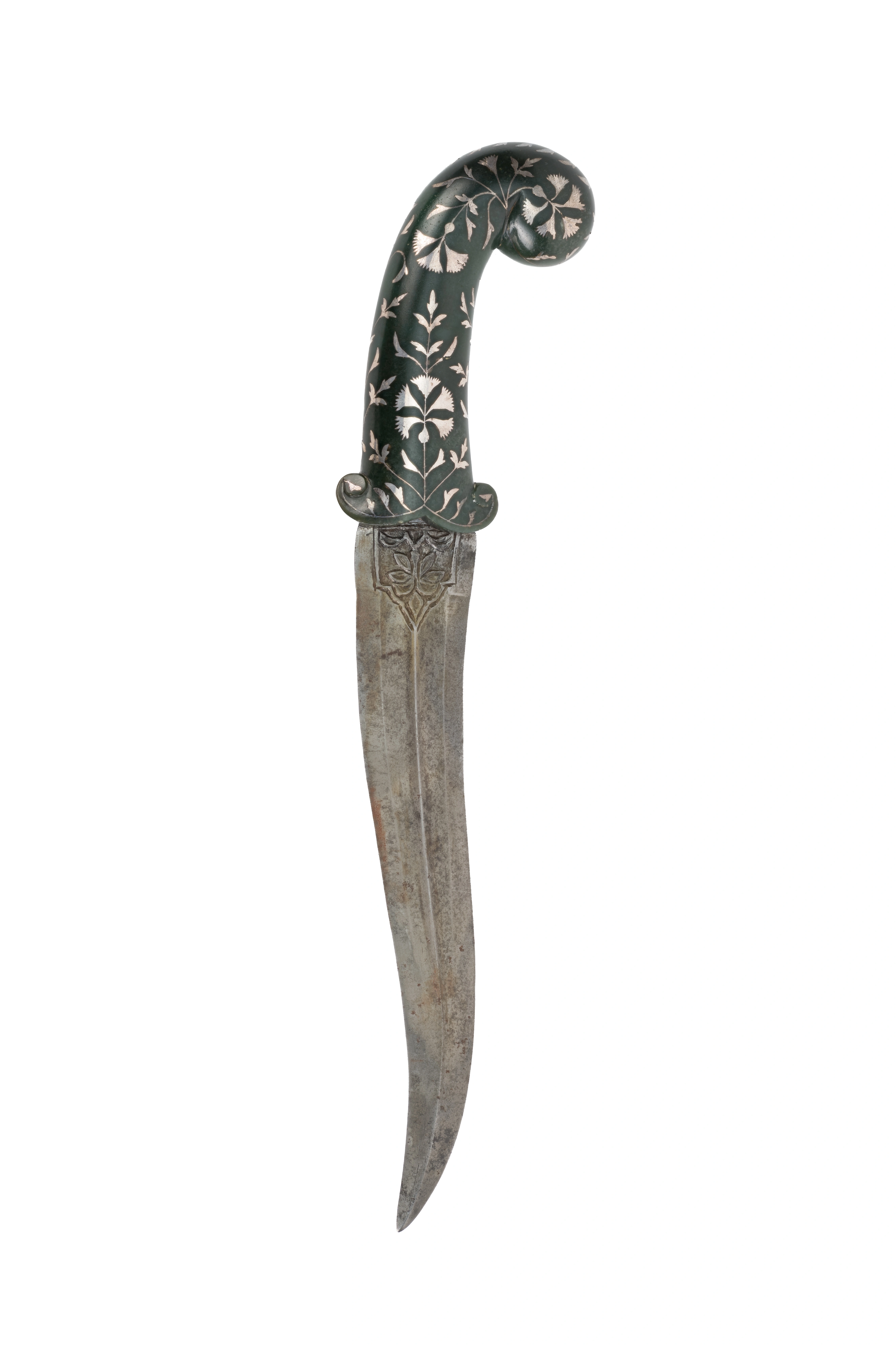
Dagger
Baburid Period. Late 17th – early 18th century. India. Steel. Hilt: Nephrite (jade) with silver trim. 35.8 × 5.4 × 2.7 cm
Audio guide
Audio available in: RU
Description
Daggers of this type in the Baburid period functioned not only as weapons but also as important markers of courtly identity, reflecting the rank, refinement, and cultural affiliations of their owners.
The steel blade is elongated and reinforced by a central ridge, a structural feature that improves rigidity and makes the weapon particularly effective for thrusting. Such blade forms became widespread in seventeenth-century India within the context of courtly arms production.
The hilt, carved from nephrite (jade) and decorated with silver floral inlay, represents the most refined artistic element of the object. The naturalistic vegetal ornament reflects the Baburid fascination with botanical imagery, influenced by court painting and the imperial interest in the study of plants.
Jade (nephrite) itself carried strong symbolic associations with prestige, durability, and Timurid heritage, which the Baburid dynasty consciously preserved as part of its cultural identity.
Worn as part of formal dress, such daggers signified membership in the military and administrative elite, illustrating the close relationship between martial culture and luxury craftsmanship.