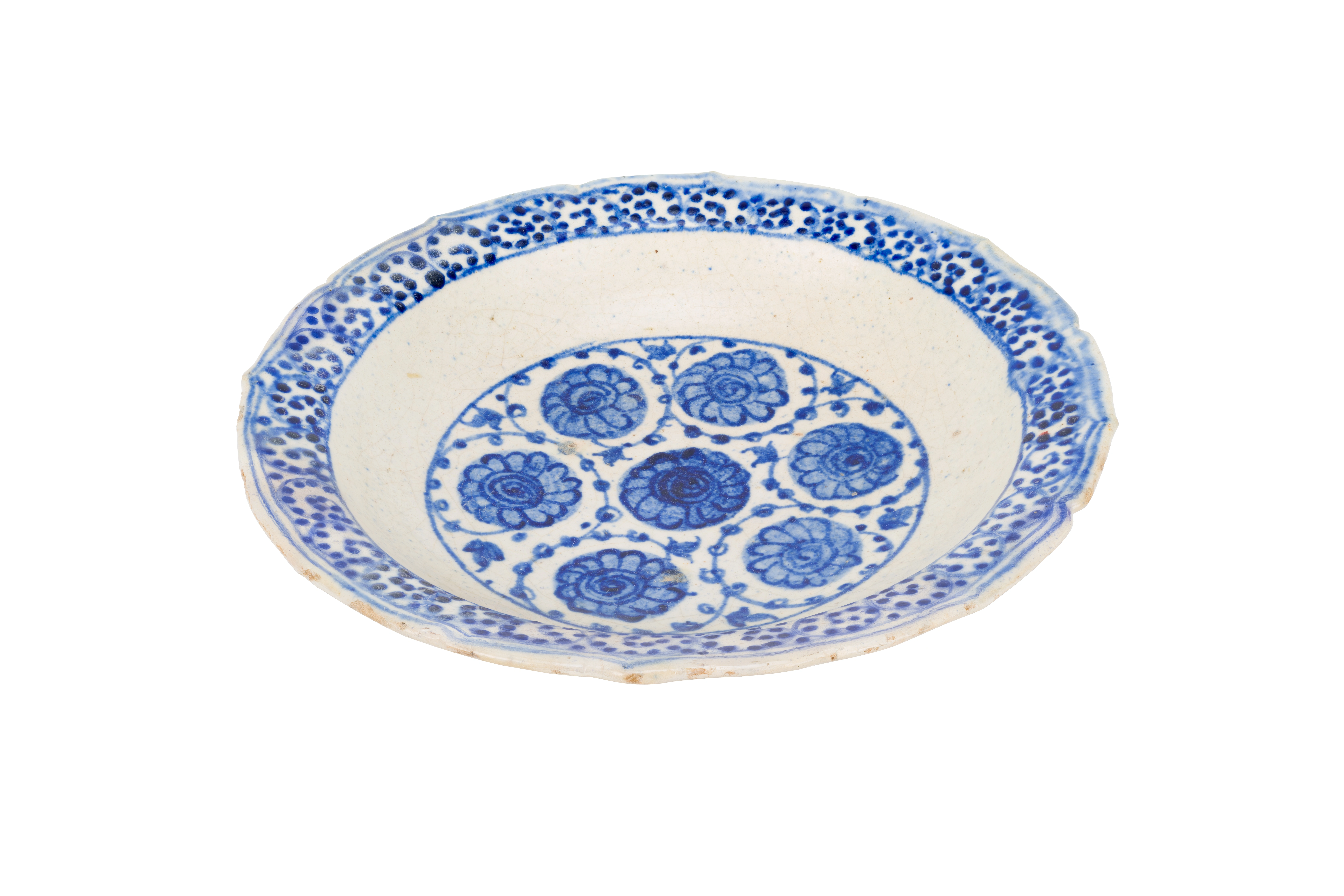
Dish
15th–16th centuries. Central Asia. Ceramic; with engobe, cobalt decoration, transparent glaze. 6 × 26.5 cm. WOSCU collection
Audio guide
Audio available in: UZ
Description
This ceramic dish of the fifteenth–sixteenth centuries illustrates the distinctive artistic synthesis that emerged in Central Asia through the interaction of local ceramic traditions.
The composition is based on a clear symmetrical scheme. At the center is a round medallion containing seven stylized floral rosettes connected by delicate scrolling stems. Such balanced structures reflect a key principle of Islamic ornament, where decoration also conveys the idea of cosmic order and harmony.
The decoration was executed in cobalt pigment over a light engobe and covered with a transparent glaze. This technique enhanced the depth of the blue color and produced the slightly fluid contours typical of underglaze painting fired at high temperatures.
The lobed rim echoes the shapes of contemporary metal vessels, demonstrating how ceramic production often translated elite artistic forms into more widely accessible materials.
Objects of this kind testify to the sophisticated artistic environment of Central Asian craft centers, where scientific thought, poetic symbolism, and decorative aesthetics formed an interconnected cultural tradition.