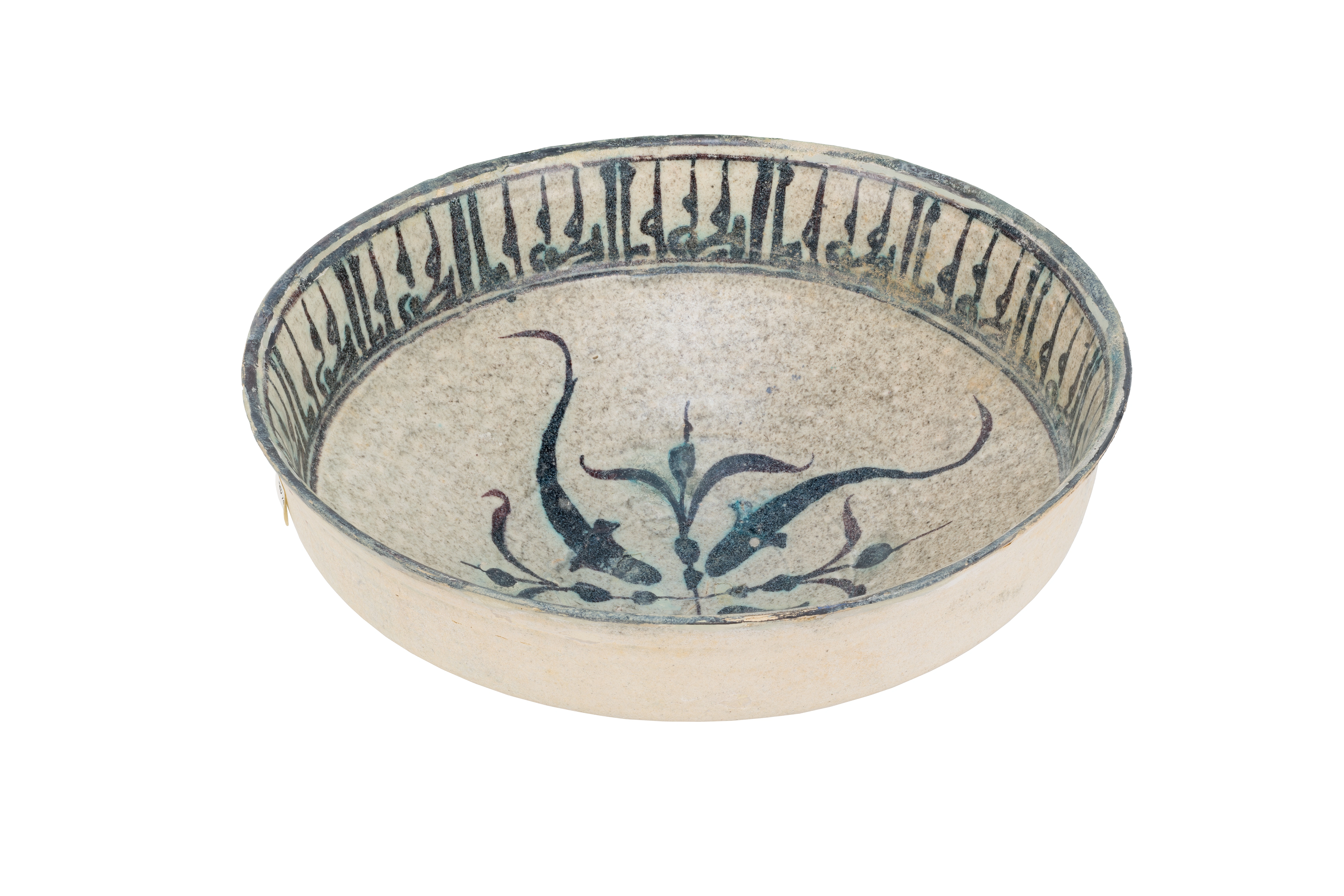
Bowl
15th century. Central Asia. Ceramic; glaze, engobe, natural pigments. 10.4 × 23.5 cm. WOSCU collection
Audio guide
Description
This ceramic bowl dates to the 15th century CE and reflects everyday material culture in Central Asia during the Timurid period.
Its form is wide and shallow, with a gently flaring rim—a practical shape used for serving food such as fruits, bread, sweets, or rice dishes. Yet the bowl’s greatest interest lies in its painted decoration.
The interior surface is adorned with delicate ornament executed in mineral pigments beneath a transparent glaze. At the center appears a stylized vegetal composition of leaves and scrolling stems. Such motifs belong to the broader tradition of Islamic decorative art, where plant forms symbolize harmony and the continuity of life.
Along the inner rim runs a decorative band composed of repeated vertical elements. This rhythmic pattern resembles stylized calligraphy and visually frames the central composition.
During the time of Alisher Navoi and Sultan Husayn Bayqara, vessels like this were not merely domestic utensils. They formed part of the social and cultural life of the Timurid world, where shared meals, gatherings, and literary conversations were essential aspects of urban and courtly culture.