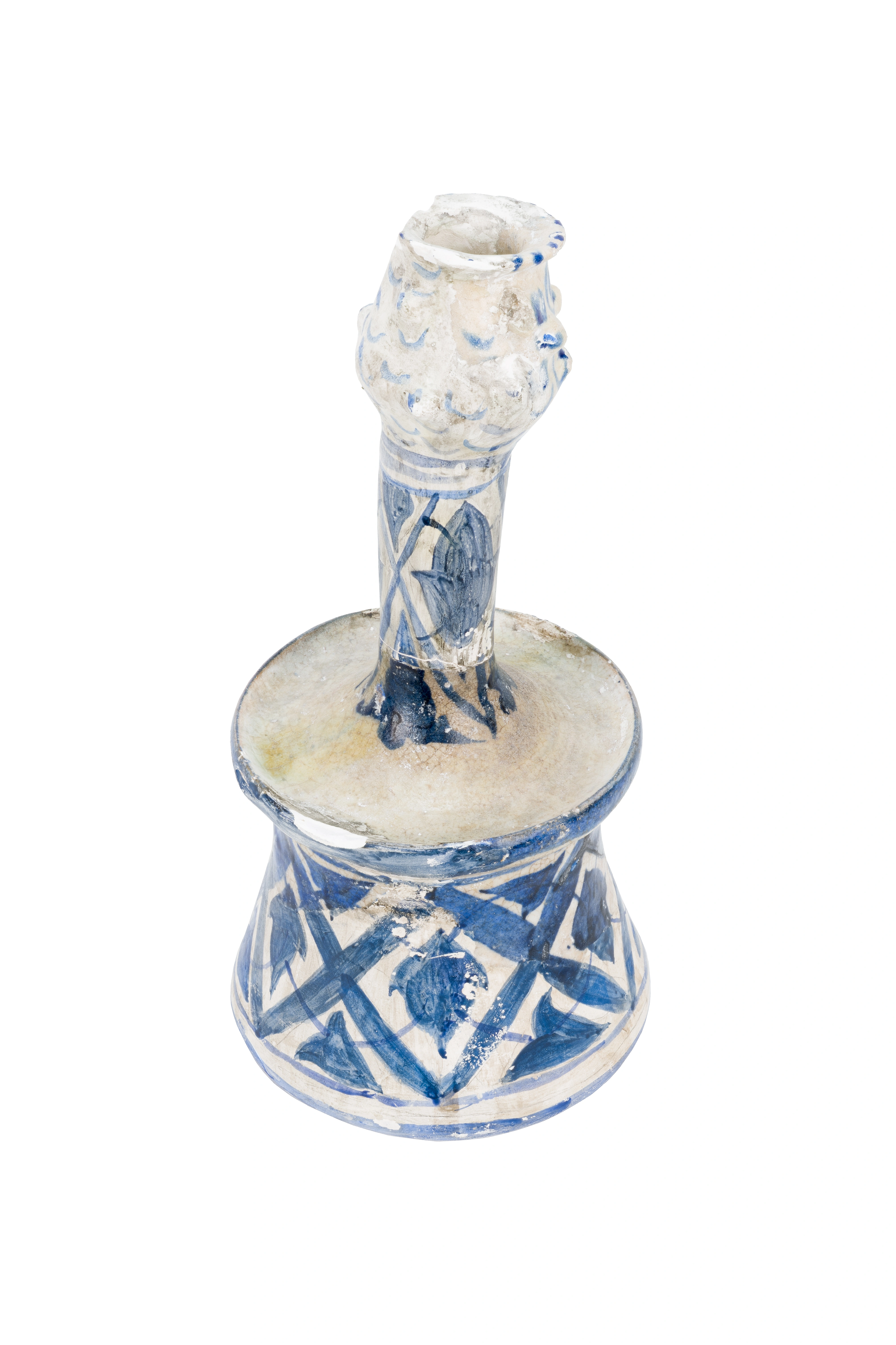
Candlestick
15th century. Tashkent. Ceramic; glaze, engobe, natural pigments. 28.5 × 13 cm. WOSCU collection
Audio guide
Description
This tall ceramic candlestick belongs to the artistic culture of 15th-century CE Tashkent, a period associated with the intellectual and artistic flourishing often described as the Second Renaissance of Central Asia.
The object is composed along a vertical axis. A slender column connects the base with the upper socket designed to hold a candle. This structure provides stability while creating an elegant silhouette. The surface is decorated with cobalt and dark-blue painting over a light slip, covered with a transparent glaze. The ornament consists of intersecting lines and stylized vegetal motifs typical of Central Asian urban ceramic workshops.
Candlesticks of this type illuminated homes, madrasas, and libraries. Candlelight accompanied the reading of manuscripts and the work of scholars.
In the poetry of Alisher Navoi, light often appears as a symbol of spiritual knowledge. In one of his verses he writes:
“Let, Navoi, the sighs of sorrow extinguish your lamp;
When that face shone forth, the candle filled your humble house with light.”
Such objects remind us of a period when the light of learning and art illuminated everyday life in the cities of Central Asia.