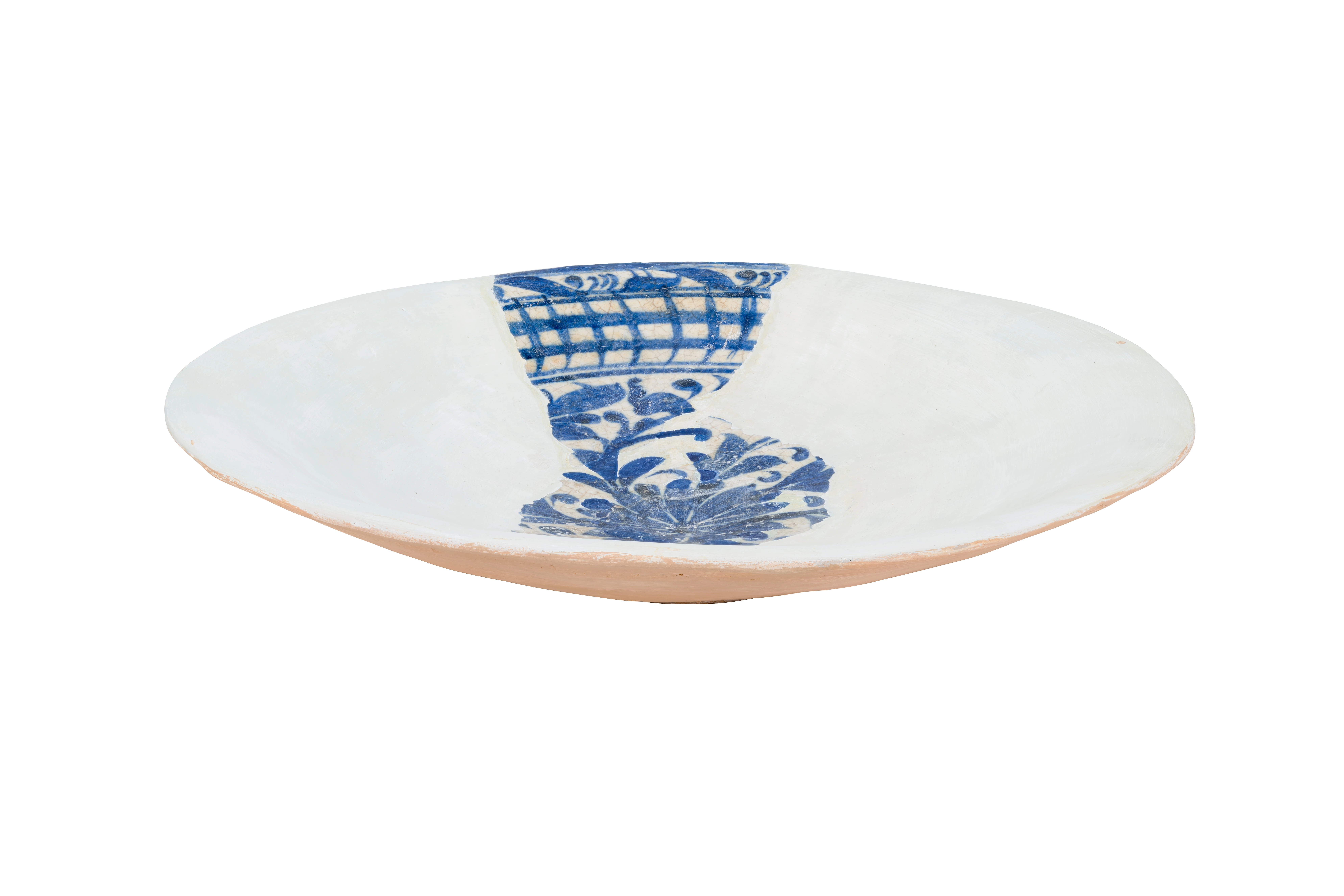
Bowl
16th century. Tashkent. Ceramic; engobe, glaze. 7.5 × 39.7 cm. WOSCU collection
Description
This large sixteenth-century ceramic dish from Tashkent reflects the artistic principles of Central Asian craftsmen, for whom even restrained decoration could convey complex symbolic meanings.
Unlike many contemporary vessels fully covered with ornament, this dish features a single decorative band, leaving much of the surface undecorated. In Islamic artistic tradition, empty space was considered an essential compositional element that enhanced the balance between form and decoration.
The main motif combines a geometric lattice with vegetal ornament. Such compositions are often interpreted as symbolic evocations of the paradisiacal garden, a central metaphor in Islamic visual culture representing order and divine harmony.
Its considerable diameter suggests use in communal dining, an important social practice in Central Asia where sharing food from a common vessel symbolized unity and mutual respect.
The blue-and-white palette reflects the circulation of cobalt pigments and broader artistic exchanges across Asia, including connections with Iranian and Chinese ceramic traditions.
This dish illustrates how Tashkent ceramics integrated local traditions, international artistic influences, and the philosophical aesthetics of Islamic art.