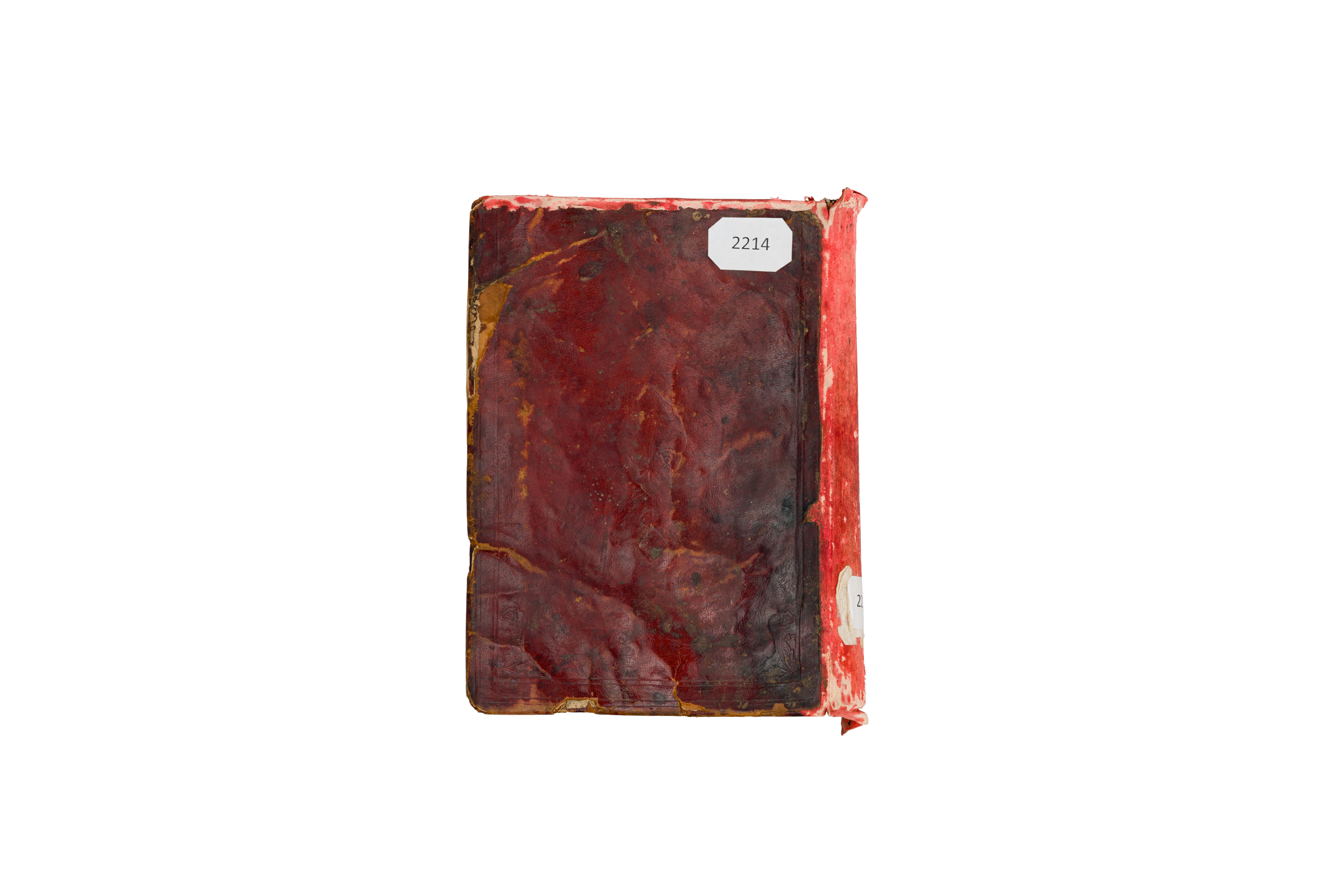
“Zij'i Jadid'i Guragani”
Mirzo Ulug Beg. Copied in 15th century. Persian. Naskh script. Indian paper. 25.5 × 18.5 cm. Manuscript of the Institute of Oriental Studies, Academyof Sciences of Uzbekistan
Audio guide
Audio available in: UZ
Description
Before you is the manuscript “Zij-i Jadid-i Guragani,” one of the key astronomical works produced in the scientific milieu of 15th-century Samarkand under the patronage of Mirzo Ulugh Beg.
This text consists of astronomical tables and calculations designed to determine the positions of celestial bodies, perform calendrical computations, and support practical astronomical applications. It is based on systematic observations carried out at the Samarkand observatory, one of the most advanced scientific institutions of its time.
Observe the interior pages: in addition to the main text, they contain numerous marginal notes added by later users. These annotations document the process of scholarly work—corrections, recalculations, and commentary—indicating that the manuscript was actively used in educational and research contexts over an extended period.
The manuscript is written in the naskh script, a clear and disciplined style traditionally employed for scientific texts. This choice reflects the need for precision, as even minor errors in astronomical tables could significantly affect calculations.
The use of Indian paper points to active trade and cultural connections between the Timurid state and the Indian subcontinent, as well as to the demand for high-quality writing materials suitable for complex numerical data.
Its dating to the 15th century makes this copy particularly valuable, as it is relatively close to the time of the original composition and reflects an early stage in the transmission of the work.
Thus, this manuscript is not merely a scientific text, but an important instrument of knowledge transmission, demonstrating the high level of exact sciences in Central Asia during the Timurid period.