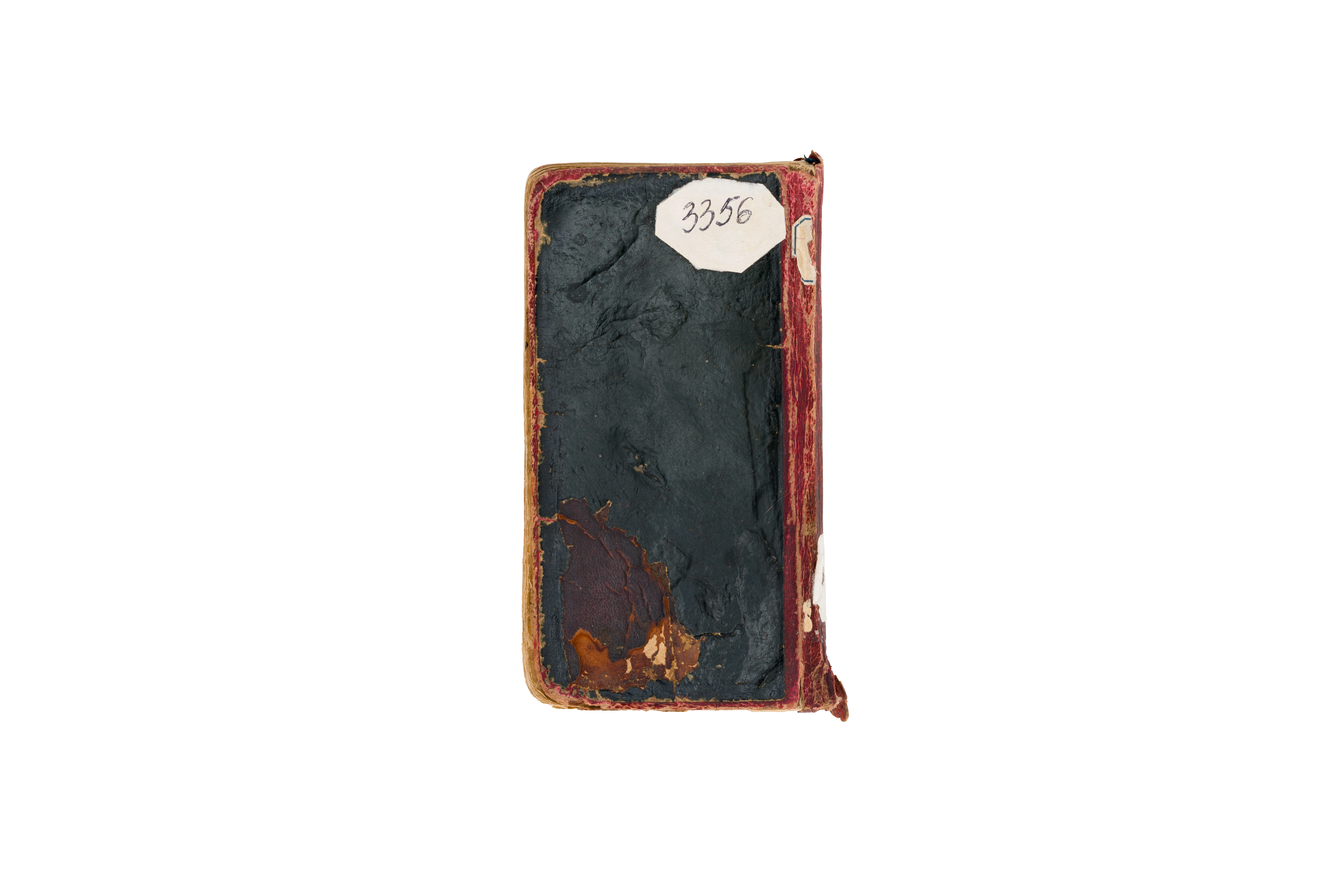
“Risala dar ilm al-hay’a”. Manuscript
Alouddin Ali Qushchi. Copied in 17th century. Persian. Nastaliq script with elements of Shikast. Oriental paper. 19 × 10.5 cm. Manuscript of the Institute of OrientalStudies, Academy of Sciences of Uzbekistan
Audio guide
Audio available in: UZ
Description
Before you is the manuscript “Risala dar ‘ilm al-hay’a,” an astronomical treatise associated with the scholarly tradition of the Samarkand school established under the patronage of Mirzo Ulugh Beg in the 15th century.
Its author, Ali Qushji, was one of the leading scholars of this intellectual circle. His works played a significant role in transmitting astronomical knowledge beyond Transoxiana to Iran and the Ottoman world. It is important to note that such texts were not isolated innovations, but part of a well-established educational tradition within madrasas.
Observe the right-hand page: it contains astronomical diagrams drawn in red and black ink. These are graphical models illustrating the motion of celestial bodies within the geocentric system accepted in medieval science. Such diagrams functioned as teaching tools and demonstrate a high level of visual representation in scientific learning.
The text is written in nastaliq script with elements of shikasta. This combination suggests a practical manuscript: while maintaining legibility and aesthetic order, it incorporates features that allowed for faster writing, typical of scholarly or instructional copies.
The elongated format of the manuscript corresponds to the so-called “safina” type. It was convenient for reading and handling during study, reinforcing its functional, educational purpose.
In the Islamic scholarly tradition, astronomy had both theoretical and practical significance. It was essential for determining the calendar, prayer times, and the direction of the qibla. Thus, this manuscript represents not only a scientific text, but also a tool connecting intellectual inquiry with everyday religious practice.