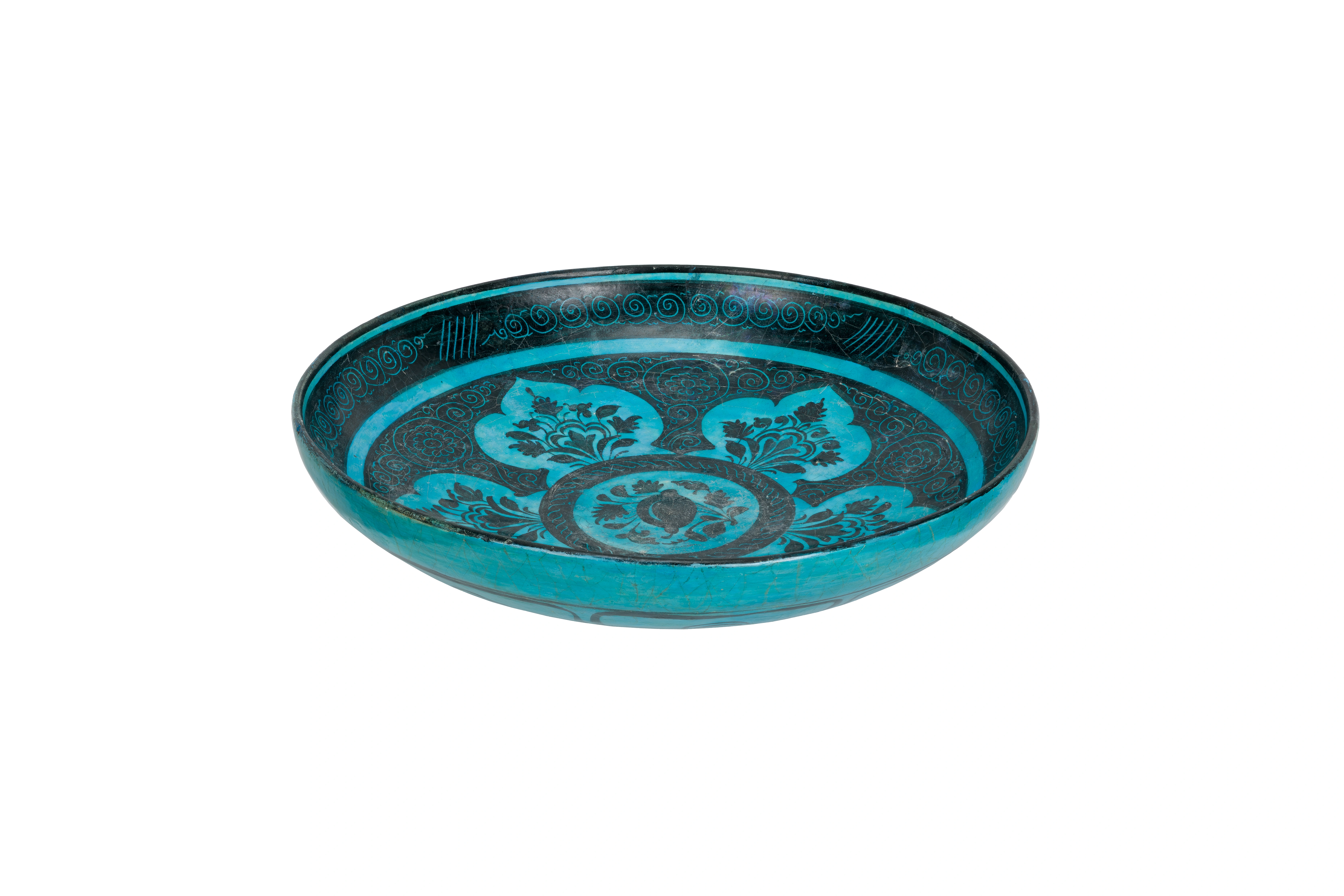
Lagan (Dish)
15th century. Central Asia. Ceramic. 10 × 34.4 cm
Audio guide
Description
This object is a lagan, a large ceramic dish from the fifteenth century CE, produced during the Timurid period.
Large dishes such as this played an important role in Central Asian dining traditions. They were used to serve dishes such as rice, fruits, and other shared meals, often placed at the center of the table.
The dish is decorated using the underglaze painting technique typical of Timurid ceramics. Dark ornamental motifs were first applied to the surface, which was then covered with a turquoise glaze. This method produced a deep luminous color reminiscent of the precious stone turquoise.
At the center of the composition is a four-lobed floral motif surrounded by flowing vegetal arabesques. Such patterns express the idea of harmony and continuity, which are key principles in Islamic decorative art.
In the fifteenth century CE, cities such as Samarkand and Herat became major artistic centers. Craftsmen from different regions worked there, blending traditions and creating a distinctive aesthetic that influenced ceramics throughout the Islamic world.
Thus, even a utilitarian object like a serving dish became a refined work of art.