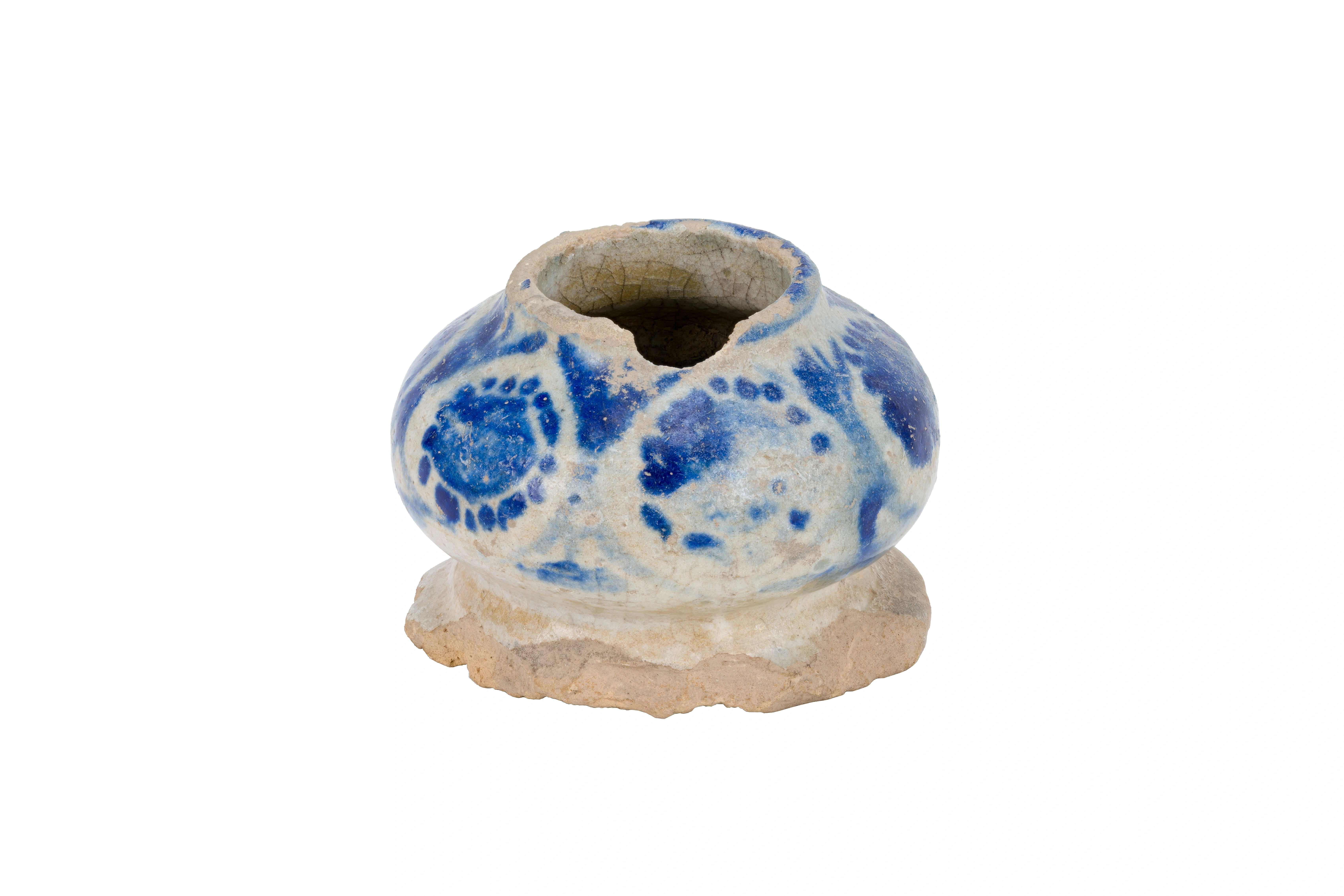
Inkwell
15th–16th centuries. Tashkent. Ceramic; engobe, glaze. 5.8 × 7.6 cm
Audio guide
Description
This inkwell dates to the 15th–16th centuries CE and reflects the material culture of writing in this period.
Its rounded, stable form served a practical purpose. The broad base provided balance, while the narrow opening helped protect the ink from drying. The surface is decorated in blue over a light slip and covered with a transparent glaze. The vegetal ornament corresponds to ceramic traditions of urban workshops active in Tashkent at this time.
Inkwells of this type were used in educational, administrative, and scholarly settings. The growth of manuscript production required reliable writing tools alongside skilled calligraphers.
The slip-decoration technique preserved the clarity of the design and ensured durability after firing.
This small vessel illustrates the practical objects that supported written culture in the 15th–16th centuries CE.