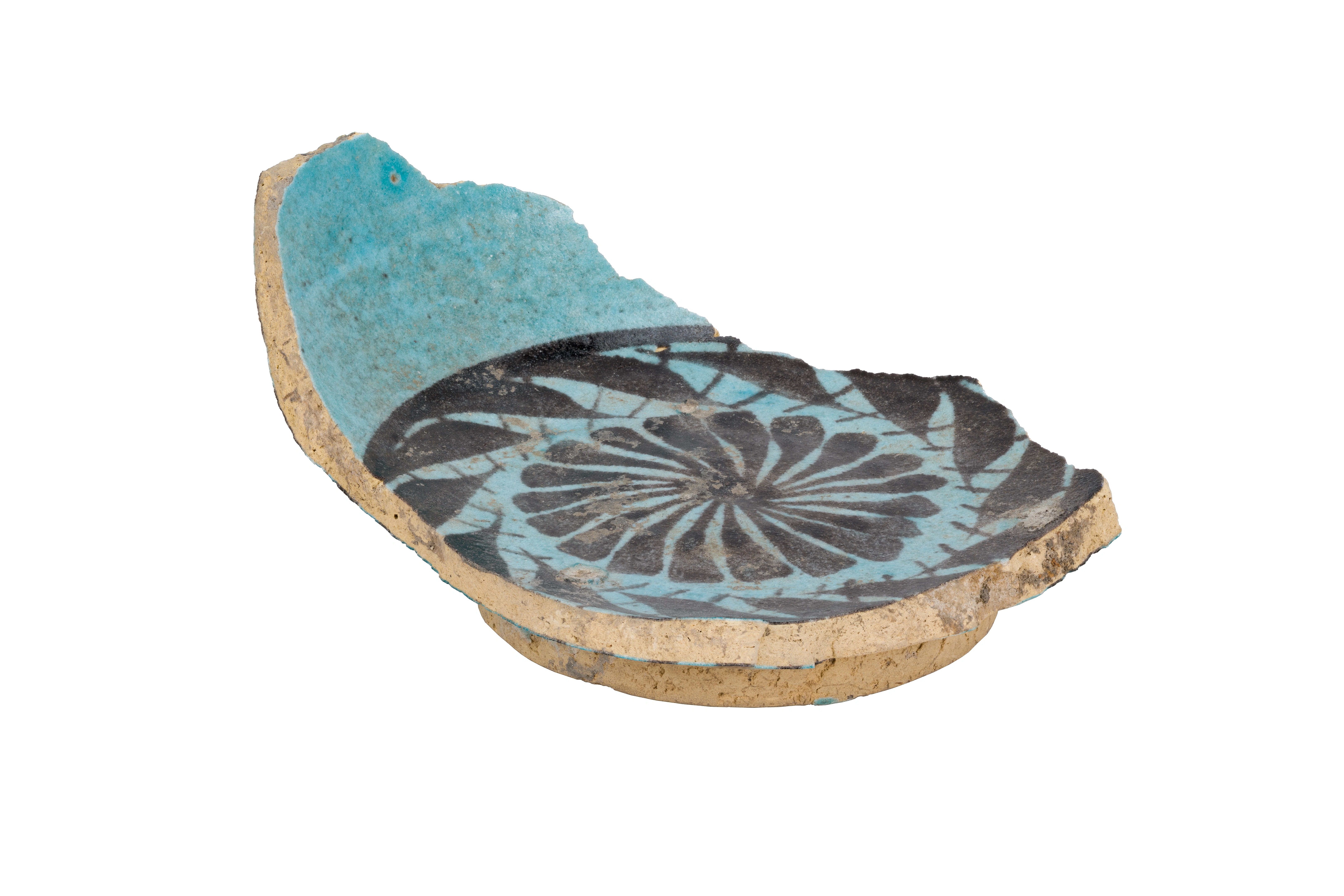
Bowl (fragment)
15th century. Tashkent. Ceramic; glaze. 5.8 × 13.7 cm
Audio guide
Audio available in: UZ
Description
This fragment of a fifteenth-century ceramic bowl from Tashkent illustrates the refined craftsmanship of everyday objects produced during the Timurid period. Even a small surviving piece such as this reveals important features of the artistic traditions of the region.
At the center of the composition is a stylized rosette, a common motif in Islamic ornament. Circular compositions of this type are often associated with ideas of harmony, balance, and the ordered structure of the universe. The rhythmic arrangement of the petals creates a subtle sense of movement across the surface.
The contrast between the dark decoration and the turquoise background was achieved through the underglaze painting technique. Artisans first applied a light-colored engobe, then painted the design using mineral pigments, and finally covered the surface with a transparent colored glaze. This method ensured both the durability of the decoration and the distinctive brilliance of the colors.
The form of the vessel is also characteristic. Hemispherical bowls with ring bases were widely used due to their stability and practicality within the dining traditions of the Islamic world.
Objects such as this demonstrate how even utilitarian ceramics reflected the sophisticated aesthetic values of Timurid urban culture.