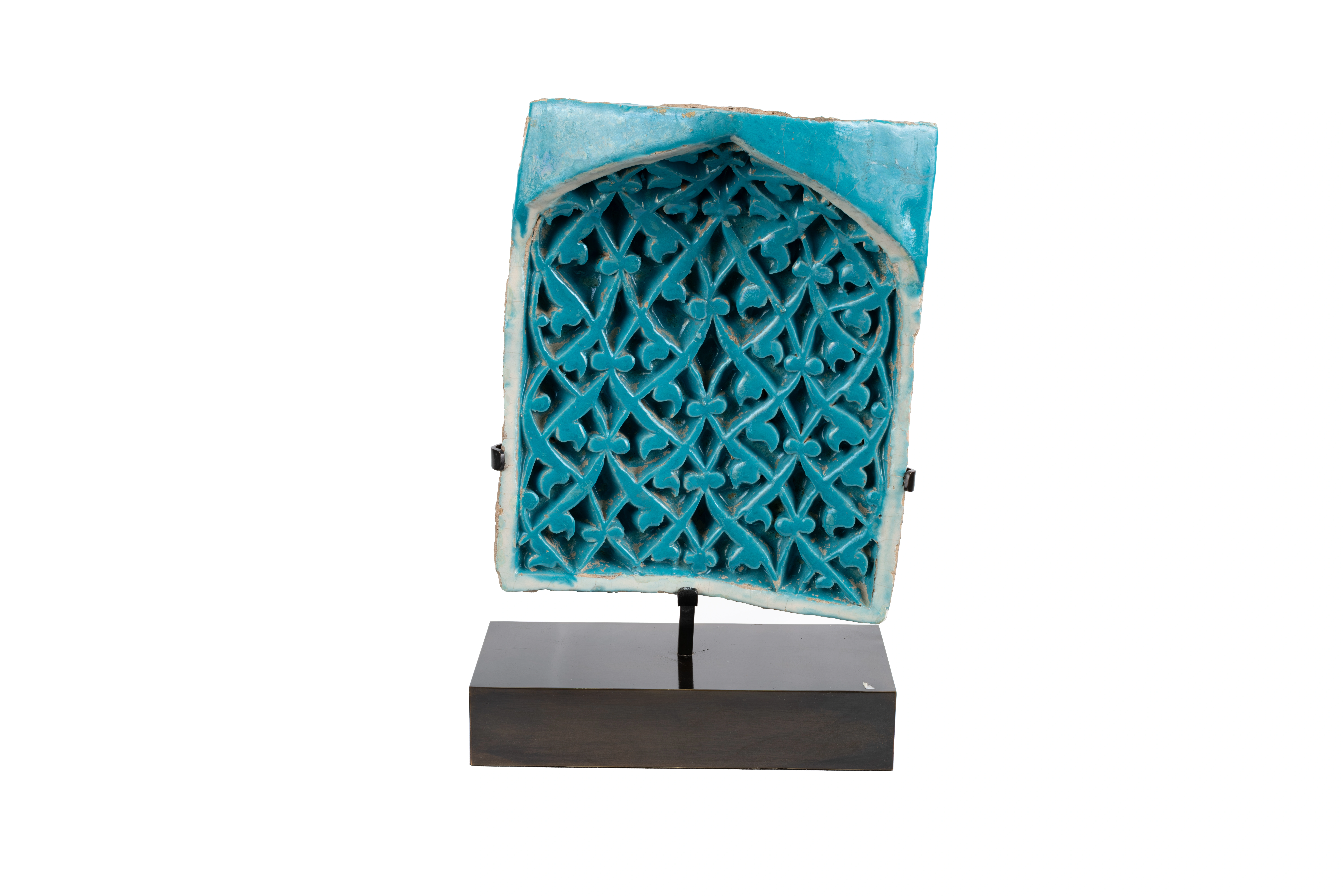
Muqarnas (Architectural Element)
15th century. Samarkand. Shah-i-Zinda. Ceramic; colored pigments, glaze. 30 × 23.9 × 12 cm
Audio guide
Description
This object is a muqarnas, an architectural element characteristic of Islamic architecture during the Timurid period. The fragment originates from Samarkand, most likely from the famous Shah-i Zinda necropolis.
Muqarnas are often described as “stalactite” architectural forms. They consist of complex, tiered cells used to create a visual transition between architectural elements—for example, between a square chamber and a circular dome. They frequently decorated niches, vaults, portals, and mihrabs in mosques and mausoleums.
This example is made of ceramic and covered with turquoise glaze. Turquoise held symbolic significance in Timurid architecture, representing the sky, eternity, and spiritual transcendence.
The surface is carved with intricate vegetal arabesques. The deeply cut ornament produces dramatic contrasts of light and shadow, giving the solid ceramic surface the appearance of delicate lacework.
Elements like this were widely used in the mausoleums of the Shah-i Zinda complex, where Samarkand craftsmen achieved extraordinary mastery in architectural ceramics.
This fragment illustrates how Timurid architecture combined structural ingenuity with refined decorative artistry and symbolic color traditions.