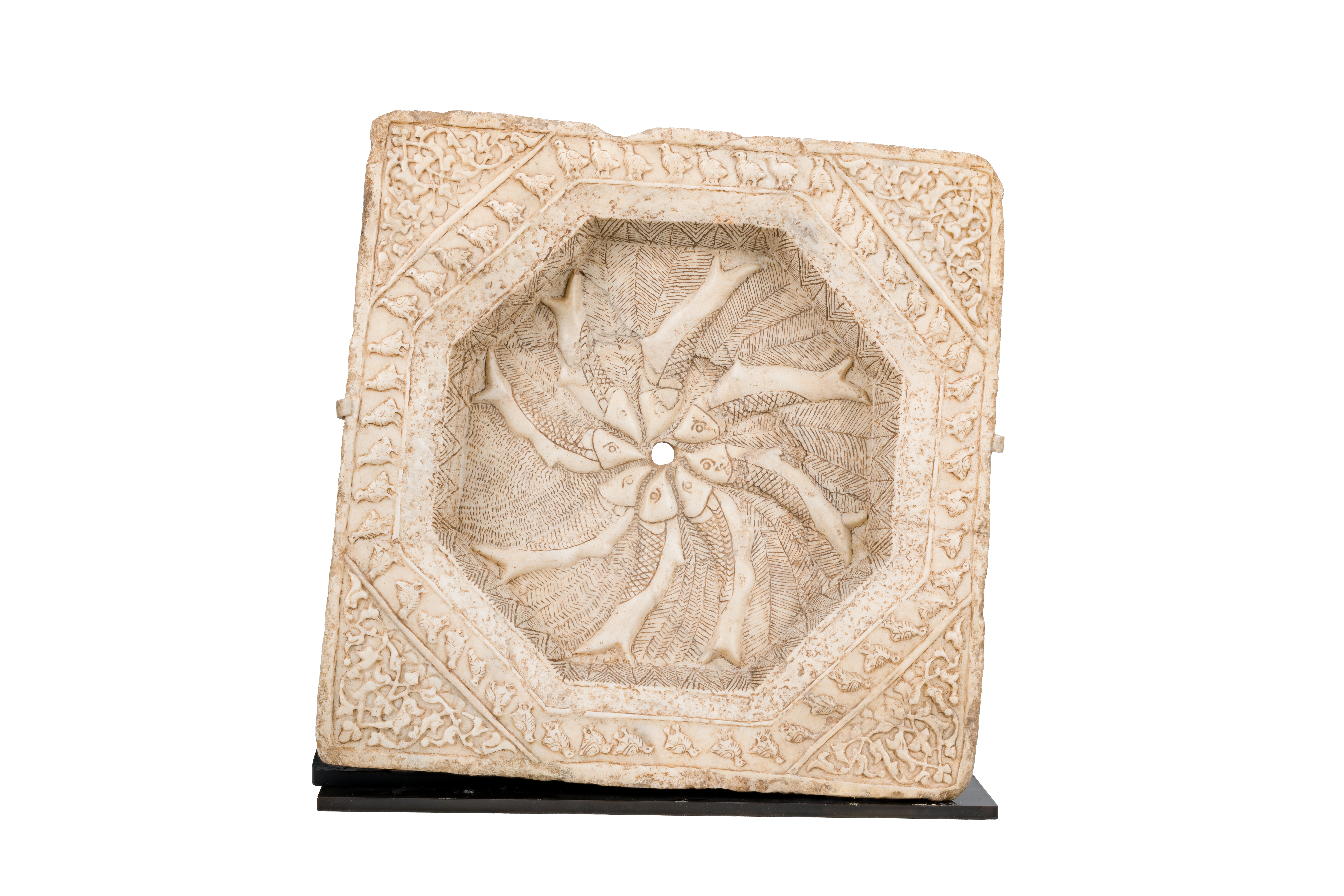
Fountain
14th–15th centuries. Central Asia. Marble. 49.2 × 48.5 × 10 cm
Audio guide
Description
This marble fountain element dates to the fourteenth–fifteenth centuries CE and belongs to the architectural tradition of the Timurid period.
At the center of the slab is a small opening from which water once flowed. From this point, shallow radial channels distribute the water across the carved surface, creating a gentle sound and a delicate pattern of flowing streams.
Fountains such as this were commonly installed in palace courtyards, madrasas, and garden pavilions. In the hot climate of Central Asia, they served both practical and aesthetic purposes, cooling the air while enhancing the architectural setting.
In Islamic culture water symbolized purity, life, and the gardens of paradise. As a result, water features became essential elements of architectural design throughout the region.
The surface of the marble is richly carved with geometric and vegetal ornamentation typical of Timurid decorative art. The finely cut patterns transform the stone into an intricate decorative surface where light and shadow enhance the visual depth of the design.
This fountain fragment illustrates how architecture, ornament, and flowing water were combined to create harmonious and contemplative spaces in the Timurid world.