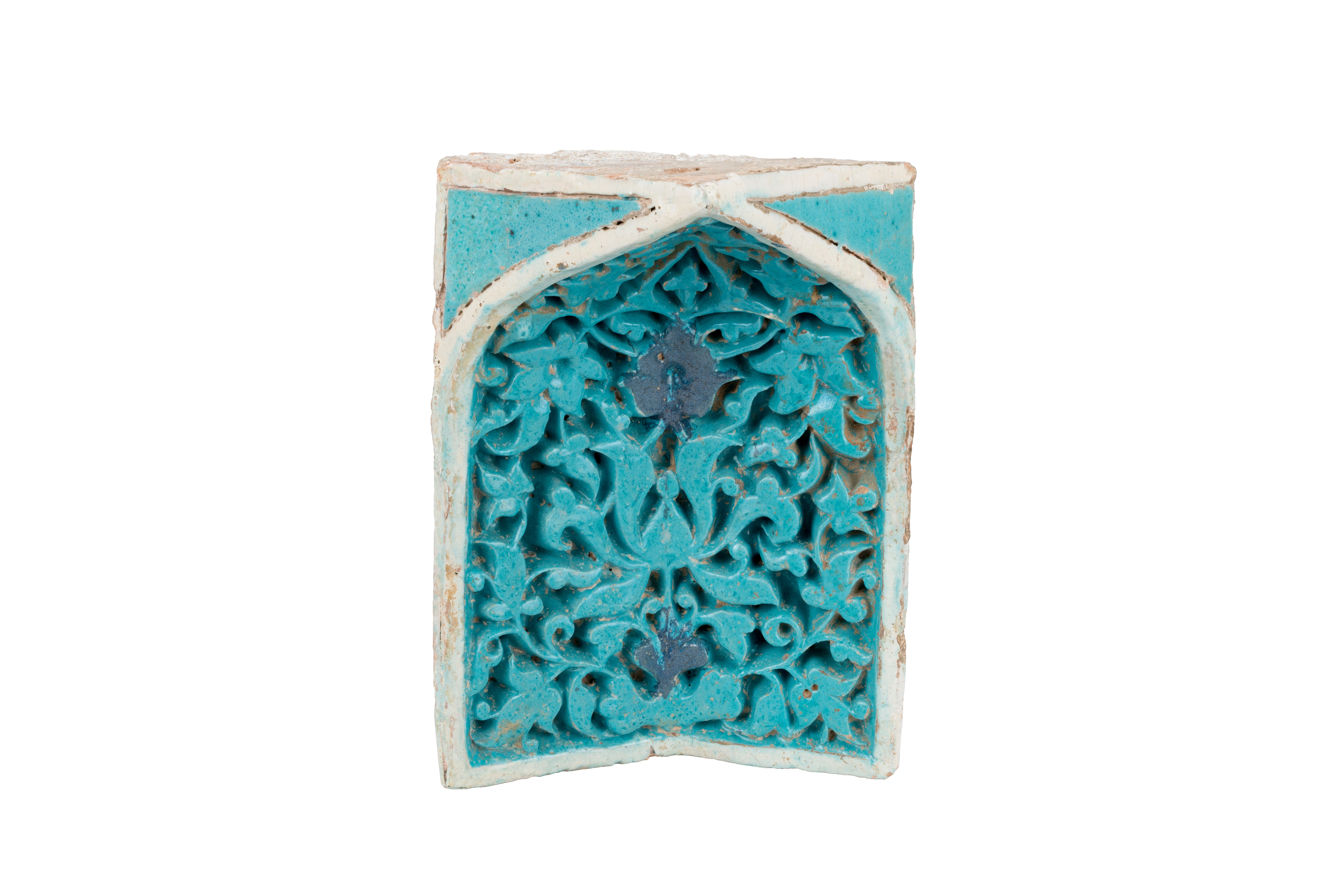
Muqarnas (Architectural Element)
15th century. Central Asia, Samarkand, Shah-i-Zinda. Ceramic; colored pigments, glaze. 29.5 × 21.4 × 16.6 cm
Audio guide
Description
This object is a fragment of muqarnas, an architectural element characteristic of Timurid monumental architecture. The fragment most likely originates from the famous Shah-i Zinda necropolis in Samarkand, one of the most important architectural ensembles of the fifteenth century CE.
Muqarnas consist of complex cellular forms used as decorative transitions between architectural elements. They were commonly placed in vaults, portals, niches, and mihrabs, creating a layered composition resembling stalactites.
This piece is made of ceramic and covered with turquoise glaze. In Timurid architecture turquoise symbolized the sky, spirituality, and eternity, and it became one of the defining colors of Samarkand’s monuments.
The surface is decorated with intricate vegetal arabesques carved in relief. The depth of the carving creates dramatic contrasts of light and shadow, enhancing the decorative effect.
In architectural settings such elements were assembled into elaborate compositions that covered large surfaces of walls and vaults.
This fragment illustrates the remarkable mastery of Timurid ceramic decoration and the sophisticated ornamental language of fifteenth-century CE Samarkand architecture.