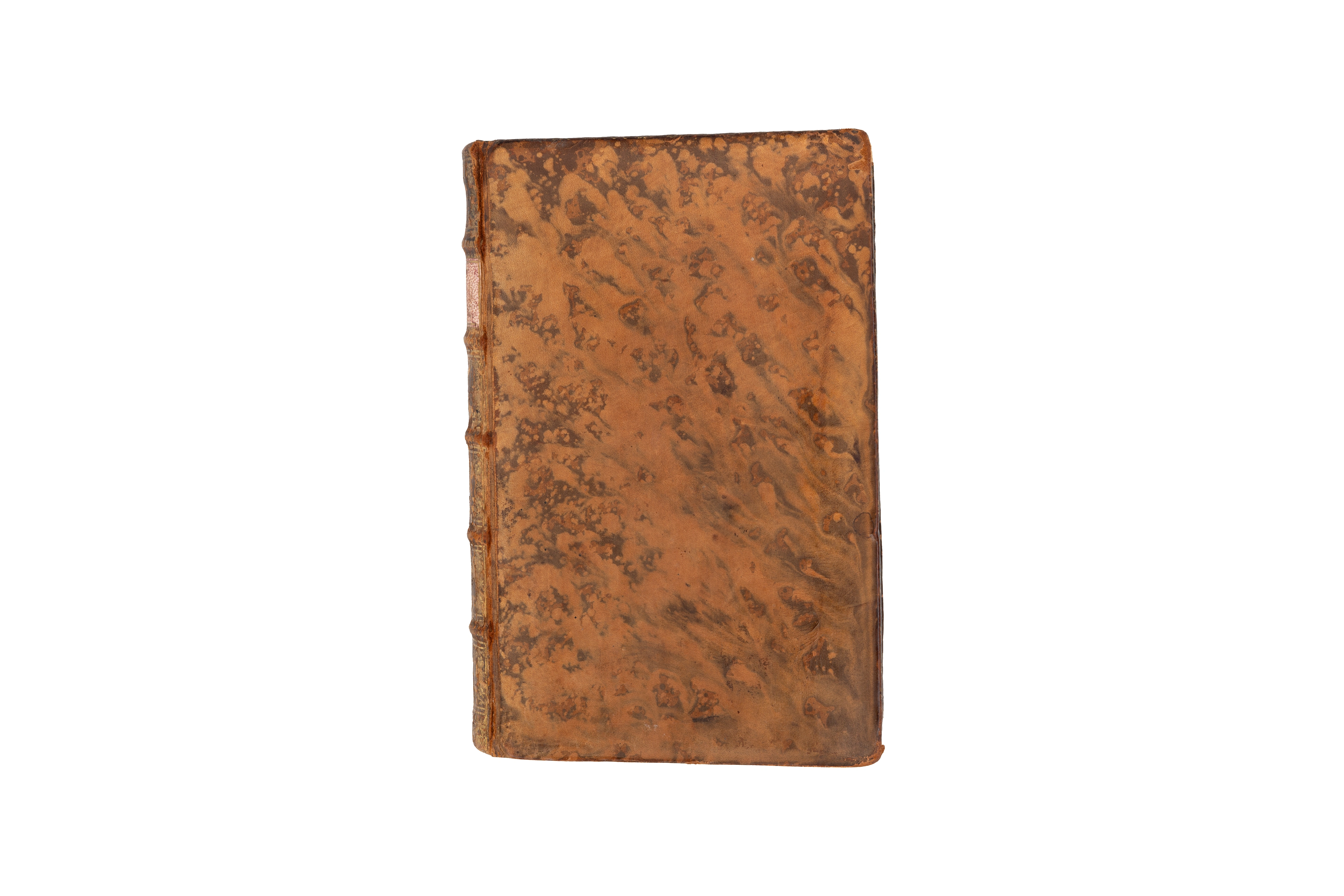
“History of Timurbek”
Sharafuddin Ali Yazdi. 1723. Delft. French. Paper; printed edition. 16.4 × 10.7 cm. WOSCU collection
Audio guide
Audio available in: RU
Description
This book is a European edition of one of the most important historical works about Amir Timur – the famous “Zafarnama” by Sharaf al-Din Ali Yazdi.
Printed in Delft in 1723, it is a French translation by the orientalist François Pétis de la Croix. This publication played a crucial role in introducing Enlightenment-era Europe to the history of the Timurids and Central Asia.
The frontispiece portrait of Timur deserves special attention. It is not an authentic likeness, but a European interpretation. The artist presents him as an “Eastern emperor,” shaped by Western visual conventions, placing Timur alongside figures such as Alexander the Great or Julius Caesar.
The inclusion of a map is equally significant. It reflects the European scholarly effort to systematize knowledge about the East. Through such visual tools, readers could better understand the geography of Transoxiana, the Caspian region, and the Silk Road networks.
The book’s compact, almost pocket-sized format suggests its practical use. It was designed for travelers, diplomats, and scholars. The leather binding with its marbled pattern exemplifies the refined printing culture of Delft in the early 18th century.
Importantly, this edition represents not just a translation but a cultural reinterpretation. Through Yazdi’s narrative, European readers explored models of governance, warfare, and rulership associated with the Islamic world.
This artifact demonstrates how the intellectual heritage of Islamic Central Asia continued to shape global thought centuries after Timur’s time.