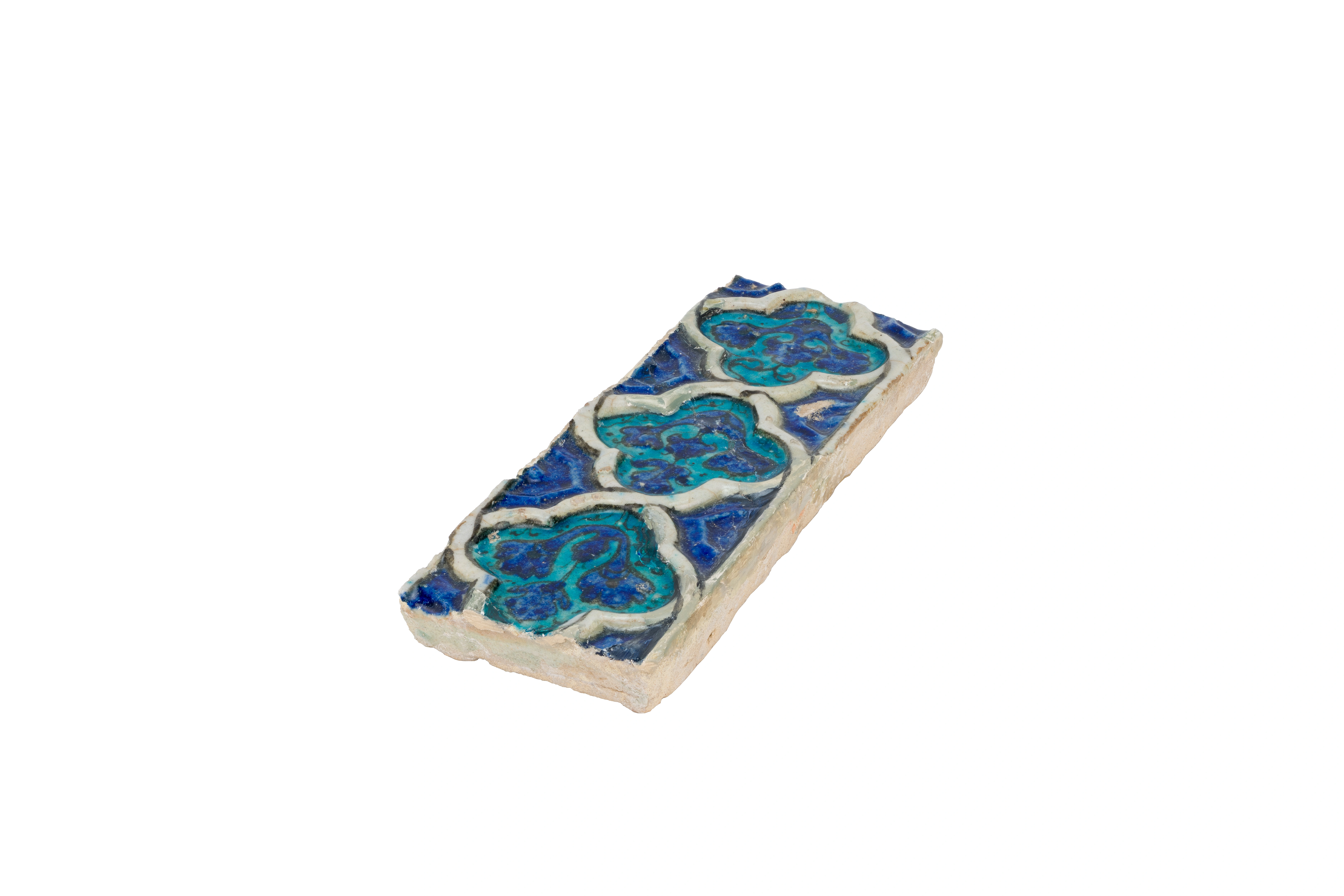
Architectural Tile
Late 14th century CE. Samarkand. Ceramic. 26.4 × 9.8 cm
Audio guide
Audio available in: UZ
Description
This object is an architectural tile from the late 14th century, created in Samarkand during the flourishing cultural era of Amir Timur.
Tiles of this type decorated the walls, portals, and domes of monumental buildings in the Timurid capital. Because of the extensive use of such blue ceramics, Samarkand was often called the “Blue City.”
The tile is made using a relief glazed ceramic technique. The clearly defined color boundaries suggest the possible use of the cuerda seca method, meaning “dry cord.” Artisans traced the outlines of the design with a mixture of manganese and oil. During firing, the oil burned away, leaving dark lines that separated the colored glazes and preserved the clarity of the pattern.
The palette of deep cobalt blue, turquoise, and white is typical of Timurid architecture. These colors symbolized the sky, water, and spiritual purity.
The ornament features a stylized trefoil motif resembling a flower or cloud form. Such motifs entered Central Asian art through cultural exchanges with China along the Silk Road and were reinterpreted by Islamic craftsmen.
Elongated tiles like this were often used as vertical friezes or frames for architectural niches in Samarkand’s great monuments, including the Shah-i Zinda complex, the Bibi-Khanum Mosque, and the Gur-e Amir mausoleum.