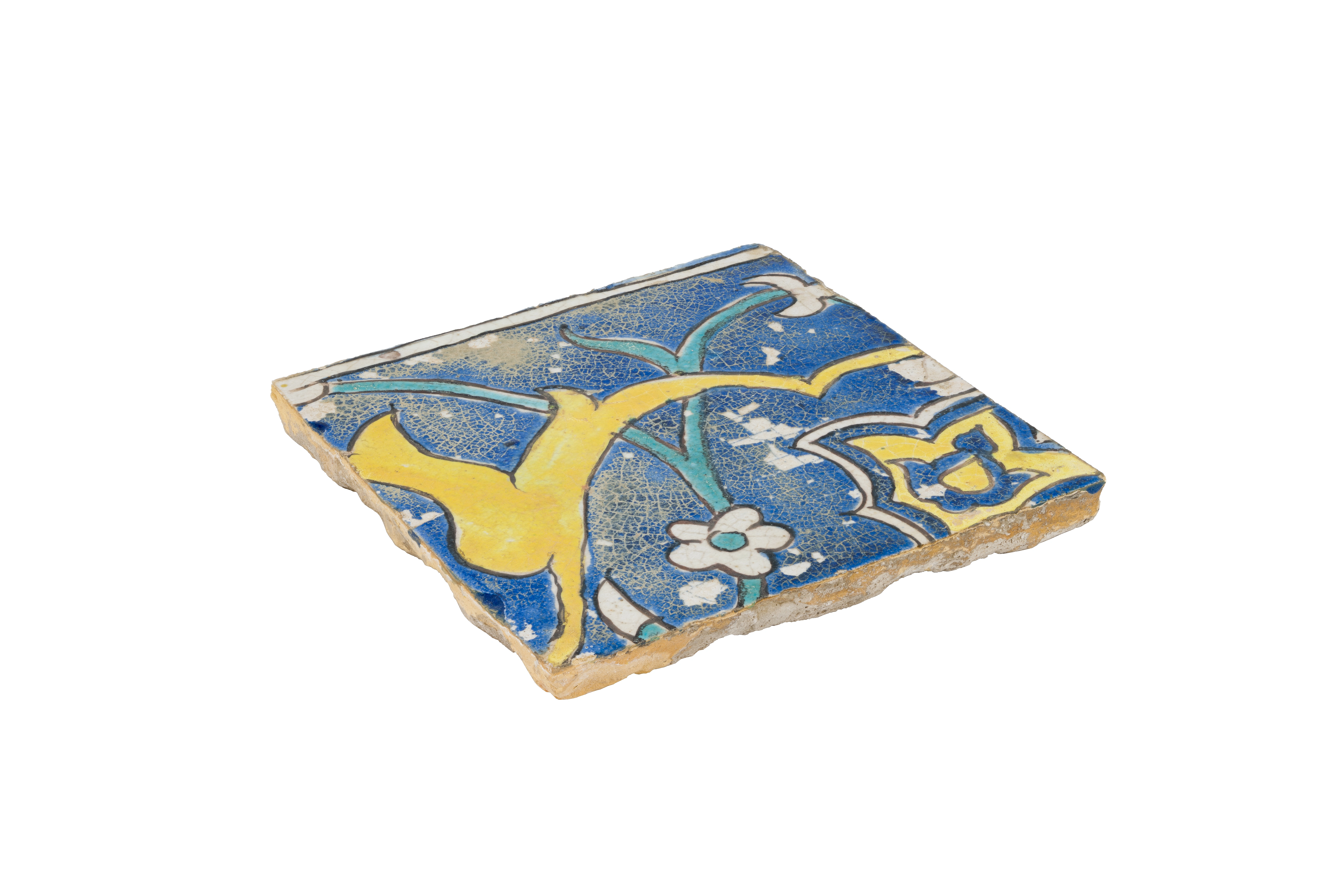
Architectural Tile Fragment
17th century. Bukhara. Ceramic. 23.5 × 23.5 cm
Audio guide
Audio available in: UZ
Description
This ceramic tile from seventeenth-century Bukhara is a fragment of architectural decoration that once adorned the walls of madrasas, mosques, and palaces.
The tile was produced using the cuerda seca technique, meaning “dry cord.” Before firing, artisans drew the outlines of the design with a greasy mixture containing manganese. These dark lines acted as barriers, preventing different colored glazes from mixing during firing and ensuring the clarity of the pattern.
The palette of deep cobalt blue, white, and bright yellow was especially characteristic of ceramic decoration during this period.
The ornament itself is a vegetal design known as islami, composed of flowing stems, leaves, and flowers. In Islamic art such patterns often symbolize the eternal garden and the harmony of divine order.
Tiles like this were widely used in Bukhara during the rule of the Ashtarkhanid dynasty. At that time, Central Asian artisans maintained strong artistic connections with Safavid Iran, which influenced the rich colors and expressive decorative style of architectural ceramics.