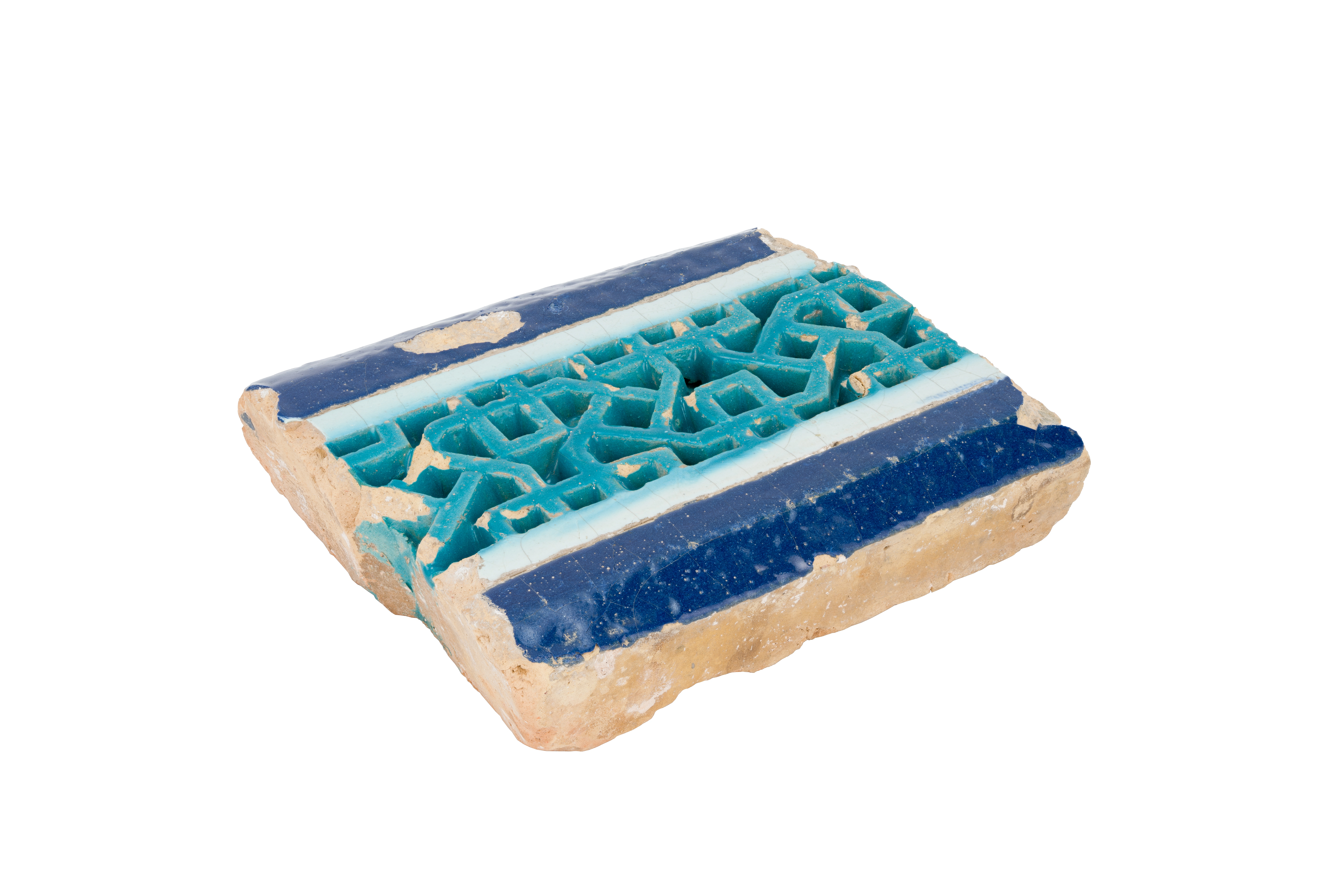
Architectural Tile Fragment
15th century. Mawarannahr. Ceramic. 23.5 × 18 cm
Audio guide
Audio available in: RU
Description
This fragment of an architectural tile dates to the 15th century and originates from Mawarannahr, the historical region of Central Asia.
Tiles of this type, known as kashin, were widely used to decorate the facades of mausoleums, mosques, and madrasas during the Timurid period. They formed intricate ornamental compositions that transformed architecture into a luminous surface of color and geometry.
The fragment was produced using the technique of carved glazed pottery. The pattern was first carved into the clay surface and then covered with colored glazes. The deep blue and turquoise tones seen here were especially characteristic of Timurid architectural decoration.
At the center of the design is a geometric pattern known as girih. This complex network of interlacing lines creates a sense of endless repetition. In Islamic art such patterns symbolize the harmony and order of the universe.
Similar decorative elements can be seen in the famous Shah-i Zinda complex in Samarkand, where architectural ceramics reached an extraordinary level of artistic and technical sophistication.