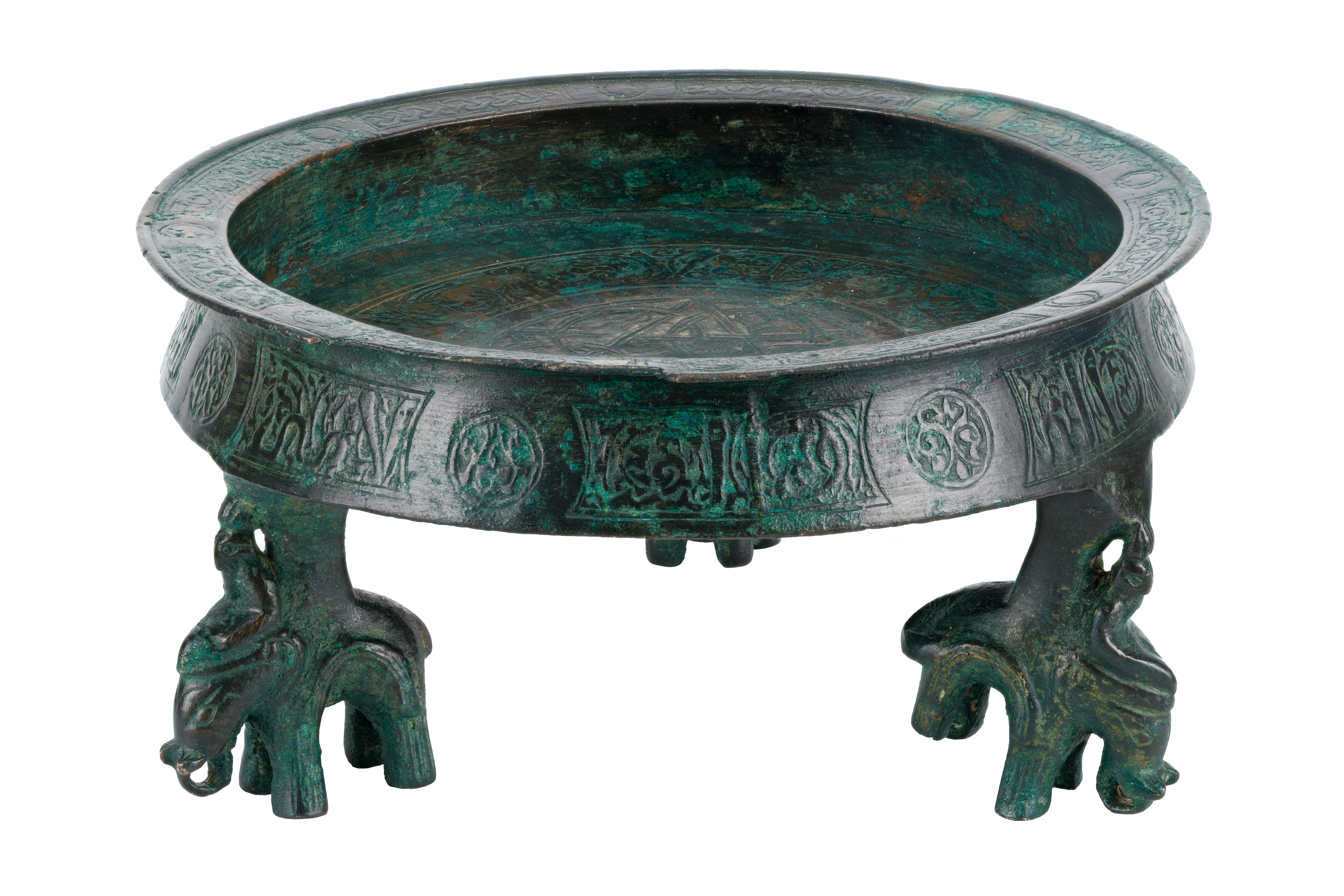
Bronze Incense Burner with Elephant Legs
11th–12th centuries CE. Central Asia. Bronze; casting9 × 18 cm
Audio guide
Description
This bronze incense burner dates to the 11th–12th centuries and stands on three legs shaped like elephants. Such censers were used to burn aromatic substances, an important practice in both daily and ceremonial life across the Islamic world. Fragrance purified the space, created a calm atmosphere, and accompanied social gatherings and rituals.
The form is striking: a rounded bowl rests on sculpted elephant feet. The elephant motif, inherited from earlier Iranian and Indian artistic traditions, symbolized strength, stability, and protection. Here it is transformed into a decorative yet functional element of a household object.
Bronze, cast as a single piece, ensured durability and even heating. Smoke from burning incense would rise gently through openings in the vessel, filling the room with scent.
This incense burner exemplifies how medieval Central Asian craftsmen combined practical function with rich symbolism, turning everyday objects into expressive works of art.