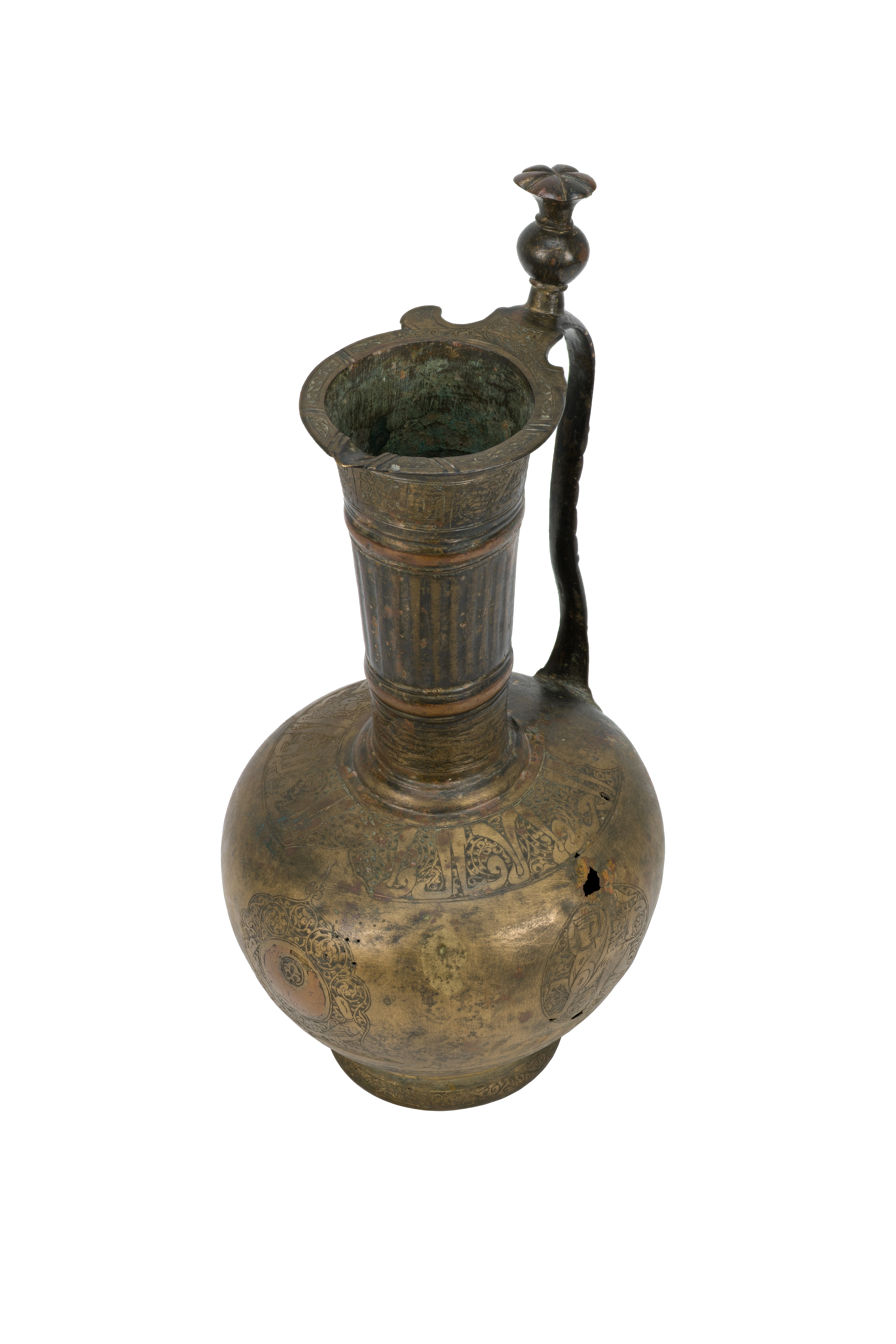
Kumgan (Ablution Jug)
9th–11th centuries CE. Central Asia. Bronze; casting. 35.4 × 17 cm
Audio guide
Description
This bronze vessel is kumgan, a type of water jug widely used in Central Asia between the 9th and 11th centuries. Such vessels were primarily intended for washing hands and performing ritual ablutions, both in everyday life and in religious contexts.
The shape of the kumgan is carefully balanced: a broad rounded body, a tall neck, and a graceful handle ensure ease of use and visual harmony. These proportions reflect the high level of craftsmanship and a clear understanding of function.
The surface is decorated with restrained ornamental motifs cast directly into the bronze. The decoration is subtle yet expressive, enhancing the object’s dignity without distracting from its purpose. Kumgans like this one were common in urban households, madrasas and near mosques.
In Islamic culture, water symbolizes purification, order, and spiritual readiness. For this reason, vessels such as this kumgan held a special place in daily and communal life, uniting practical function, symbolic meaning and refined artistic tradition.