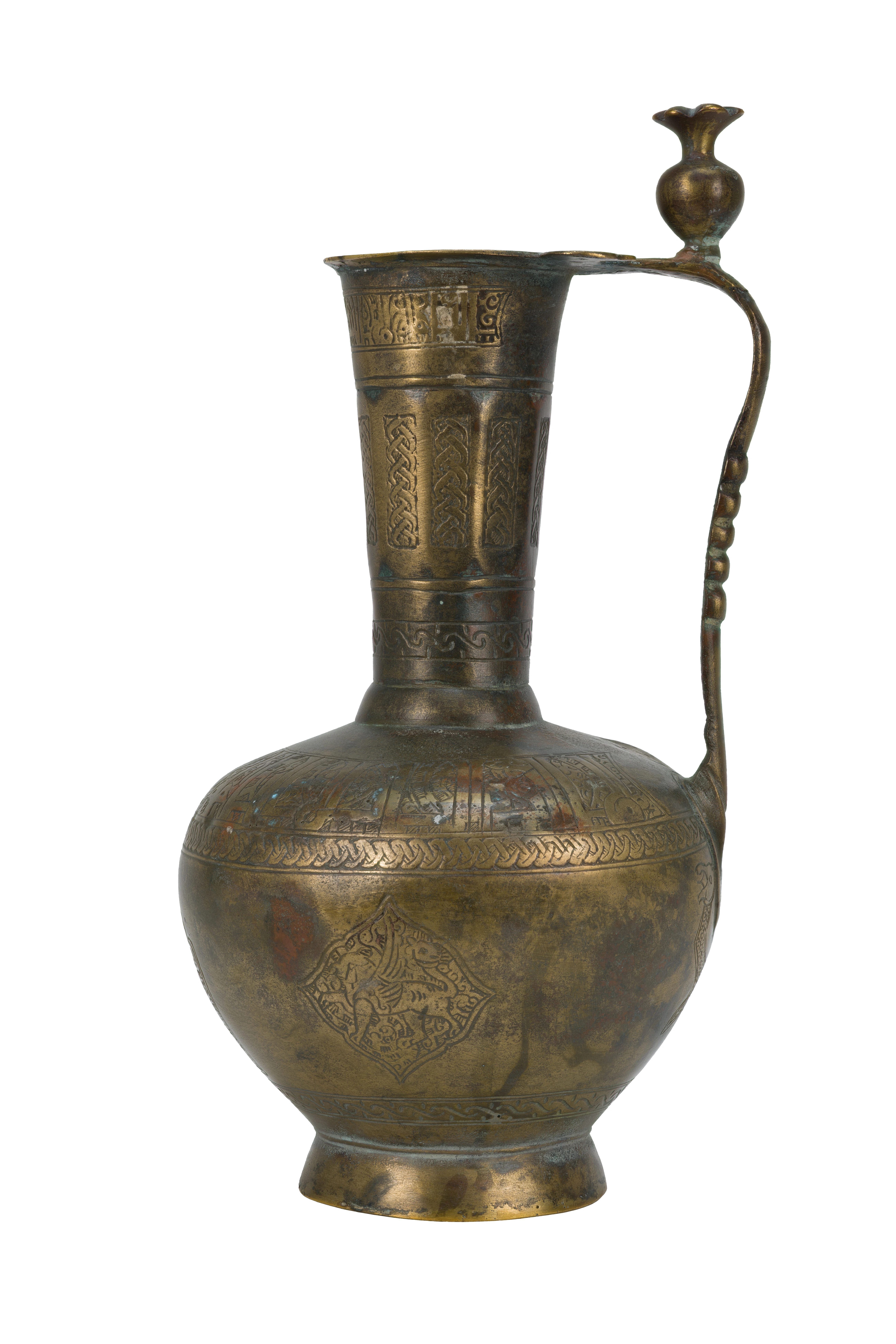
Kumgan (Ablution Jug)
Ghaznavid Period. 11th century CE. Bronze; casting, engraving. 29.2 × 14.2 cm. Museum of Islamic Art, Jeddah, Saudi Arabia
Audio guide
Description
This object is kumgan, a traditional vessel used for water during ritual ablution. In Islamic civilization, ablution performed before prayer is understood not only as physical cleansing, but as a moment of spiritual preparation and discipline.
Its wide body stores water, the elongated spout allows a controlled flow, and the raised handle provides balance when pouring. Such a design made the vessel suitable for domestic use, mosques, and communal spaces.
Cast in bronze, the ewer is both durable and resistant to frequent contact with water. Engraved decoration on its surface reflects the refined aesthetic sensibilities of the Ghaznavid period, when even everyday objects were shaped with artistic intention and symbolic meaning.
Areas of wear and the softened surface reveal prolonged use, emphasizing the object’s role in daily life. In the exhibition, this kumgan represents the culture of purity and discipline underlying the Islamic tradition, and shows how faith, craft, and daily routine were combined into a single value system.