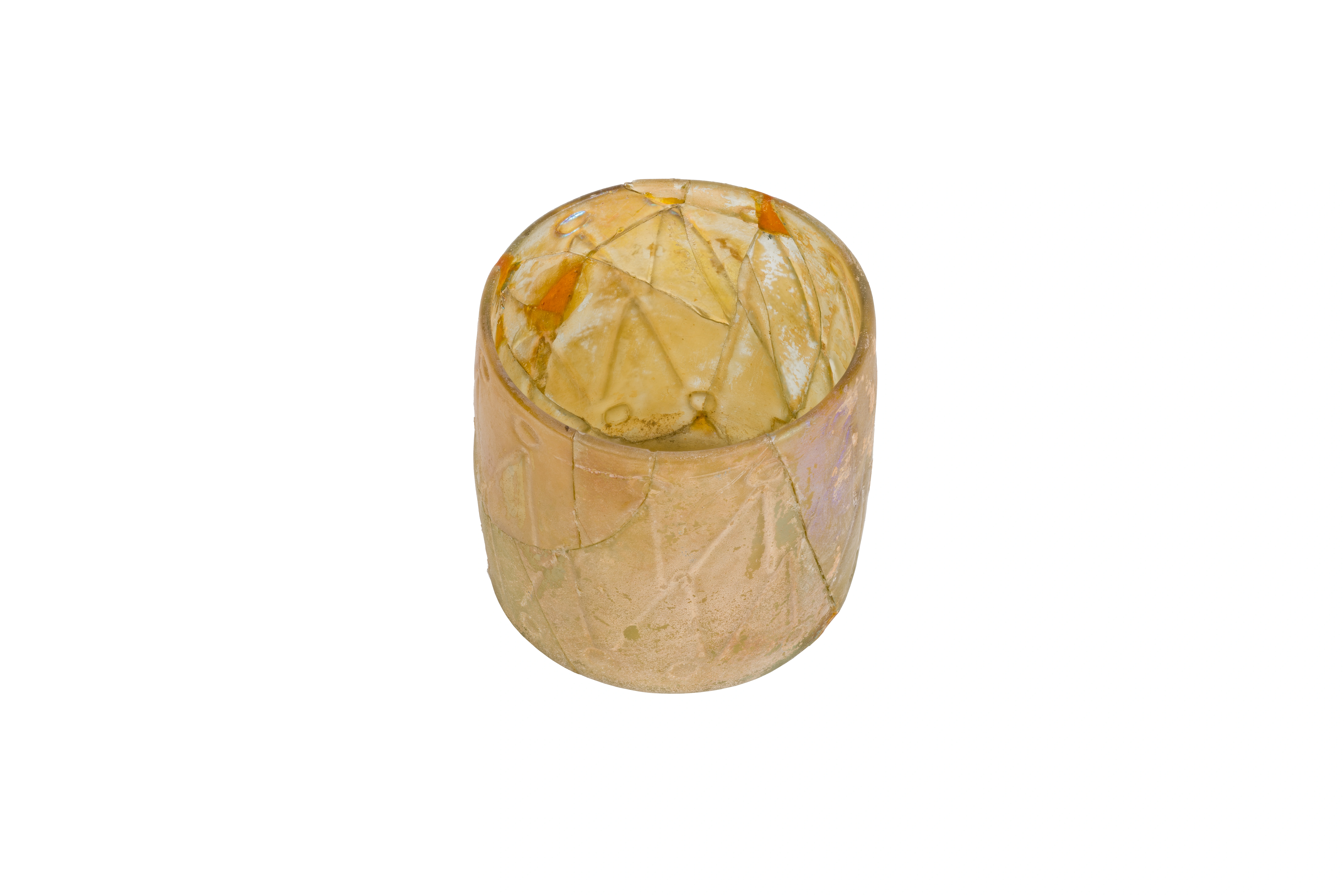
Glass Vessel
9th–10th centuries СЕ. Sogd. Glass8.4 × 8.8 cm
Audio guide
Description
This glass vessel was produced in Sogdiana during the 9th–10th centuries, a region renowned for its advanced glassmaking traditions in the early Islamic world. Its compact proportions, balanced form, and carefully finished walls suggest an object intended not for everyday domestic use, but for elite or scholarly environments.
The translucent glass, with its subtle play of light, reflects precise control over material composition and firing temperature. Such vessels were commonly used to store precious liquids, as medical preparations, aromatic substances, or alchemical solutions. In the writings of Ibn Sina, transparent containers are emphasized as essential tools for observing changes in color, clarity, and consistency during medical and chemical processes.
Sogdian glassware was closely linked to scientific practice. Objects of this type appear in contexts associated with courtly medicine, pharmacies, and experimental work. Their form allowed not only storage but also visual examination of contents, an important feature in scientific observation.
Fine cracks, surface clouding, and material fatigue developed through prolonged use and chemical interaction over time. This vessel illustrates how, during the First Renaissance, refined craftsmanship supported the growth of medicine and natural sciences, blending functionality with intellectual culture.