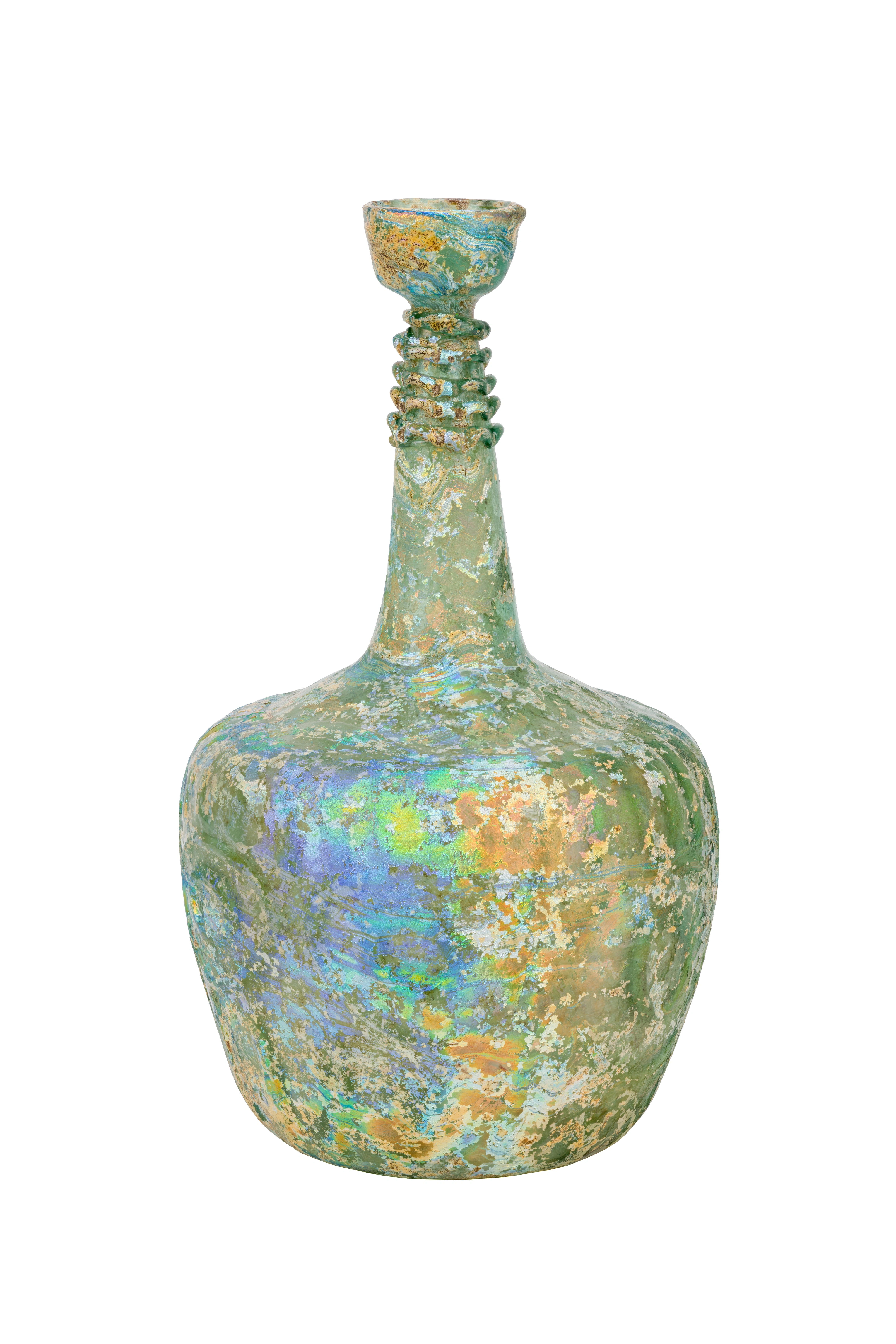
Glass Vessel
11th–12th centuries CE. Samarkand. Glass. 20.3 × 11.1 cm
Audio guide
Description
This vessel draws attention through the play of color on its surface. Shimmering green, golden, and blue tones create the impression that the glass continues to change when exposed to light.
The vessel was produced in Samarkand during the 11th–12th centuries, a time when the city was one of the key centers of craftsmanship and trade in Central Asia. In the period presented as the First Renaissance, glassmaking reached a high level of technical and artistic development. Such vessels were commonly used to store valuable liquids–oils, perfumes, or medicinal substances–and also conveyed the status of their owner.
The broad, rounded body provides stability, while the elongated neck with ringed elements allows for controlled handling and pouring. The surface displays iridescence, an effect caused by long-term chemical interactions within the glass over centuries. Originally clear or lightly tinted, the material gradually acquired a complex, layered coloration.
Cracks, losses, and surface irregularities attest to the object’s long history. This vessel reflects both the technical expertise of Samarkand’s craftsmen and the urban culture of the 11th–12th centuries, where functional objects also carried aesthetic value.