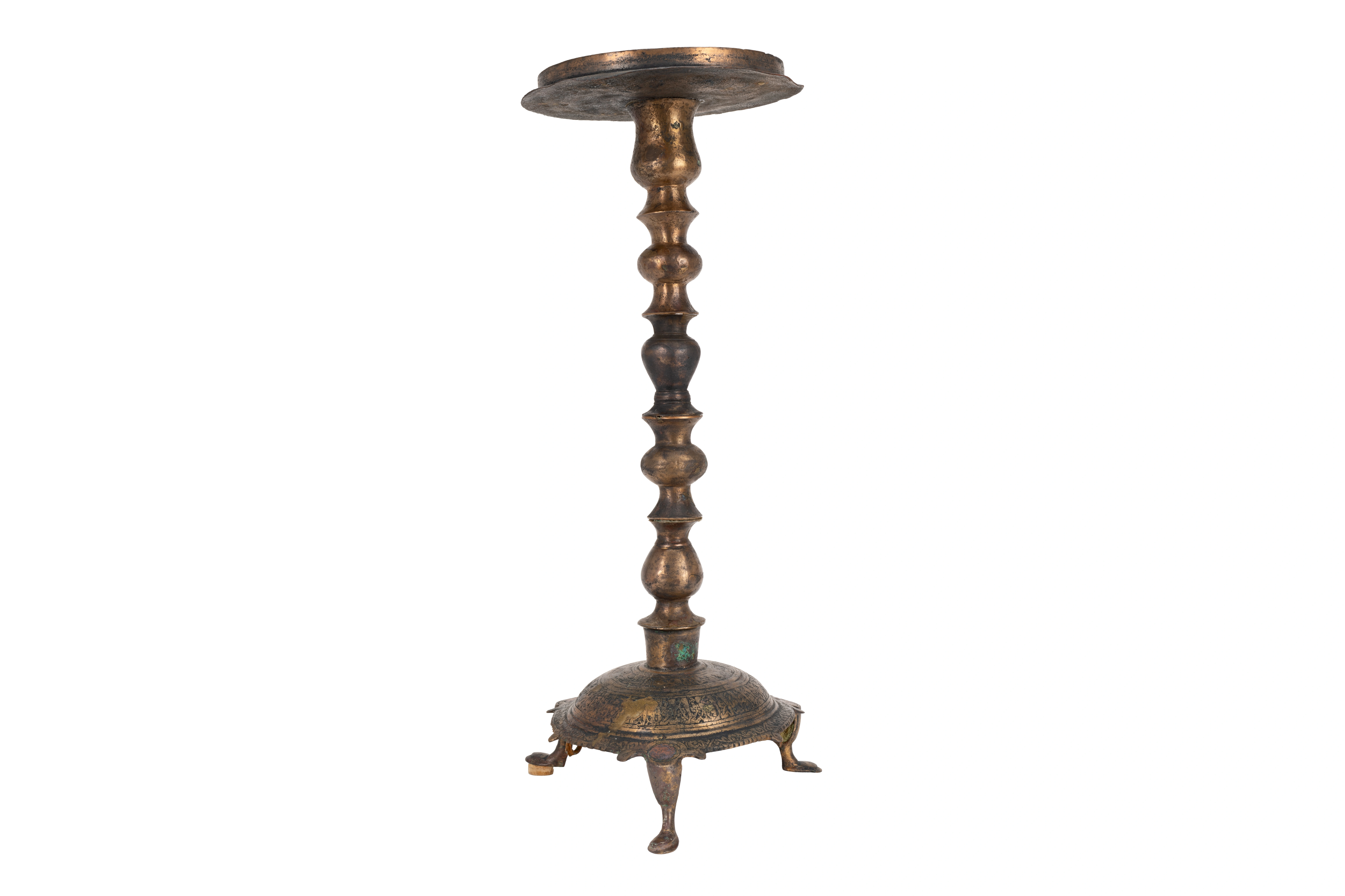
Oil Lamp Stand
12th–13th centuries СЕ. Mawarannahr. Bronze; casting, decorated. 58.5 × 20 × 22.6 cm
Audio guide
Audio available in: UZ
Description
This object represents a type of artifact that held not only a practical function but also a profound symbolic meaning in Islamic culture – a stand for an oil lamp.
During the 12th–13th centuries, such bronze lamp stands illuminated mosques, madrasas, and the residences of scholars in Mawarannahr. In Islamic thought, light symbolized knowledge and divine truth. The famous Qur’anic “Light Verse” (Surat al-Nur) compares divine guidance to the light of a lamp, reinforcing this symbolic association.
The form of the stand also reflects artistic traditions of the period. Its vertical structure with alternating bulbous elements recalls the architectural rhythm of minarets, visually connecting interior objects with urban architectural forms.
The base is equally significant. The stylized animal-shaped feet reflect earlier artistic traditions of Sogdiana and Bactria, demonstrating how Islamic art in Central Asia absorbed and reinterpreted pre-Islamic decorative elements.
Its considerable height indicates that it functioned as a floor-standing lamp support, likely used to illuminate large interior spaces. Bronze objects of this quality required advanced casting techniques and were typically commissioned by wealthy patrons.
This artifact demonstrates how light in the culture of Central Asia symbolized not only illumination but also learning, scholarship, and spiritual enlightenment.