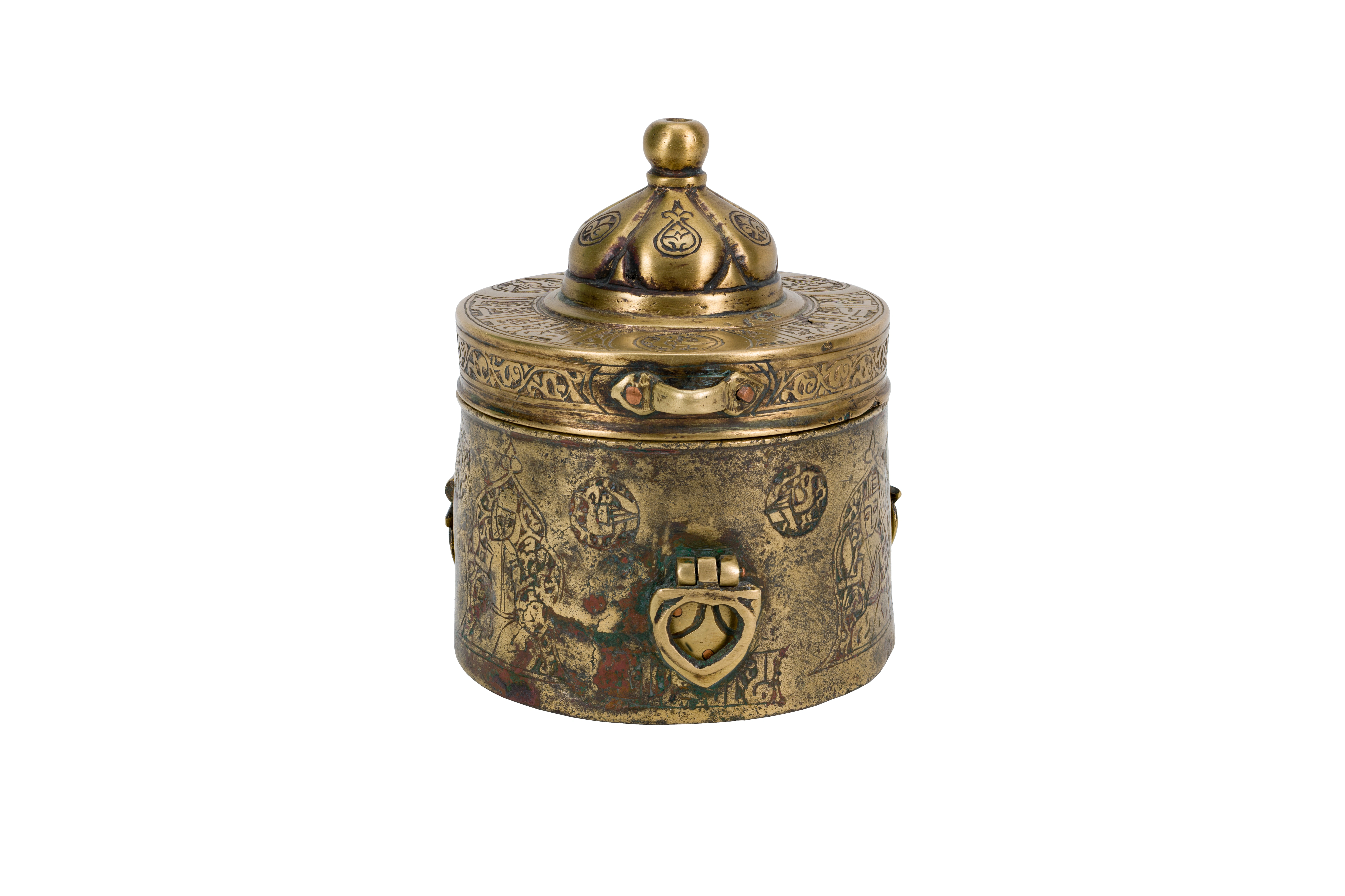
Inkwell
12th century СЕ. Fergana. Bronze; casting. 4.8 × 3.5 cm
Audio guide
Audio available in: UZ
Description
This object represents an essential tool without which the intellectual life of the Islamic world would have been impossible – an inkwell.
In the 12th century, bronze inkwells known as dawāt were more than simple writing implements. They were symbols of education and social prestige, typically owned by judges, administrators, scholars, and teachers engaged in the scholarly life of madrasas.
Writing held a special status in Islamic civilization. This is reflected in the Qur’an itself, where one chapter is titled Al-Qalam (“The Pen”), emphasizing the sacred importance of knowledge and writing.
The decoration is equally significant. The medallions with figural motifs and ornamental bands reflect artistic traditions of Transoxiana and Khurasan. Such imagery was sometimes associated with protection and good fortune.
The small rings on the sides indicate practical use. Inkwells of this type were often suspended from belts or straps, allowing officials and scholars to carry writing tools while traveling or performing administrative duties.
This small object illustrates the scale of intellectual culture in Central Asia, reminding us that the spread of Islam was closely connected with the expansion of literacy, bureaucracy, and scholarly traditions based on the written word.