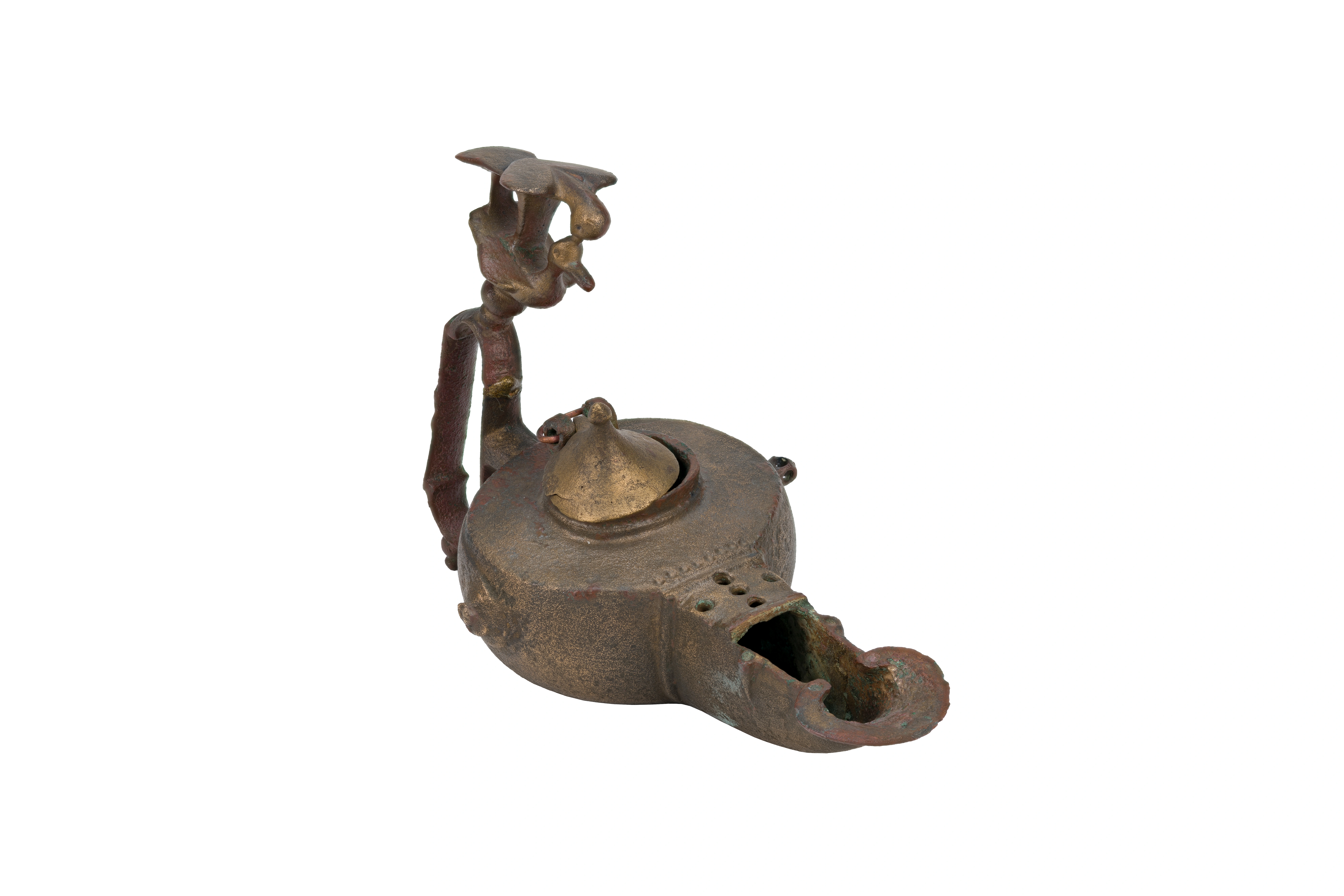
Oil Lamp
10th–11th century CE. Mawarannahr. Copper. 11.1 × 15.4 cm
Audio guide
Description
This object is defined not by movement or sound, but by light. An oil lamp shaped the rhythm of domestic life after sunset–marking the time for prayer, reading, and conversation. Its elongated spout directed the flame carefully, allowing efficient use of oil while reducing smoke.
The lamp was made of copper in the 10th–11th centuries in the region of Mavarannahr. Metalworking traditions made it possible to produce durable vessels with complex features such as a lid and handle. These elements helped regulate burning and made the lamp easier to carry between spaces.
In Islamic culture, light held both practical and symbolic meaning. It was associated with knowledge, clarity, and presence within a space. For this reason, lamps like this were used not only in homes but also in places connected with learning and reading.
Wear marks and surface darkening testify to long-term use. This lamp shows how, during the First Renaissance, technical skill supported everyday life, sustaining practices in which knowledge, faith, and daily routines were closely intertwined.