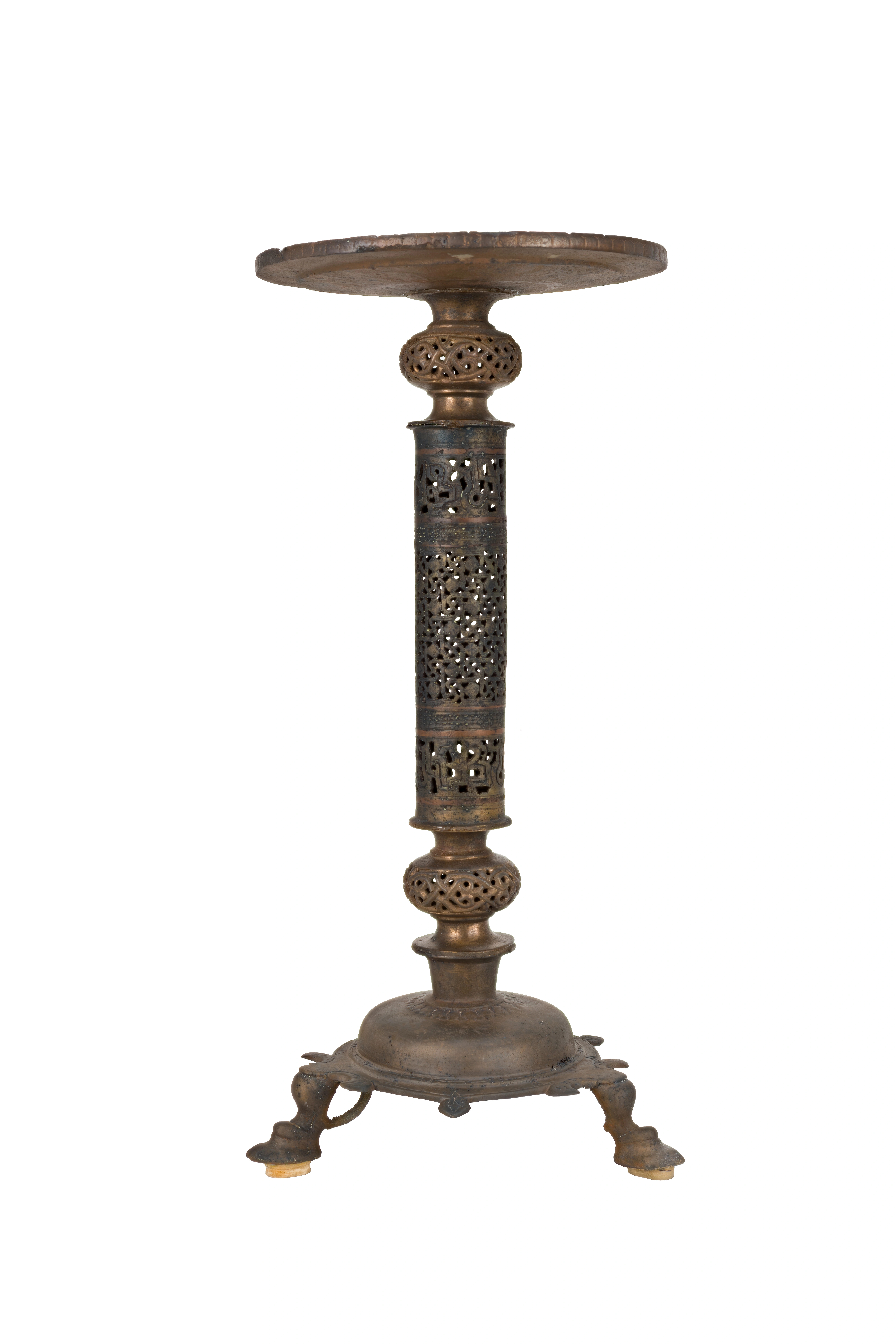
Oil Lamp Base
Seljuk Period. 11th–12th centuries CE. Central Asia. Bronze. 61.5 × 28 cm
Audio guide
Description
This bronze stand was designed specifically to hold an oil lamp, combining practical lighting needs with thoughtful construction. Its tall vertical profile elevated the flame, while the wide, flat base was intended to collect dripping oil, protecting floors and surfaces.
The object dates to the 11th–12th centuries, during the Seljuk period, a time of significant cultural and technological development in Central Asia. Such stands were used in diverse settings: urban homes, mosques, educational spaces, caravanserais, and mobile dwellings. The durable bronze structure made it suitable for both settled and itinerant lifestyles.
The pierced decoration in the central shaft served a functional role by improving air circulation around the flame and creating a subtle interplay of light and shadow. These features demonstrate a refined understanding of material properties and everyday use.
Surface patina and signs of long-term handling indicate sustained use over time. This stand illustrates how, during the First Renaissance, technical knowledge, aesthetic sensitivity, and practical requirements of different communities were integrated into a single functional form.