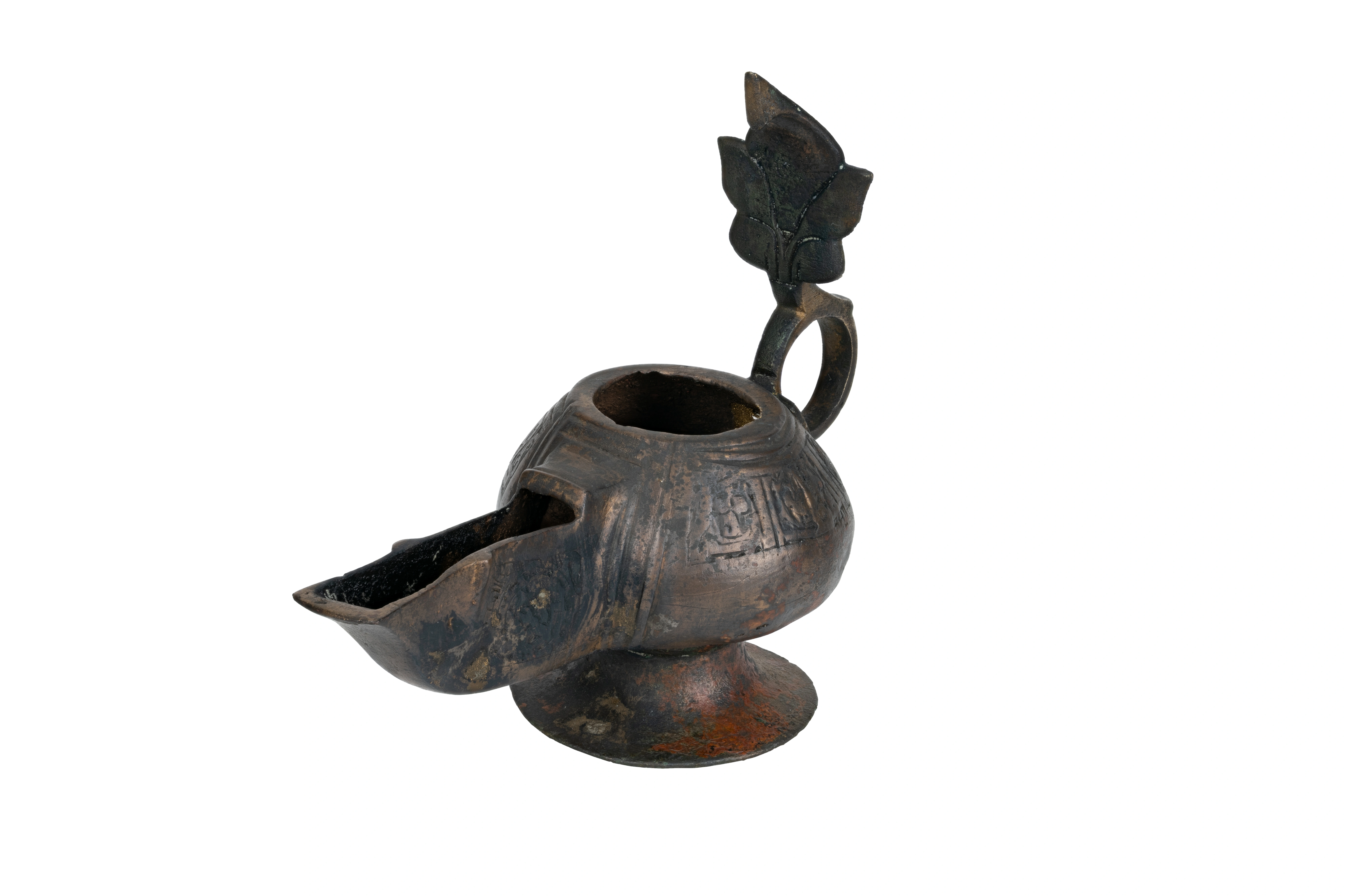
Oil Lamp
11th century СЕ. Bukhara. Copper. 11.9 × 14.6 cm
Audio guide
Audio available in: UZ
Description
This object is an 11th-century oil lamp produced in Bukhara, one of the major cultural centers of Central Asia during the Karakhanid period.
Its form is closely tied to function: the elongated spout held the wick through which the oil burned, while the vertical handle allowed the lamp to be carried easily. The handle terminates in a stylized vegetal motif, typical of Islamic decorative art.
The surface is adorned with engraved decoration. Such objects often carried short Arabic inscriptions — blessings for the owner, associated with prosperity, protection, and well-being. In this way, a utilitarian object also acquired symbolic meaning.
The lamp is made of copper, a material requiring advanced craftsmanship. Its production involved casting, shaping, and detailed surface engraving. Objects of this type were likely owned by affluent urban households and used in both domestic and educational or religious settings.
In the context of 11th-century Bukhara, the lamp also holds deeper significance. In Islamic culture, light is understood as a metaphor for divine knowledge. Oil lamps illuminated madrasas and libraries where scholars studied and copied manuscripts.
This object demonstrates how, during the flourishing of Islamic civilization, even everyday items combined functionality, artistic refinement, and symbolic depth.