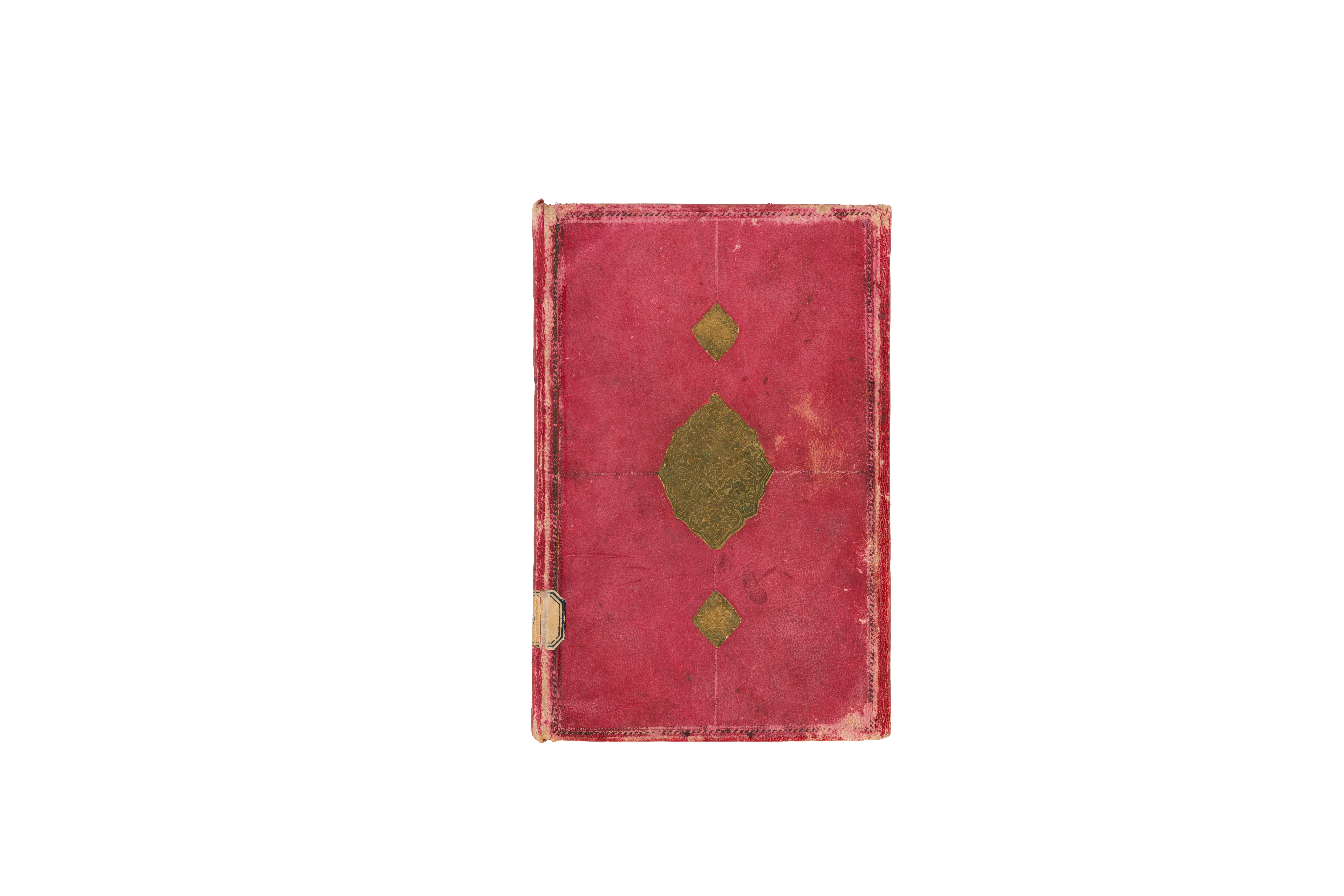
“Li jamʼ bayna raʼi hakimayn” (A book that combines the views of two philosophers)
Abu Nasr Al-Farabi. Arabic. Nastaliq script. 20 × 14 cm
Audio guide
Audio available in: UZ
Description
This compact manuscript reflects one of the most ambitious intellectual efforts of medieval philosophy – the attempt to reconcile the teachings of Plato and Aristotle.
Its author, Abu Nasr al-Farabi, believed that no real contradiction existed between the two philosophers. According to him, apparent differences resulted from misinterpretations. In this work he sought to construct a unified philosophical system in which Greek philosophy could be harmonized with the Islamic intellectual tradition.
The importance of this treatise lies in its long-term influence. Through works such as this, scholars of Central Asia, including Ibn Sina (Avicenna), came to understand Greek philosophy as a coherent scientific tradition rather than a collection of unrelated doctrines.
The manuscript’s small format is also significant. Its portable size suggests it may have served as a personal study book, possibly accompanying scholars during journeys between major intellectual centers of the Islamic world.
The binding, with its characteristic central medallion known as a turunj, as well as the red leather and gilded decoration, indicate that this was a valued manuscript, likely belonging to a learned or elite library of Mawarannahr.
This manuscript demonstrates how Central Asia became a crucial intellectual bridge connecting ancient philosophy with the scientific traditions of the Islamic world.