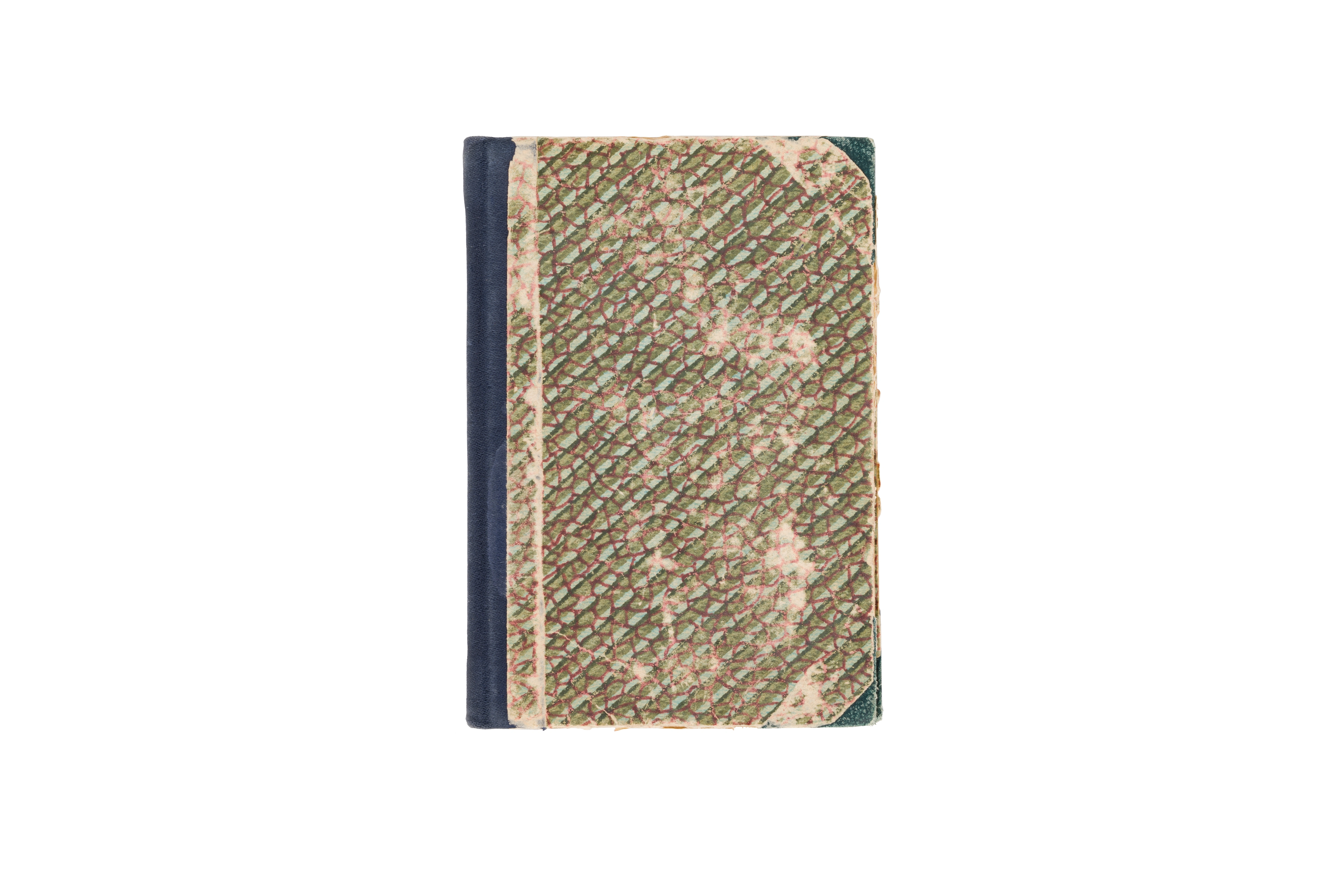
“Kitab fi mabadi aro ahl al-Madinat al-Fazilah” (Views of the Inhabitants of the Virtuous City)
Abu Nasr Al-Farabi. Copied in 1664. Arabic. Nastaliq script. Oriental paper. 30 × 21 cm
Audio guide
Audio available in: UZ
Description
This manuscript presents al-Farabi not only as an author, but as a systematic thinker whose works form an integrated intellectual framework.
It is a 17th-century copy containing “The Opinions of the Inhabitants of the Virtuous City” alongside other philosophical treatises. It reflects the continued transmission and study of his works centuries after his lifetime.
The open page shows a passage on the nature of intellect—one of the central themes in his philosophy. Al-Farabi describes cognition as a process in which the human mind moves from potential understanding to actual knowledge.
This concept combines Aristotelian logic with Islamic metaphysics. Knowledge is presented as an ascent—from sensory perception to universal truths.
The table of contents reveals the breadth of his scholarship: from reconciling Plato and Aristotle to works on logic, metaphysics, and even critiques of astrology. Together, they form a structured curriculum rather than isolated writings.
The use of nastaliq script reflects the manuscript culture of Central Asia, where intellectual content and aesthetic form were closely intertwined.
This object illustrates how al-Farabi’s ideas functioned as a living intellectual tradition that shaped scholarly life in the region for centuries.