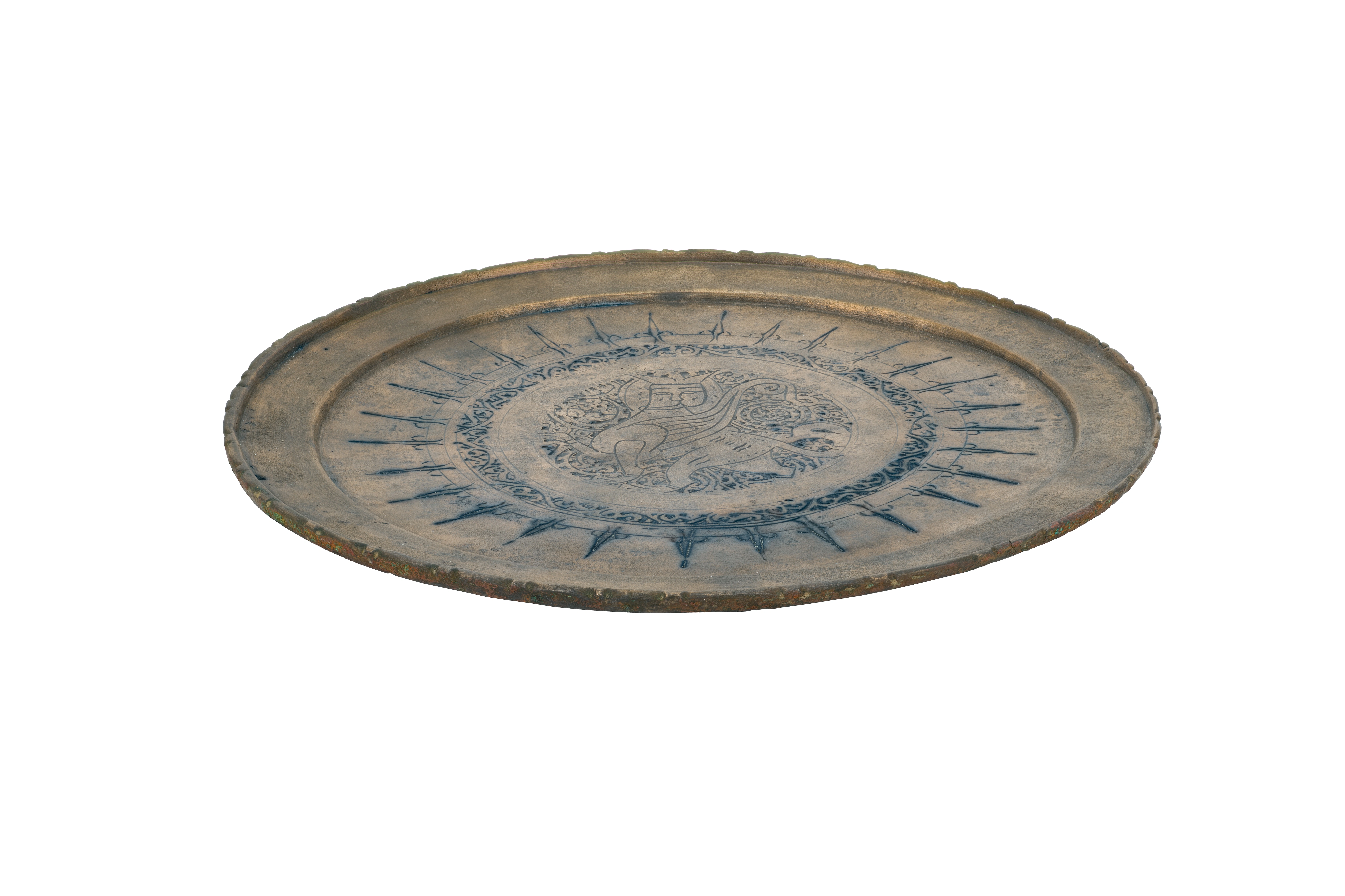
Cast Tray
12th century СЕ. Mawarannahr. Brass; casting. 8 × 23.5 cm
Audio guide
Description
This cast brass tray dates to the 12th century and comes from Mawarannahr, a cultural region of Central Asia during the First Renaissance. Its shallow form and wide surface suggest use in dining or hospitality practices, such as serving food, fruit, or bread.
At the center, a zoomorphic image is enclosed within a circular composition. The figure of a griffin or winged beast is surrounded by a rhythmic ornamental band radiating toward the rim. Such imagery was common in Central Asian art and often symbolized protection, strength, and prosperity.
The casting technique ensured durability, making the tray suitable for prolonged everyday use. Visible wear on the surface confirms that it was an object of daily life rather than a purely ceremonial piece. This tray exemplifies how functional objects in Mawarannahr were infused with artistic expression, reflecting both the craftsmanship and the aesthetic values of the 12th century.