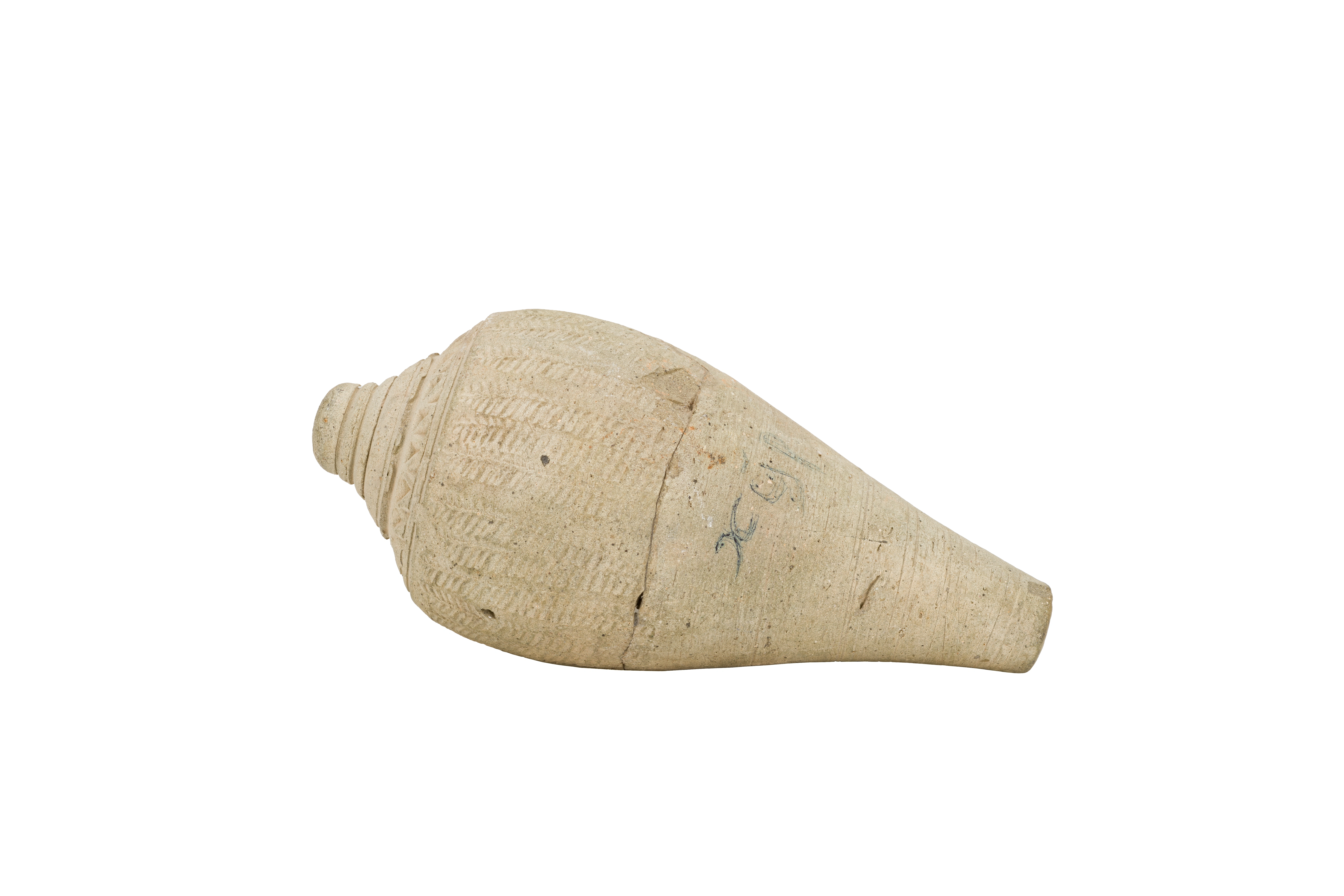
Vessel for mercury
10th century СЕ. Surkhandarya. Ceramic; molding. 24 × 18 cm
Audio guide
Description
The form of this vessel immediately signals its practical purpose. The elongated conical body and narrow opening indicate careful handling of a specific substance.
This mercury vessel was produced in the Surkhandarya region in the 10th century. As Islam spread across Central Asia, new approaches to medicine, natural science, and empirical knowledge emerged. Mercury was used in medical treatments, experimental practices, and technical processes, requiring specially designed containers for its storage.
The vessel’s shape reflects considerations of control and safety. The narrow opening reduced evaporation, while the thick, hand-formed clay walls provided durability. The ringed and notched surface patterns are not primarily decorative; instead, they emphasize structural zones and stages of manufacture.
Wear, cracks, and losses testify to prolonged use. This mercury vessel illustrates how, alongside the spread of Islam in Central Asia, scientific and medical knowledge became embedded in material culture through specialized tools and containers.