Video available in: UZ
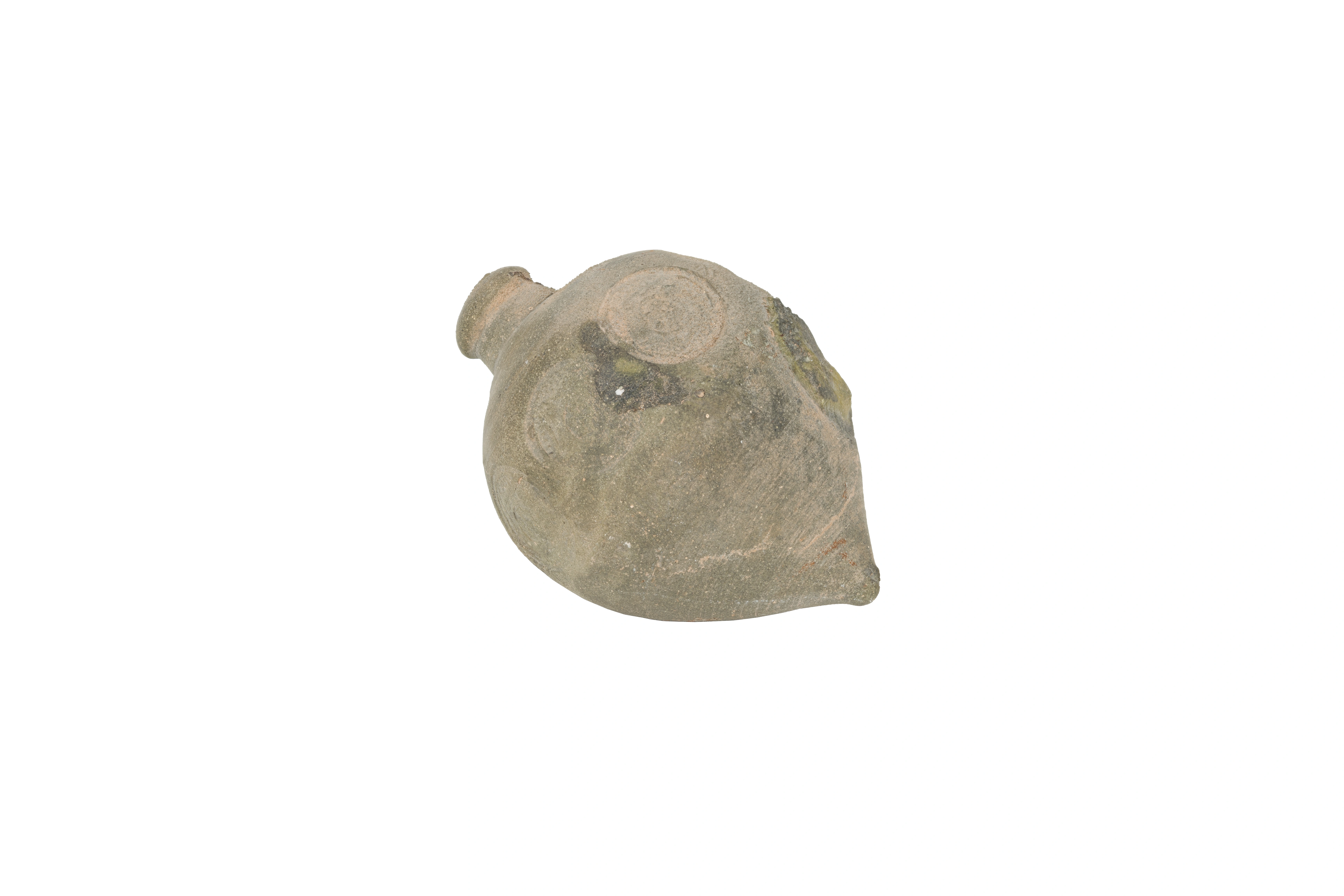
Vessel for mercury
11th–12th centuries СЕ. Central Asia. Ceramic; molding. 13.3 × 10 cm
Audio guide
Audio available in: UZ
Description
This small ceramic vessel may once have contained one of the most enigmatic substances of medieval science – mercury, known to alchemists as “living silver”.
The object belongs to a type of containers known as sphero-conical vessels, widely used in Central Asian cities during the 11th–12th centuries. Their thick walls and narrow necks made them ideal for transporting mercury, perfumes, or medicines that required airtight storage.
Notably, the Fergana Valley was one of the important regions of mercury extraction. This metal played a significant role in the work of physicians and scholars of the Islamic world, including Ibn Sina (Avicenna), who referred to it in medical and chemical contexts.
The shape of the vessel was also highly practical. Its drop-like body allowed it to be firmly held in the hand, while the pointed base suggests it was stored in sand or special stands during caravan transport along the Silk Road.
Even utilitarian objects were not deprived of artistic attention. The stamped circular medallions on its surface demonstrate how the aesthetics of Islamic art extended into everyday objects connected with science and trade.
This vessel illustrates how the scientific achievements of Islamic civilization relied not only on manuscripts, but also on technological objects that supported the development of medicine, alchemy, and long-distance commerce.