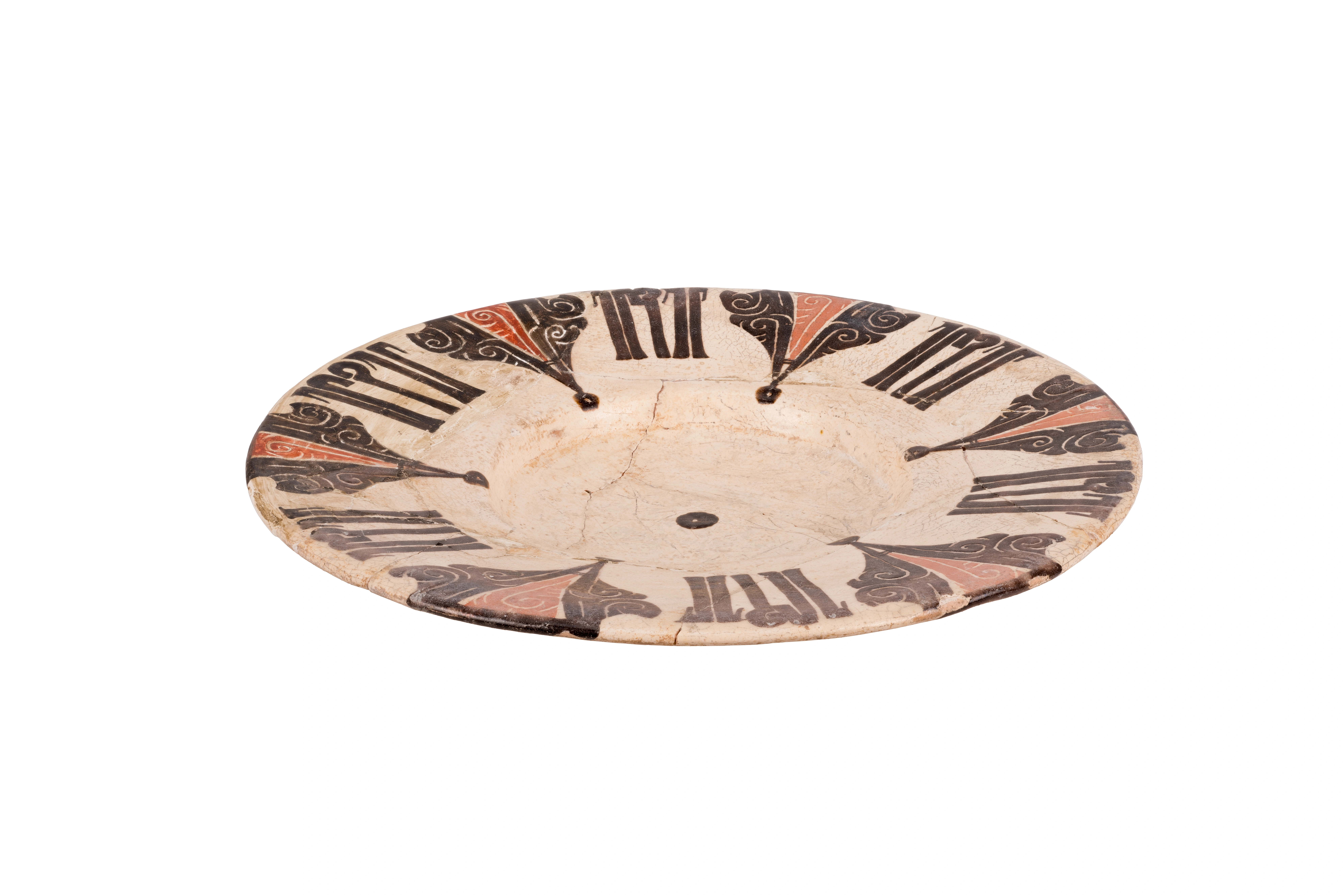
Lagan (Dish) with Kufic Inscription
10th–11th centuries CE. Central Asia. Ceramic; engobe. 4.5 × 27.8 cm
Audio guide
Description
This object is a ceramic lagan – a wide dish decorated with a Kufic inscription. In 10th–11th centuries in Central Asia such vessels combined everyday use with intellectual and symbolic meaning.
Kufic script, one of the earliest forms of Arabic writing, is transformed here into a visual rhythm. The elongated letters follow the strict geometry of the circular surface, turning text into ornament. These inscriptions usually conveyed blessings, wishes of prosperity, and protective formulas for the household.
The dish was used during meals, yet it also carried a moral and spiritual message. While eating, the viewer’s gaze encountered the written word, reminding them of order, moderation, and the presence of the divine in daily life.
The contrast of black and red decoration on a light slip background enhances the graphic power of the script. This reflects the artistic language of Central Asia’s First Renaissance, when calligraphy became a dominant expressive medium across ceramics, metalwork, and manuscripts.