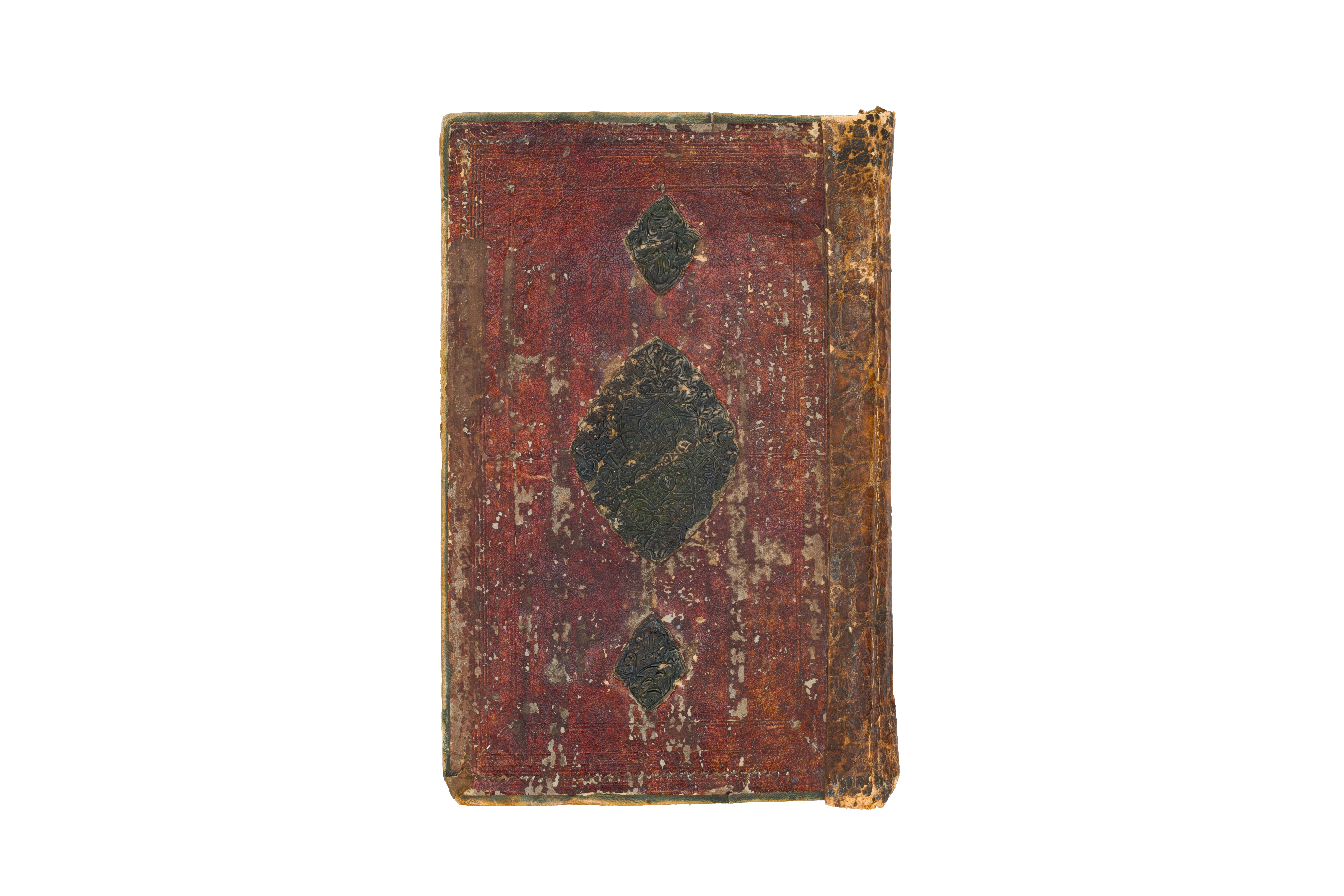
The Holy Qurʾan
1291/1874 CE. 21 × 13.5 cm. 64 folios. From the collection of the Center of Islamic Civilization in Uzbekistan, inv. No 00062
Audio guide
Description
The richly illuminated frontispiece, adorned with gilded rosettes and a deep blue frame, establishes the ceremonial character of this 1876 manuscript. The date 1293 AH corresponds to the late Ottoman period, a time of continued refinement in calligraphy and manuscript decoration.
The format corresponds to the standard book size of the 19th century. The manuscript comprises 64 folios, suggesting a partial Qur’anic section or a selected reading volume rather than a complete mushaf. Such codices were suitable for personal use and convenient storage.
The text is written in naskh, the most legible and normative script for copying the Qur’an. Its clear letterforms and developed vocalization system ensure readability.
The decorative program combines gilding with blue and red pigments, integrating vegetal and geometric motifs that both embellish and structure the page.
Within the exhibition section “The Spread of Islam in Central Asia,” this manuscript illustrates the resilience of the handwritten tradition at a time when print culture was expanding, yet calligraphy continued to embody spiritual authority and artistic prestige.