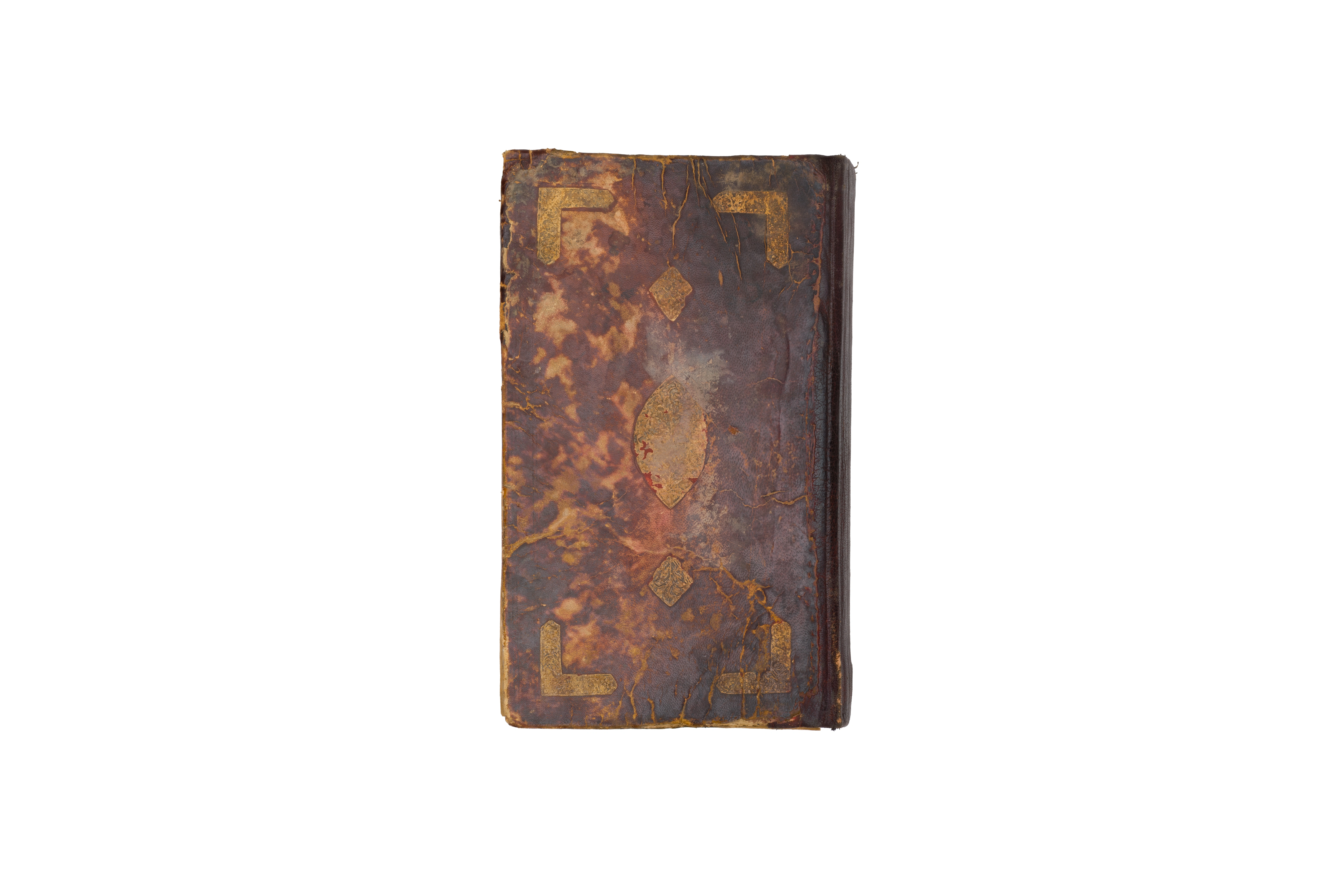
The Holy Qurʾan
18th century CE. 29 × 17.5 cm. 420 folios. From the collection of the Center of Islamic Civilization in Uzbekistan, inv. No 00240
Audio guide
Description
A broad ornamental frame dominated by blue and gold immediately conveys the ceremonial character of this 18th-century codex. The manuscript comprises 420 folios and represents a complete mushaf produced within an established manuscript tradition.
The text is written in naskh script. By this period, naskh had become the principal and stable hand for copying the Qur’an. Its clear graphic structure, proportional balance, and developed vocalization system ensure legibility and compositional coherence.
The format combines practicality with representational presence. The opening spread is enclosed within a complex decorative program of polychrome vegetal and geometric motifs.
The substantial volume reflects careful textual organization and the developed manuscript production practices of the 18th century.
Within the exhibition section “The Spread of Islam in Central Asia,” this Qur’an embodies the continuity of written tradition and the transmission of religious knowledge across generations.