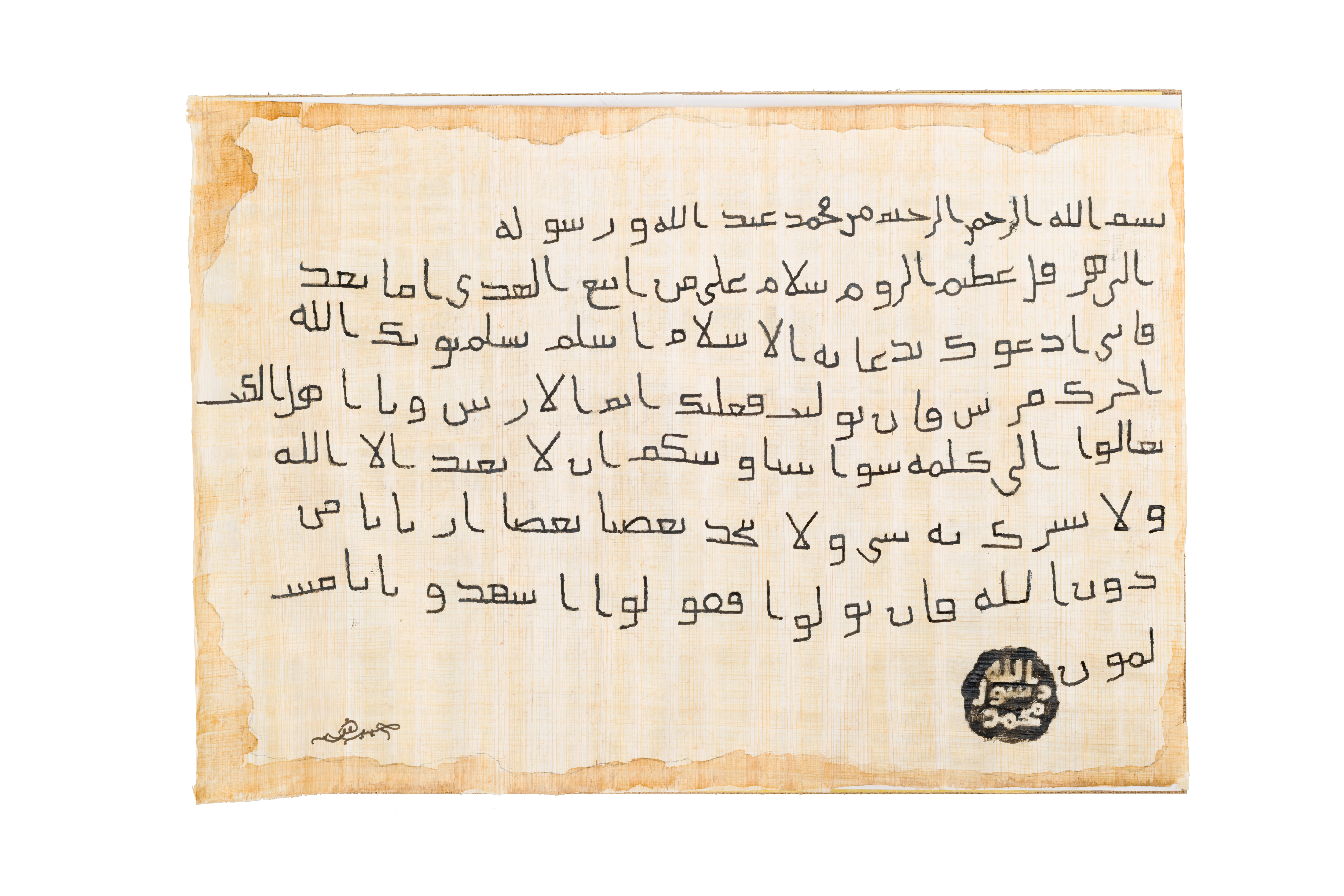
Letter Аttributed to the Prophet Muhammad addressed to the Byzantine Emperor Heraclius
Kufic script. 628 CE. Papyrus. 28.8 × 40.5 cm
Audio guide
Description
A major world power of the 7th century received this message from Medina. The letter attributed to the Prophet Muhammad (peace and blessings be upon him) was addressed to the Byzantine emperor Heraclius and is dated to 628 CE. This communication marked a diplomatic initiative of considerable scale. The early Islamic community engaged Byzantium through a theologically structured appeal affirming monotheism and peaceful coexistence.
The lines are written in early Kufic script. At the bottom appears a seal reading “Muhammad – Messenger of God,” arranged from bottom to top, symbolically elevating the meaning from name to mission. The content reflects the key message of Qur’an 3:64 – an invitation to a “just word”: acknowledgment of one God without associating partners with Him.
According to Hadith No. 7 in Sahih al-Bukhari, the emperor received the letter respectfully, questioned witnesses, and is said to have inwardly recognized its truth, though political concerns prevented public acceptance.
This papyrus unites religious proclamation and high diplomacy, embodying the spiritual and intellectual scope of what is termed the First Renaissance of the Islamic world.