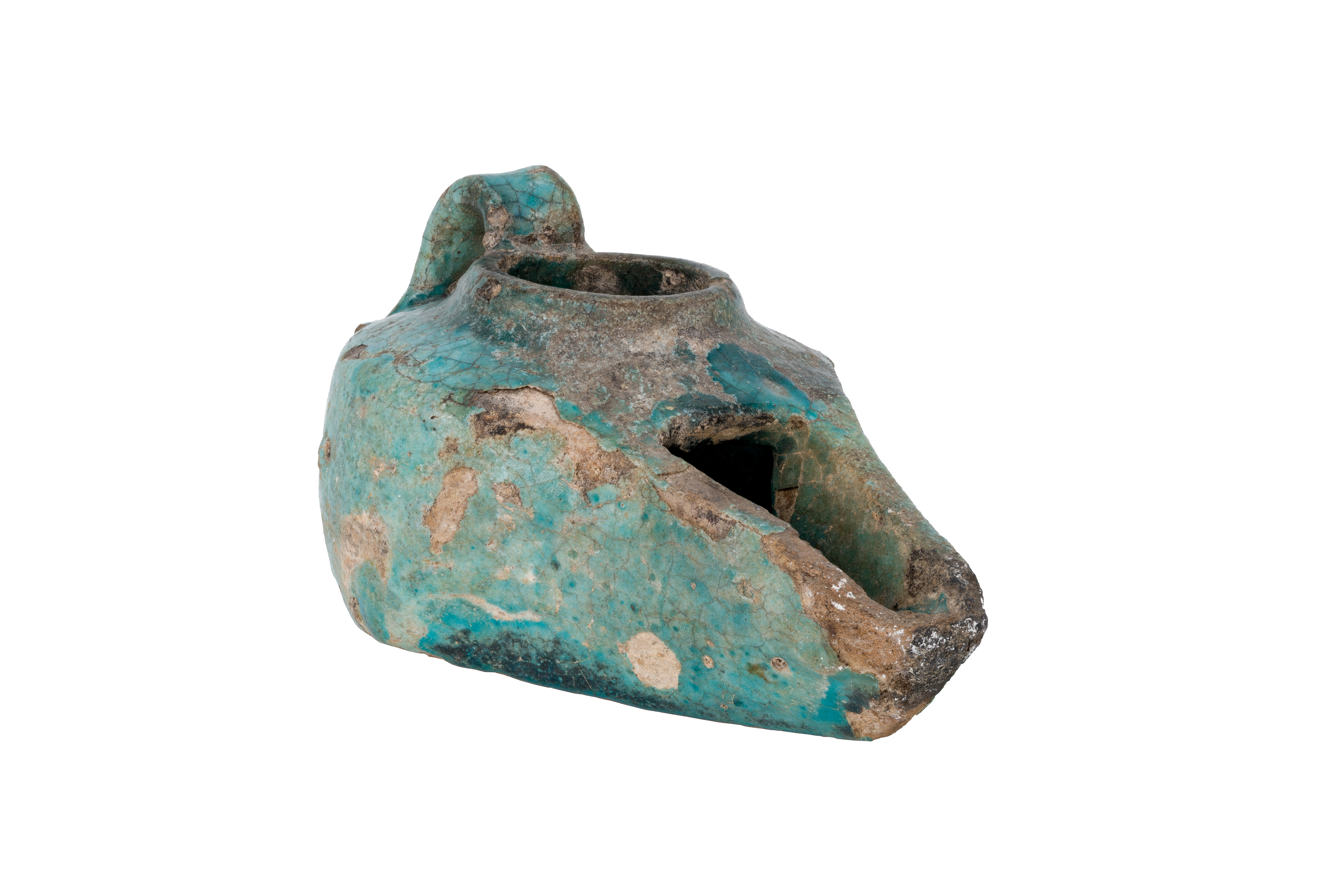
Oil Lamp
12th century CE. Mawarannahr. Ceramic. 7.2 × 12.8 cm
Audio guide
Description
In the medieval cities of Mawarannahr, objects like this oil lamp were part of everyday life. They illuminated houses, workshops, and caravanserais, casting a soft flickering light after sunset.
This ceramic oil lamp dates to the twelfth century. Its design is compact and practical: the small reservoir held oil, while the elongated spout supported a wick. When lit, the wick absorbed the oil and produced a steady flame.
The surface is covered with a bright turquoise glaze, a color characteristic of Central Asian ceramics. This tone was achieved by adding copper compounds to the glaze mixture. Turquoise became one of the most recognizable colors of the region’s decorative arts.
A small handle allowed the lamp to be carried or hung on a wall. Such simple yet effective designs made these lamps reliable tools for daily use.
Archaeologists have discovered similar lamps in many medieval settlements across Mawarannahr. They illustrate how craftsmen combined practical function with aesthetic refinement in even the most ordinary household objects.