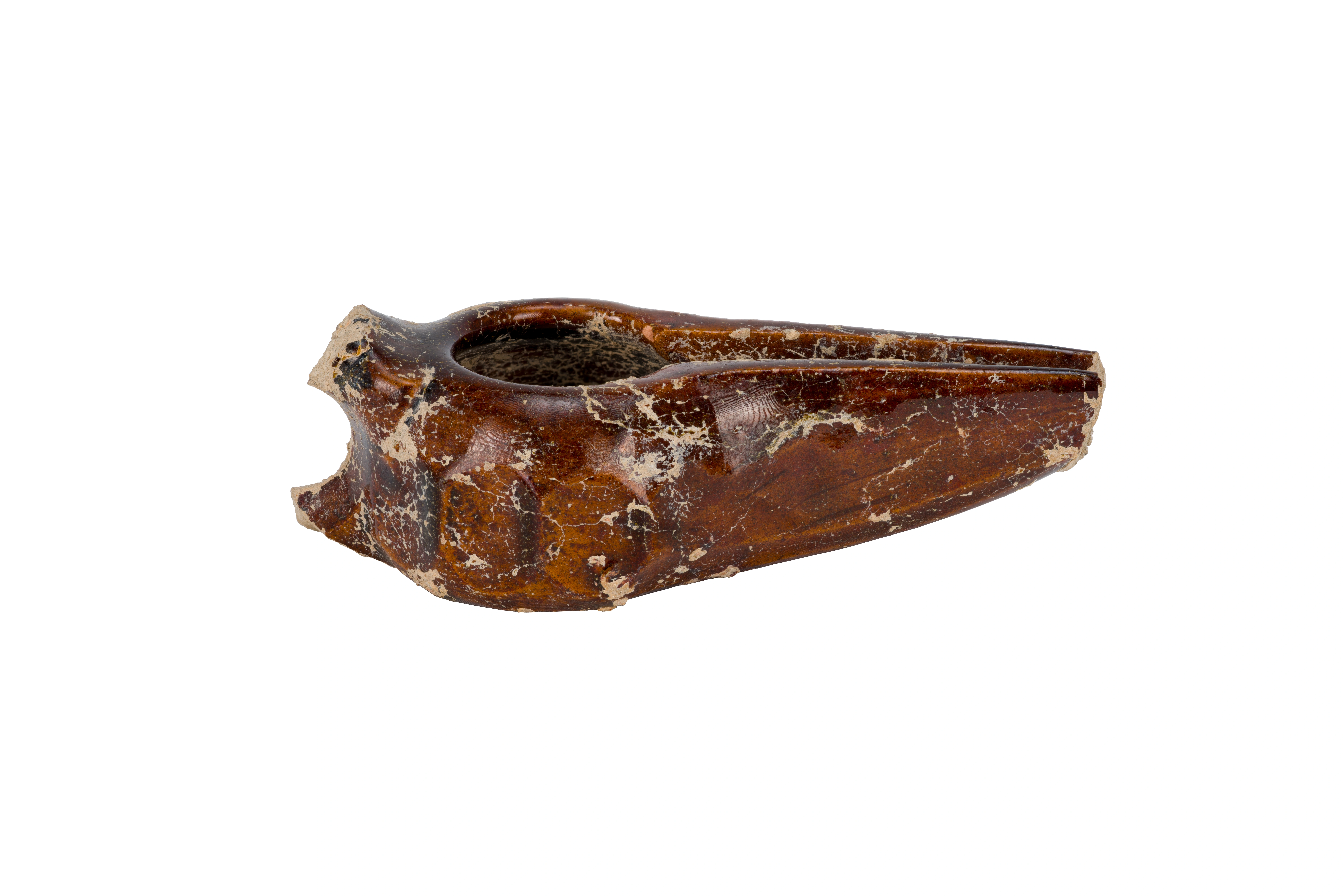
Oil Lamp
10th–11th centuries CE. Mawarannahr. Ceramic. 11.4 × 5.4 × 3.1 cm
Audio guide
Description
Small oil lamps like this one were among the most common household objects in medieval Mawarannahr. They illuminated daily activities – evening meals, craft work, and reading.
This example dates from the tenth to eleventh centuries and is made of fired ceramic. Its design is functional and carefully balanced: the rounded chamber held oil, while the elongated spout supported a wick. When lit, the wick absorbed the oil and produced a steady flame.
The surface is coated with a brown glaze. Besides adding a decorative finish, the glaze also protected the ceramic body from absorbing oil and soot, making the lamp more durable in everyday use.
Such lamps were produced in craft workshops of major urban centers such as Samarkand and Bukhara, cities connected by the trade routes of the Silk Road. Because they were affordable, they became widely used household objects.
Today these simple artifacts allow us to imagine the atmosphere of medieval interiors, where the quiet glow of a small oil lamp provided light long before modern illumination.