Video available in: UZ
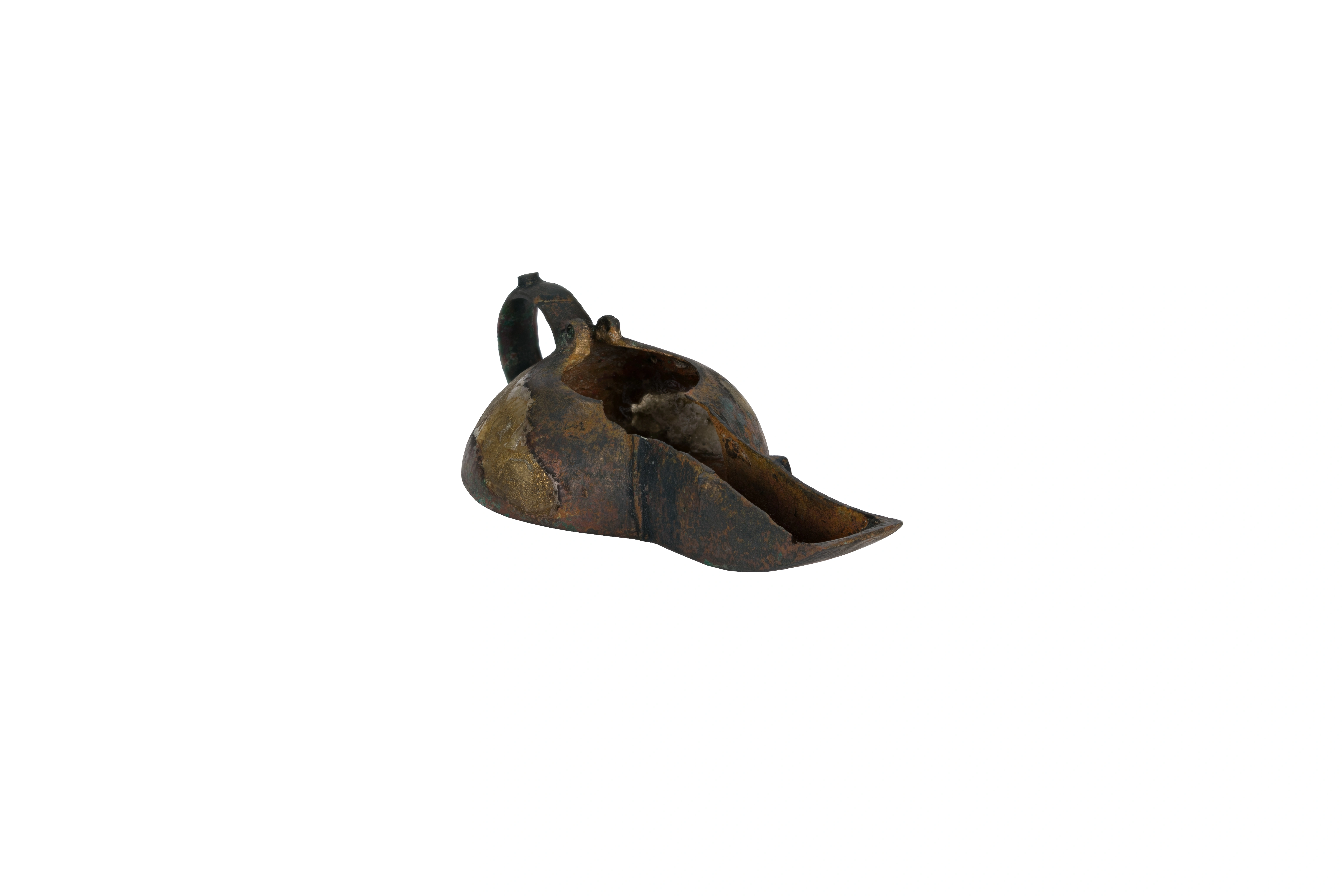
Oil Lamp
11th century CE. Bukhara. Brass. 14.5 × 6.5 cm
Audio guide
Description
This object is an oil lamp from the eleventh century, produced in Bukhara–one of the major cultural centers of medieval Mawarannahr.
Oil lamps like this were widely used to illuminate houses, workshops, and religious buildings. Oil–often sesame oil or animal fat–was poured into the reservoir, while a wick was placed in the narrow spout. When lit, the wick produced a steady, warm flame.
The design is simple yet practical. The elongated spout directed the flame and helped protect it from wind. A small opening at the top allowed oil to be poured inside. At the back, a circular ring made it possible to carry the lamp or hang it on a wall.
The lamp is made of brass, an alloy of copper and zinc widely used in medieval metalwork because of its durability and warm color. Over centuries the surface develops a natural patina, giving the metal green and dark brown tones.
Such lamps were everyday objects that illuminated the lives of people across Central Asia–lighting craftsmen’s homes, caravanserais along trade routes, and madrasas where scholars studied.
This small artifact evokes the atmosphere of medieval cities, where the night was illuminated by the gentle flicker of oil lamps.