Video available in: UZ
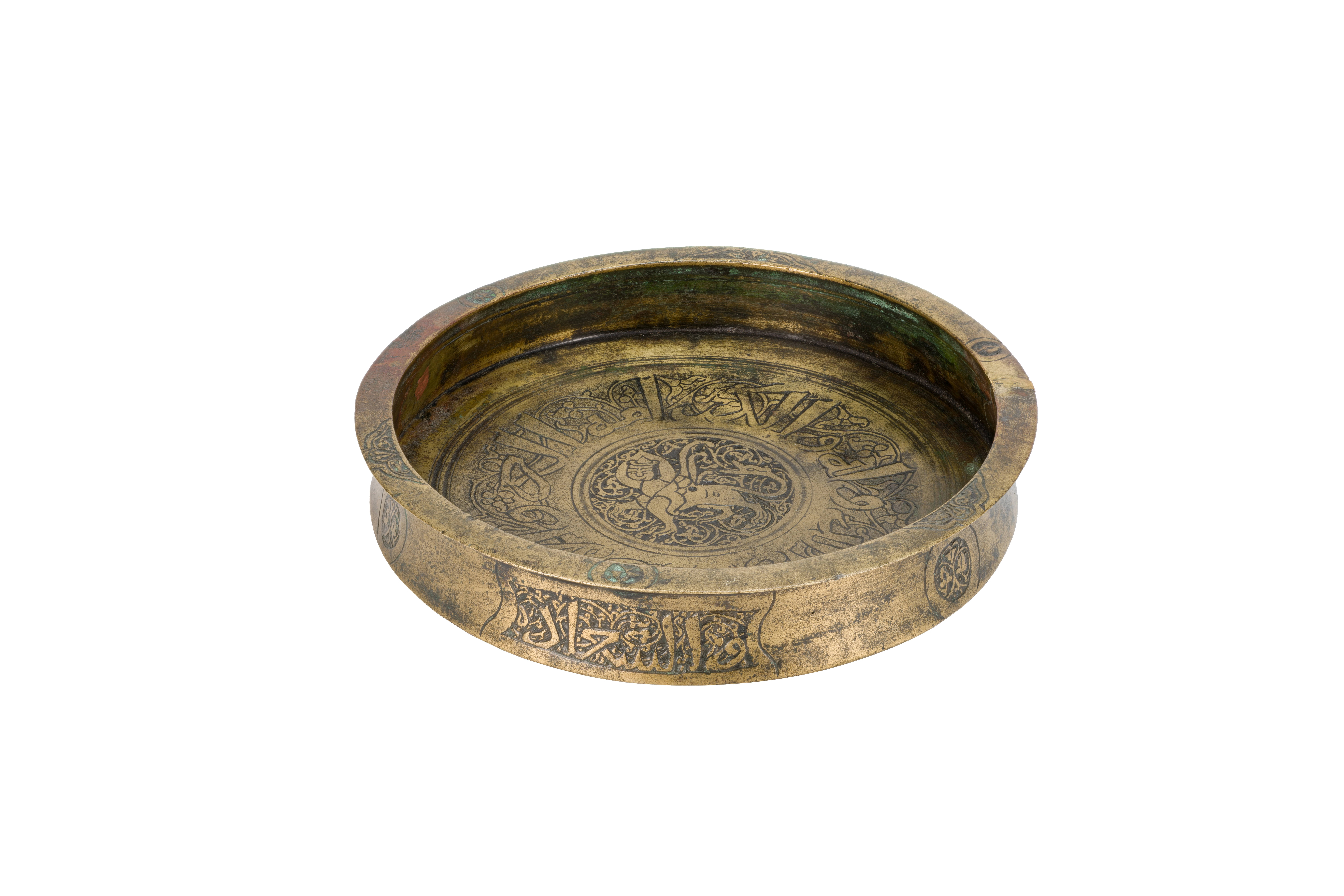
Small Plate
11th century CE. Mawarannahr. Brass. 3.3 × 17.4 cm
Audio guide
Description
This brass dish dates to the eleventh century and originates from Mawarannahr, the historical region between the Amu Darya and Syr Darya rivers–one of the major cultural centers of medieval Central Asia.
Despite its modest size, the object represents a refined example of decorative metalwork. The surface is engraved with intricate designs. At the center appears a mythical winged lion, a powerful symbolic motif widely used in medieval art across the Iranian and Central Asian world.
Such hybrid creatures combine features of animals and wings to symbolize strength, protection, and divine authority. The motif reflects artistic traditions that predate Islam and continued to influence visual culture throughout the medieval Islamic period.
Surrounding the central image is a decorative band of Kufic inscription. Kufic is one of the earliest forms of Arabic calligraphy and was frequently used as ornament on everyday objects. These inscriptions often conveyed blessings, prosperity, and good fortune for the owner.
The dish itself is made of brass, an alloy of copper and zinc. Metalworkers of Mawarannahr were highly skilled artisans whose products–ranging from tableware to lamps and ceremonial objects–were valued across the broader Islamic world.
This small object illustrates how everyday utensils could embody artistic sophistication, symbolic meaning, and technical mastery in medieval Central Asia.