Video available in: UZ
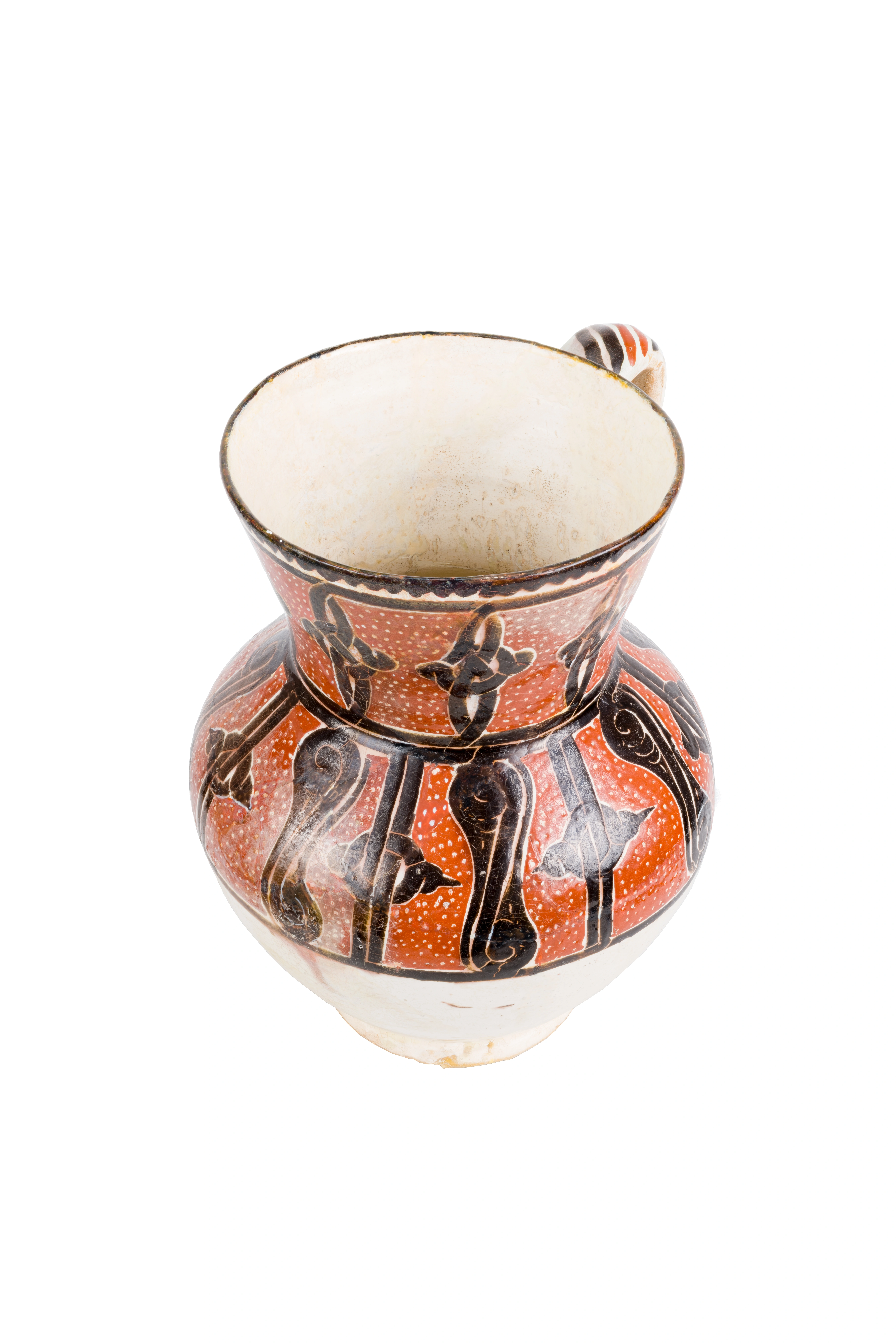
Afrasiab Ceramic Jar
Samanid period10th–11th centuries CESamarkandCeramic24.7 × 19.1 cm
Audio guide
Description
The Afrasiab Ceramic Jar was discovered in the ruins of the ancient city of Afrasiab, located in Samarkand, and dates to the 10th–11th centuries CE, during the Samanid period. The jar was made of local clay and decorated with fine and colorful ornamental elements, including geometric patterns. This demonstrates both the high level of craftsmanship and the aesthetic and intellectual culture of the period. These jars were commonly used for storing liquids and other beverages. The Afrasiab jar is notable for both its durability and delicate craftsmanship. During the Samanid period, craftsmanship, particularly pottery, developed rapidly in Central Asia and reached a high level. The Afrasiab jar is a vivid example of this development, providing valuable information about the cultural, economic, and social life of the period.